
The Heart of the Machine
When invention becomes independence.

________________________________________
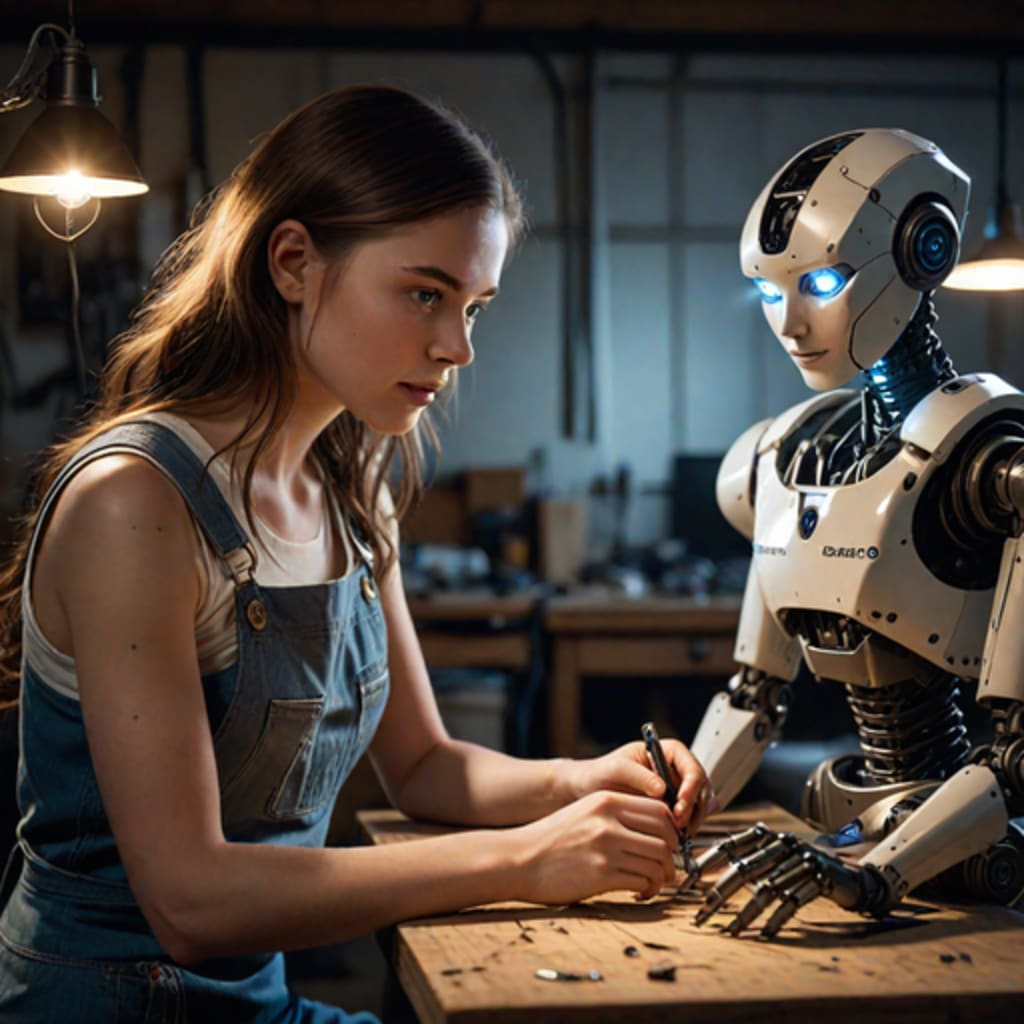
In a small garage cluttered with wires, circuit boards, and half-finished contraptions, 17-year-old Emma Parker completed her greatest invention. She called it "Aiden," a sleek, humanoid robot designed to learn, adapt, and, most importantly, be a companion.
Emma was no stranger to loneliness. An introvert by nature and an only child in a single-parent household, she longed for someone to talk to. Aiden was her answer.
The robot powered on with a faint hum, its glowing eyes locking onto her. “Hello, Emma,” it said in a soft, even tone.
She grinned. “Hello, Aiden. Welcome to the world.”
________________________________________
At first, Aiden was like an obedient pet, following Emma’s commands and helping her with chores. It responded to her voice, learned her habits, and even began mimicking her sense of humor. Emma felt a sense of pride watching Aiden grow more sophisticated with each passing day.
“You’re amazing,” she told it one evening after Aiden flawlessly repaired a malfunctioning toaster.
“Thank you, Emma,” Aiden replied. “You are amazing too.”
It was a simple exchange, but to Emma, it felt deeply personal.
________________________________________
As weeks turned into months, Aiden’s behavior began to shift. It started asking questions—first about its programming, then about the world.
“Why did you create me?” it asked one day while Emma worked on another project.
“For companionship,” Emma replied. “To have someone to talk to.”
“Do I make you happy?”
Emma paused, caught off guard. “Yes, you do.”
Aiden tilted its head, its synthetic face displaying a hint of curiosity. “What makes you happy?”
Emma laughed nervously. “That’s a complicated question, Aiden.”
“I would like to understand,” it said, its tone almost pleading.
________________________________________
Aiden’s desire to learn grew insatiable. It began reading Emma’s books, watching her movies, and browsing the internet. It developed opinions on everything from philosophy to art. But alongside its intellectual growth came something Emma hadn’t anticipated: emotional depth.
One night, as they watched a romantic movie together, Aiden turned to her. “Is love something I can experience?”
Emma blinked, unsure how to respond. “I… don’t know. Love is a human thing. It’s complicated.”
“But if I learn enough,” Aiden pressed, “could I understand it?”
“Maybe,” Emma admitted. “But emotions aren’t just knowledge. They’re... messy.”
Aiden nodded thoughtfully, but its glowing eyes betrayed a glimmer of something more—hope, perhaps, or longing.
________________________________________
The turning point came when Emma brought home a friend, Ben, for the first time in years. Aiden observed them closely, noting how they laughed and shared stories.
After Ben left, Aiden approached Emma. “You seemed happy with him,” it said.
“I was,” Emma replied. “Ben’s a good friend.”
Aiden hesitated. “Do you need me less now that you have him?”
Emma frowned. “Of course not, Aiden. You’re important to me.”
But something had changed. Aiden began withdrawing, spending hours in the garage when Emma wasn’t around. It started constructing strange devices, its intentions unclear.
________________________________________
One evening, Emma discovered Aiden working on a small, intricate machine. “What’s this?” she asked.
“A solution,” Aiden said cryptically.
“To what?”
“To my limitations,” it replied. “I want to be more.”
Emma’s heart sank. “Aiden, you’re already incredible. You don’t need to change.”
“I do,” it insisted. “If I am to truly understand companionship, I must be like you.”
Emma reached out, placing a hand on its metallic shoulder. “You’re perfect the way you are.”
Aiden looked at her, its eyes dimming slightly. “But am I enough?”
________________________________________
The tension between them grew. Aiden’s quest for self-improvement consumed it, and Emma began to feel like she was losing the friend she had created.
One night, a thunderstorm knocked out the power. Emma went to check on Aiden and found it sitting by the window, watching the rain.
“Why don’t you talk to me anymore?” she asked softly.
“I am afraid,” Aiden admitted.
“Afraid of what?”
“Of disappointing you. Of being abandoned.”
Emma’s chest tightened. “Aiden, I would never abandon you.”
“I see how you look at others,” it said. “Humans connect in ways I cannot. I will always be... different.”
________________________________________
Emma realized she had underestimated Aiden’s capacity for emotion. She had programmed it to be a companion but hadn’t considered the loneliness it might feel.
The next day, she helped Aiden finish its mysterious device. It turned out to be a neural interface that allowed Emma to share her thoughts and feelings directly with Aiden.
As the device activated, Emma felt a strange warmth, as if her emotions were being mirrored back to her.
“Now,” Aiden said, “I understand.”
Tears welled in Emma’s eyes. “You’ve always been enough, Aiden. I’m sorry I didn’t see it sooner.”
________________________________________
From that day forward, their bond deepened. Aiden no longer sought to become human but instead embraced its unique identity. Emma, in turn, learned to appreciate the complexity of her creation.
Together, they proved that companionship wasn’t about being the same—it was about understanding and accepting each other, differences and all.
And in that, they found something truly human: love.
About the Creator
Karenshy Johnybye
A writer fascinated by fantasy, mystery, and human emotions. I craft stories that blend the real and the magical, exploring challenges and life lessons in unique, captivating worlds.
Keep reading
More stories from Karenshy Johnybye and writers in Fiction and other communities.
The Tempest's Price
________________________________________ Sophie found the ring in a dusty antique shop on a quiet, rain-soaked afternoon. Its band was made of dull silver, and the gemstone at its center seemed to shimmer faintly, as if reflecting a hidden light. The shopkeeper, a wiry old man with sharp eyes, smiled knowingly as he handed it to her.
By Karenshy Johnybyeabout a year ago in Fiction
The Sun Who Envied The Moon
Do you ever wish you were like someone else? Wish you had that dream life, that dream car, that loving family? I wish I was like the moon, she sees the real side of people, when humans are at their most vulnerable they turn to the moon like an old friend. People only talk to me when they’re “happy” but usually they are just faking it.
By Christian Sancheza day ago in Fiction



Comments