
A pile of rags lay in the dessert, still cool in the morning sun. They began to stir, and a thin brown leg, the foot wrapped in tattered leather, projected from the mess.
Luke had ringing in his ears. He would have preferred not to answer, but his phone implant was ancient, lost technology, and no one knew how to fix it, so he winced as a burst of static and a loud voice cut through his brain like a scimitar on meth.
“Luke, you awake? It's Lin!” the voice shouted, “You awake?”
“No,” he said. He'd been dreaming about being indoors.
“That's great! Hey, I got a hot tip on a grave two klicks south of you.”
Graverobbing was a decent profession now, especially in the glass desert, provided you didn't mind the way the radiation shortened your life.
“Canned goods?” Luke asked hopefully.
“The guy I got the tip from said he and his buddies carried away all they could, but there should be something left.”
Luke's lips were dry and cracked, and he hadn't eaten the previous day.
“On my way,” he said. He didn't quite have the juice to salivate.
“There should be tools,” Lin said. Lin's trading post was the best place to find those. Luke knew he was lucky to be the closest graverobber to the new site, and if he didn't act fast, Lin would send someone else from the settlement. He was the only one she could reach by phone.
“Gotcha,” he muttered, and started loping to the site. Best to make some progress before the sun got any higher. Lin gave him a heading, which turned out not to be very accurate.
It only took him half an hour to find the site, a little mess of disturbed earth at the top of a mound, fortunately not too close to the glass fields where weapons had melted the surface, so not as radioactive as most of the spots Luke went to. Someone had broken through what had once been a roof, now a few feet below the surface of the mound. Luke lowered himself into the room, not sure how he would get back out.
The room smelled musty, dusty, and dry. There was furniture, heavy stuff not worth hauling for the most part. There were electronics in the room, mostly plastic and tiny wires, not worth moving either. A cloud of dust rose around him as he plopped onto the couch, but it was worth it to feel the history of all those who had touched it before, the comfortable, middle-aged butts that sat there anesthetized by the television, the fumbling teens whose passion had not quite made it to home base, the sorrowful husband in exile from the bedroom for drinking too much on a particular night. This was his Talent, to feel all that had been felt by those an object had contact with, and know their history. It wasn't a Talent he liked, because some of the memories in those objects were things he didn't want to know or feel. So many people had Talents now, and most were more worthwhile than this.
He got up and looked at the other rooms. At first he thought he had found a peculiar punch bowl, until he remembered his childhood before the war, and correctly identified it as a toilet. Few shards of the mirror remained, the first robbers must have taken as much as they could, since the science of making mirrors had been lost, and even a hand-sized shard was a treasure fit for a king.
The kitchen was better. Most of the tinned food was gone, that would be the first priority for the first graverobber. Two skeletons had been shoved aside, and parts of the stove were gone, because metal was something valuable.
Most of the drawers had been pulled out and dumped on the floor, but it looked like the robbers hadn't been able to take everything of value. Under one of the drawers, Luke found a knife that still shined silver, the lost technology of stainless steel.
He hesitated. One disadvantage of being able to feel the emotions and history associated with the objects he stole from these old homes was that sometimes the objects were cursed. He'd handled knives used for murder, had once nearly passed into madness when he'd handled a knife that had been used to flay the shoulder of a living man, while questions rained down and the man tried not to tell, knowing he would die either way. Now it took courage to pick up a knife, even a kitchen knife like this one.
But it was valuable. He steeled himself and picked it up, and smiled in relief as he felt the domesticity of cooking, the joy and companionship of this knife's use.
There was more stainless, spoons and forks and butter knives. At last, he found a real treasure, a can of peaches. He had a little opener, which he carried carefully concealed on his body (such things were no longer made) and slowly, carefully, opened the can. The peaches were packed in water, so he had some much-needed moisture and enough calories to get him through an entire day. Compared to his usual diet of grubs, lizards, and the few edible plants he could find, this was bliss. Lin wouldn't want him to consume it himself, but he knew that without water, he wouldn't make it back to the trading post.
He packed as much treasure as he could into his bag, then resumed his search. The earlier thieves had not bothered to remove some of the machine-woven fabric from the bedroom. He found trousers made from strong blue fabric, even several shirts he could pull over his body. Everything was made for someone better fed, but he pulled a rope around himself and muttered, “I look like a king!”
“What was that?” Lin said on his phone.
“Nothin', nothin' think I'm goin' peculiar 'cause I ain't ate or dank,” Luke said. Damn, he thought, does she listen in on me all the time? And what about the lens implanted between his eyes, could she see what it saw? Did she see him eat the precious peaches?
“Come back safe,” she said. He was the only one of her graverobbers who had a phone implanted, so it was possible she spent a lot of time listening in. He knew she could get a fix on his position, though that was getting harder as more and more of the GPS satellites failed. It was something that made him useful to her.
“Don't worry,” Luke said, “I always do what the voices in my head tell me to do.”
There was costume jewelry scattered on the dresser, no doubt anything of real value had gone to the earlier robbers. He touched individual pieces to get their owner's history and feelings. An earring was imbued with the night its owner had spent in beauty, thrilling to the looks from her lover, while a hair clip was all about fading beauty and a blooming career, children and grandchildren, a sentimental gift the owner had worn for decades. An AA coin told of a man's long, successful struggle, of a life reclaimed after a time of debauchery. A tie clip told a story about the man sobering up and settling down, going to work each day, putting up with bad bosses and backstabbing co-workers just to keep the happy home, still longing for the adventures of his youth, a little regretful of the woman he'd left behind.
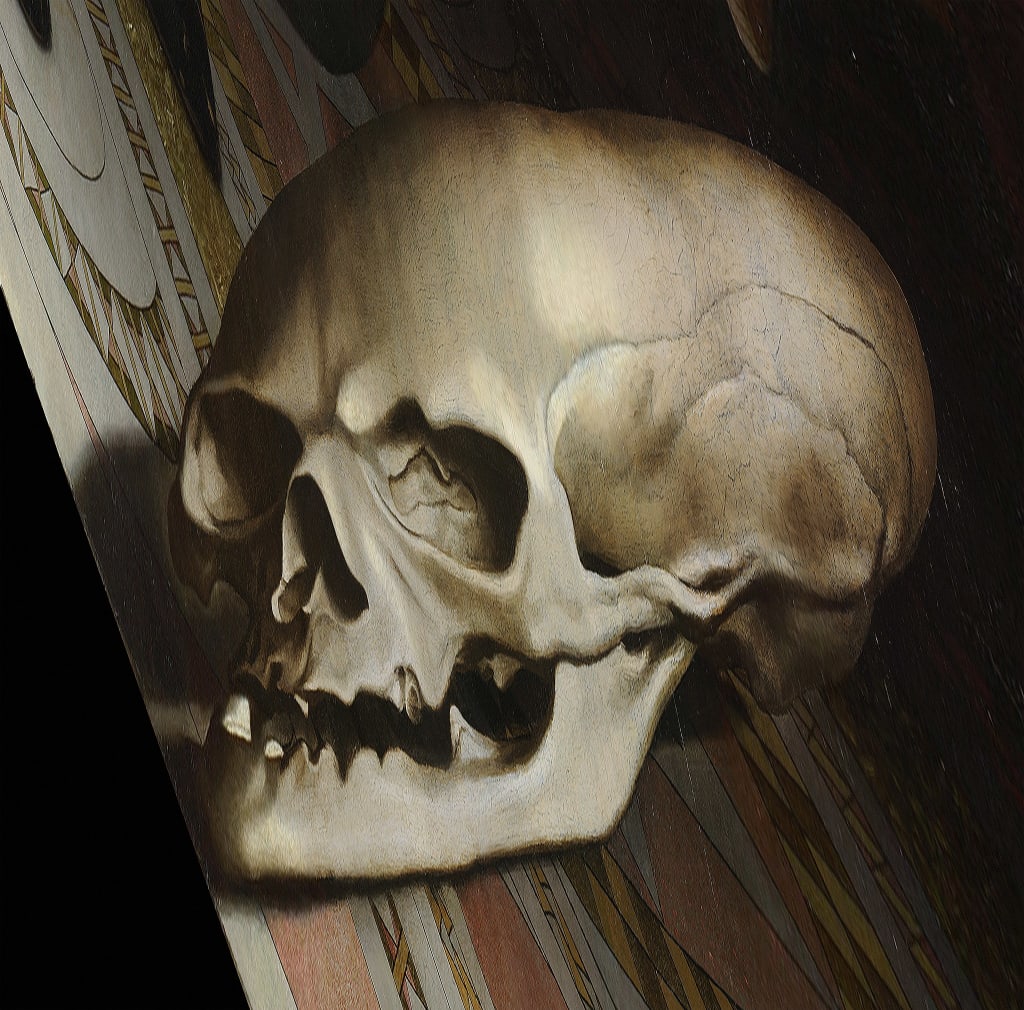
They had been a happy couple, those skeletons in the kitchen, but there was something strange in the man's story.
At the bottom rear of a drawer full of sheets and pillowcases imbued with memories of lovemaking and contented nights just sleeping together was a little box, something hidden, perhaps even hidden from one's mate.
The box was nothing special, cardboard, not much wear, as if concealed and forgotten. He felt a combination of regret and contentment from its touch, a feeling of moving on.
Inside the box was a heart-shaped locket, which Luke touched incautiously, nearly fainting with the love and longing and pain he got from it. He dropped the locket, and it sprang open, spilling torn bits of cardstock on the floor. He cautiously reached for the paper, tentatively touching just a corner of a tiny bit of it.
Joy, and hope, and warmth like he'd never felt before. He slowly adjusted to the feelings as he pieced the document together.
It was a prostitute's health certificate. She couldn't work without it. It was a sign of her commitment to her man when she tore it up, meaning she would no longer sleep with other men for money. She had been so full of hope when she had done that, of leaving behind a life of being trafficked, of having the love she'd starved for all her life. She had known what kind of man he was, a smuggler, a drunkard, a man who moved right into the whorehouse, but had lost herself in love for him, and besides, she thought, I'm a whore, what more can I hope for? A whore. It was an ugly word in an ugly world, but love had made her feel beautiful.
The message of pain in the heart-shaped locket was clear. When the smuggler left again, she sent him away with her love and her pain and her hopes, feeling certain he would never come back. The locket was a prison for the pain of a whore.
And when his adventure was over, the smuggler had returned to the world he'd come from, a world which had no place for a love-starved woman who had sold herself while dreaming of one man she could call her own. He had quit drinking, stopped smuggling, and settled down with the sort of woman he was expected to love, smart, well-educated, a professional and in every way a match for a man from a respectable family.
Luke had been born before the war, but he had no strong memories of the kind of life these people had led.
It was an easy decision for Luke. He would sell the locket to Lin, and keep the bits of torn cardstock to touch and feel the warmth that he, in his desperate life, and never felt on his own.
About the Creator
John MacBeath Watkins
John is a bookseller in Seattle, Washington. He is the author of The Outlaw John Locke and why liberalism is worth fighting for, a book about the radicalism of liberal democracy and the ways Locke's ideas continue to change our society.
Keep reading
More stories from writers in Fiction and other communities.
Miss Persephone's Manual to a Seemingly Ordinary Life
Miss Persephone was found at the dining table, her blue eyes swollen, her tears arriving and retreating like the tides of the ocean. Earlier that day, her family had visited her in the retirement home where she had lived for eight years. It was her eightieth birthday.
By Imola Tóth7 days ago in Fiction
A Heart Worth Saving
Dawn had always suspected her heart was dangerous. Not metaphorically, though she’d had her share of heartbreak, but literally. Every man she had ever loved had died. Not dramatically, not heroically, not even interestingly. They died like losers, which, if she was honest, they had been.
By Sara Wilsonabout 21 hours ago in Fiction
Center Stage with Paul Stewart
*** I'm keen to republish the interviews I did for my series with Vocal creators. It's been a few years and I thought it might be nice to revisit these wonderful conversations. I'll be releasing them one at a time for a few weeks/months.
By Heather Hubler7 days ago in Interview




Comments
There are no comments for this story
Be the first to respond and start the conversation.