
The Ghost on the Map: My 2,000-Mile Journey to a Paris That Isn’t There
In a world where every inch of Earth is mapped, I found a sanctuary in a town that refused to be found.
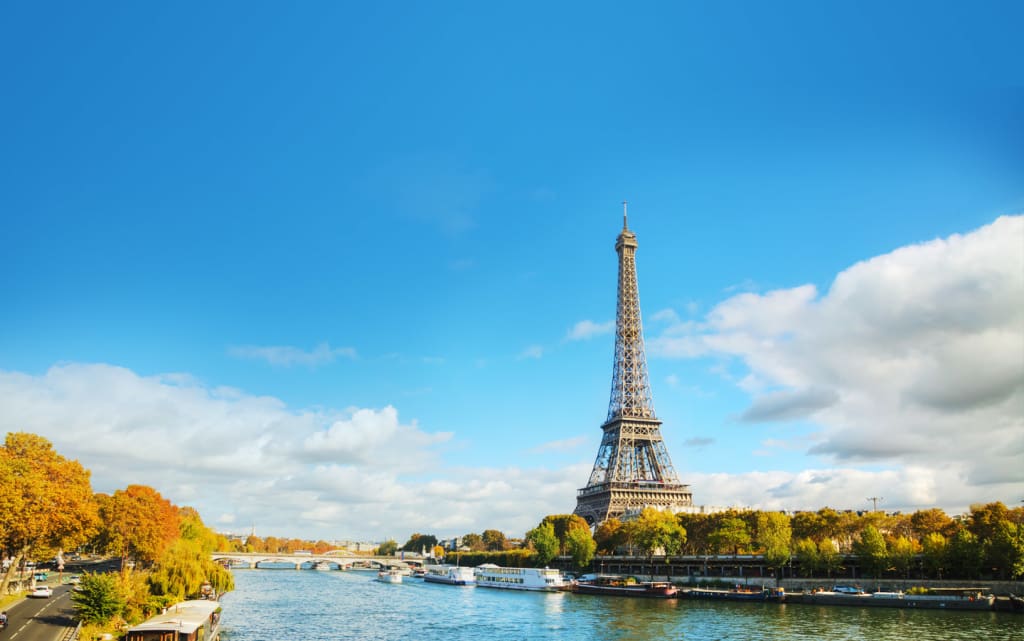
If you type "Paris" into Google Maps, the algorithm will dutifully drop a pin on the City of Light. It will show you the winding Seine, the star-shaped sprawl of the Place de l’Étoile, and enough crêperies to feed a small army.
But if you drive 2,000 miles away from the nearest international airport, deep into the heat-shimmered heart of the high desert where the scrub brush outnumbers the people ten-to-one, you’ll find my Paris. Or rather, you won’t find it.
Google Maps insists there is nothing there but a jagged intersection of two nameless dirt roads and a vast expanse of ochre dust. There is no "Search Nearby" for coffee. There is no Street View. To the digital world, this place is a glitch, a blank space, a cartographic "here be dragons."
Yet, every two years, I pack a trunk with extra water jugs and a spare tire, and I drive until the bars on my phone vanish into a single, mocking "No Service" dot. I travel 2,000 miles to visit a town that doesn't exist.
The Architecture of Absence
The first time I went, it was a dare to myself. I had found an old, tattered physical atlas in a thrift store—the kind with coffee stains and dog-eared corners from the 1970s. On page 42, tucked into a valley that the modern world had seemingly forgotten, was a tiny dot labeled Paris.
When I arrived that first year, I expected a ghost town—the classic cinematic tumbleweeds and creaking saloon doors. Instead, I found an architecture of absence.
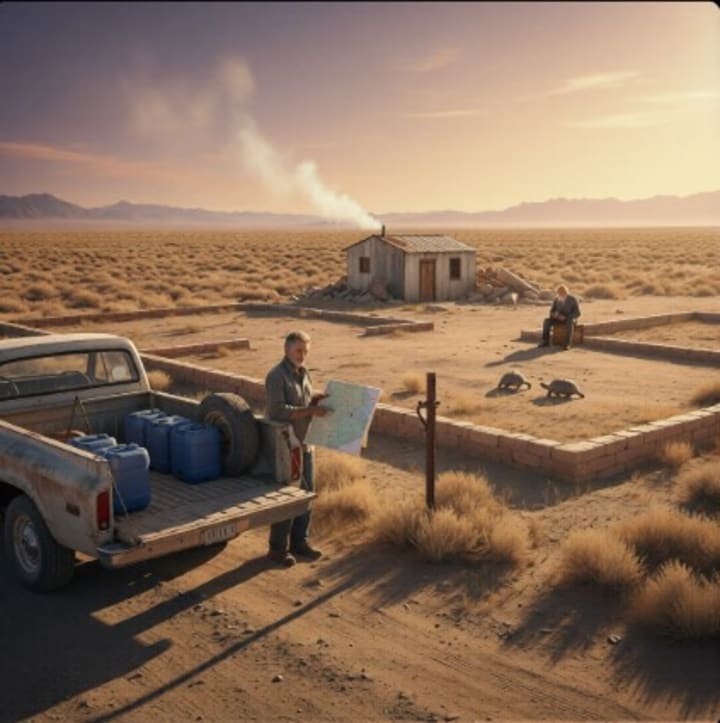
Paris isn't a collection of buildings; it’s a collection of foundations. The "Grand Hotel" is a rectangular perimeter of limestone half-buried in the sand. The "Post Office" is a lone, rusted hitching post standing guard over a patch of wild sage.
Why do I go? Because in a world where every square inch of the planet is indexed, rated, and photographed by a satellite, there is a profound, quiet power in a place that refuses to be seen.
The Resident of Nowhere
On my third trip, I realized I wasn't entirely alone.
About a mile from the "center" of Paris sits a shack made of corrugated tin and silvered cedar planks. This is the home of Elias. Elias doesn't show up on a census, and he certainly doesn't have an Instagram. He is the self-appointed mayor of a town that exists only in his head and my vintage atlas.
"You’re back," he said, not looking up from a piece of juniper wood he was carving. He didn't ask how the drive was. In Paris, time doesn't work in "trips" or "hours." It works in seasons and droughts.
"I brought the books you asked for," I said, handing him a box of paperbacks. In exchange, Elias gave me what I really came for: the gossip of the ghosts.
He told me about the 1920s, when Paris was a hopeful mining camp. He pointed to a dip in the earth where a woman used to teach piano lessons to children who had never seen a real piano. He showed me the "Town Square," which was currently occupied by a family of desert tortoises.
"People think a place is real because it's on a screen," Elias told me once, his voice like sandpaper on silk. "But screens only show you the skin of the world. You come here to see the bones."
The 2,000-Mile Meditation
The drive itself is part of the ritual. To get to a place that doesn't exist, you have to shed the version of yourself that lives in the "real" world.
Mile 500: You stop checking your email at red lights.
Mile 1,000: You start noticing the subtle shift in the color of the soil—from clay red to bone white.
Mile 1,500: You realize that the silence isn't actually silent; it’s a hum of wind, insects, and the cooling of the engine.
Mile 2,000: You turn off the GPS because it’s been telling you to "Return to Highlighted Route" for the last three hours.
By the time I reach the invisible gates of Paris, I am unmoored. I am no longer a "Content Strategist" or a "Social Media User." I am just a person standing in the wind. There is a terrifying freedom in being somewhere that no one can find you—not because you’re hiding, but because the place you’re standing in doesn't officially exist.
Why the "Real" Paris Fails Me
I’ve been to the France version, too. I’ve stood in line for the Louvre and paid twenty euros for a lukewarm espresso near the Eiffel Tower. It was beautiful, certainly. But it was also performed.
In the French Paris, you are constantly aware of the millions of eyes on the city. Every corner is a backdrop for a photo; every meal is a potential post. The city is burdened by its own fame.
In my Paris, there is no performance. The desert doesn't care if you're watching. The ruins don't pose for your camera. When the sun sets over the valley, painting the sky in bruises of purple and gold, it does so with a breathtaking indifference. It is beauty without a witness.
The Map is Not the Territory
There is a concept in philosophy called Simulacra—where the representation of a thing becomes more real to us than the thing itself. We live in an era where, if a restaurant has no Yelp reviews, it might as well not serve food. If a hiking trail isn't on AllTrails, it doesn't have a path.
My trips to Paris are a rebellion against that logic.
Every time I return home, my friends ask for photos. I show them a picture of a rusted nail or a patch of cracked earth. "That's it?" they ask. "You drove 2,000 miles for that?"
I can't explain to them that I didn't go to see "that." I went to see the space between the pixels. I went to remember that the world is much larger, much stranger, and much more secretive than a five-inch glass screen would have us believe.
The Final Horizon
As I left Paris this last time, I watched the town disappear in my rearview mirror. Within ten minutes, the "foundations" were indistinguishable from the rocks. Within twenty, Elias’s shack was a speck of silver lost in the sage.
I pulled over at the edge of the county line, where the first bar of LTE service flickered back onto my phone. My pocket buzzed instantly—a cascade of notifications, news alerts, and "While you were away" summaries. I looked at the map on my dashboard. It showed a vast, tan void. I felt a surge of protective love for that void.
We need the places that Google can't find. We need the towns that refuse to be pinned down. Because as long as there is a Paris that doesn't exist on a map, there is still a part of the world that belongs entirely to itself—and a part of us that can still get truly, wonderfully lost.
About the Creator
George Evan
just be a human
Keep reading
More stories from George Evan and writers in Fiction and other communities.
The Light That Remembered Us
The cold in Chicago didn't just bite; it owned the streets. It was the kind of February wind that whistled through the gaps in the window frames of the high-rise, a constant, low-frequency reminder that the world outside was indifferent to human comfort. Inside Apartment 42B, the air was different. It was clean, filtered, and smelled faintly of the expensive lemon-scented disinfectant used by the cleaning crew that came every Thursday. It was a home, theoretically, but to Clara, it often felt like a gallery where she was one of the exhibits.
By George Evan6 days ago in Families
After the Storm
After the storm of winter snow there sat a small bear by the name Ted, of course. He loves the snow and likes to roll around in it making all sorts of trails and whatever he has a mind to do. He wondered where all the people are, but in a way, he is hoping that they are all snug in the homes maybe drinking hot chocolate-one of his favorite drinks with mini-marshmallows and eating something homemade for he likes this winter wonderland all to himself to romp and play and maybe even catch some fish down by the river.
By Mark Graham3 days ago in Fiction
The Strong Word
Studio lights permitted the viewer enough visual stimulation as a NASA engineer’s workspace. The producer, Latrell “Real Weight” Voight, looked black as root beer. He queued up a video of a documentary depicting the construction of a skyscraper in Wilmington, Delaware a few blocks away. The engineer, Argent “Clean Bill” Boggs, possessed the skin color of an oak tree.
By Skyler Saundersabout 22 hours ago in Fiction



Comments
There are no comments for this story
Be the first to respond and start the conversation.