
The Future of Humanity
It takes a disaster to avoid one.
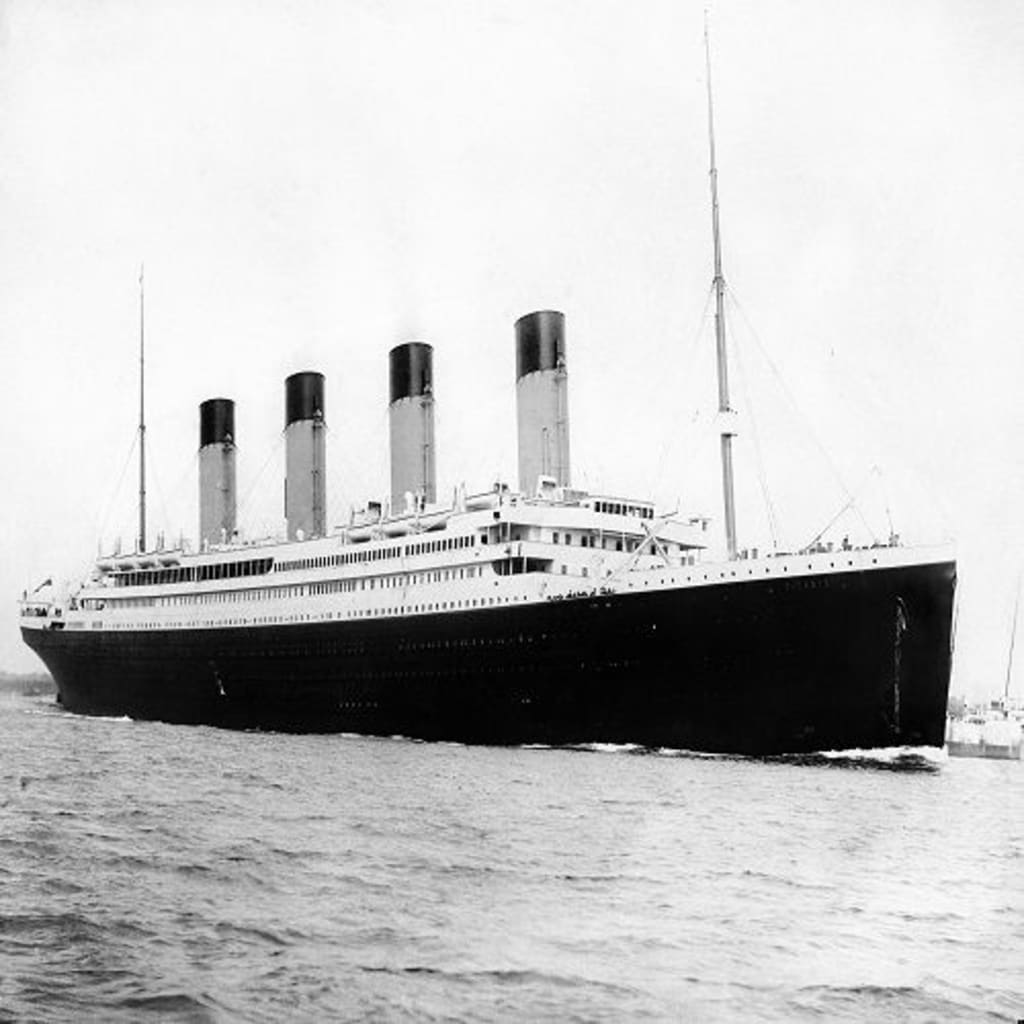
There was a shifting in the ground, as if the planet wasn't as stable as usual. A stiff breeze like that found blowing across a flat, featureless, northern grassland pressed upon her face, mercilessly cold. It breathed through the fabric of her lab coat and the cotton blouse beneath like they weren't there, stroking her skin with gooseflesh. Then her legs gave way.
Geneve Carlton groaned, and rolled over onto her front and pushed herself off the ground. The starbursts erupting behind her eye sockets painfully diminished. That's when she noticed the stone pavers she had been standing on a few minutes ago were gone. Polished wooden boards stretched away from her now, ending only six feet to the left where they dropped off sharply. A dark vastness was all that lay beyond, and only metal railings prevented her sliding into the night. A quartet of huge orange towers capped in belching black pointed the way forward.
Well, it worked. This is the ship. Carlton looked around with something approaching scepticism, like she didn't quite believe she had done it. Fortunately, a circle of plastic hanging on one wall belayed the doubt that told her she had miscalculated. This was the right ship. This was the RMS Titanic.
The Titanic's maiden voyage had been a success, a testament to the engineering standards at the time. Had it not been for the near miss of the iceberg in the North Atlantic there might have been more to report. As it was, the ship docked in New York and was subsequently forgotten about until The Great War began a couple of years later, when it was used to ferry troops to Europe. Another five years after that it met an inglorious and unmemorable end, finding itself back in the shipyards of Southampton being decommissioned.
It would be over a century later when nuclear detonations wiped out 75% of the world's population and disrupted the Earth's ecological balance past the point of salvation, forcing humanity to look elsewhere or risk extinction. Construction began around the International Space Station in 2032 and it took thirty years for the space station to be transformed into the Intrepid. During this time the Earth became more and more uninhabitable, as if its human settlers weren't bothered, like they didn't need to care any more. It was like an elderly relative put in a home and left to rot.
The Intrepid was a technological Noah's Ark, carrying everything the people aboard it would need, but unlike that story this one did not make it through the storm. The day came when the ship blasted off on its doomed mission into the stars, but in the fifth month of its journey The United Nation's Star Ship was struck by a comet. There were no life pods. No escape craft. There had never been the need for such things before so why waste resources to include them? The entire ship was lost because nobody had considered the possibility of disaster, that something might not go to plan; Humanity's arrogance was humanity's downfall. Millions of lives, human and animal, gone in an instant.
When contact was lost with the UNSS Intrepid, those few who had decided to remain behind on their dying homeworld felt it was their duty to rebuild civilisation, but they were not nearly enough to maintain a stable population growth throughout the generations. They all knew this, but tried anyway. All except Carlton. She didn't look to the future. Instead, she looked at the past.
It had taken Carlton many months of research, but when she discovered the Titanic's great flaw she knew that while hundreds may die the grand vessel would ultimately save mankind. Her plan may not be as solid as the ship she now stood upon, but it was her only plan. It had to work. For the good of humanity's future this ship couldn't make it to New York City. Not this time.
The scientific breakthroughs used to power the Intrepid on a path that would take it out of the solar system were put into reverse. Folding space/time to thrust a starship out into the black was now miniaturised and focused, thrusting a single individual back to a singular point in time: 22:00 hours, April 14. The Titanic's sailing path was documented, the moment of the near miss clarified. Carlton had worked out exactly the global co-ordinates she would need to occupy. Getting onto the Titanic was the easy part, Carlton reflected. Now she had to do the impossible. Now she had to sink it.
Carlton found out that the near-miss iceberg had been noticed at the last minute and avoided, so she did some more math. She calculated the undersized rudder, the ship's poor turning capacity. She knew 7 knots was all it would need to ensure the near miss was not a miss at all.
7 knots. Maybe an hour and a half. There was not a moment to waste.
About the Creator
Paul Wilson
On the East Coast of England (halfway up the righthand side). Have some fiction on Amazon, World's Apart (sci-fi), and The Runechild Saga (a fantasy trilogy - I'm a big Dungeons and Dragons fan).
Keep reading
More stories from Paul Wilson and writers in Fiction and other communities.
Where did February go?
Is it really already the middle of March? All of February has blurred into one vast memory, and I don’t know what I did or where it went. Outside, there was frost, and for the first time in a long while, Prague was wrapped in a white coat and stayed that way, the way winters used to be. Like the city, I wrapped myself up too, and from the safety of my home, I watched from beneath the covers how quickly life can pass by when one isn’t paying attention.
By George Roastabout 3 hours ago in Fiction
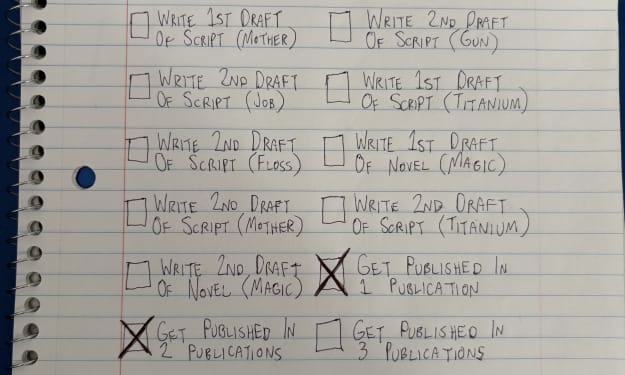
Early March 2026: 4 Goals Accomplished
It's early March and I've now accomplished my 4th writing goal for the year of 2026. Before diving into the behind-the-scenes of it... why not tell you up front what that accomplishment was? I was published in a 2nd publication for this year. Published in Helix Literary Magazine out of Central Connecticut State University. You can read it for free right now!
By Stephen Kramer Avitabile3 days ago in Writers


Comments
There are no comments for this story
Be the first to respond and start the conversation.