
The Forgotten Room of the Divine Feminine
Mira's story

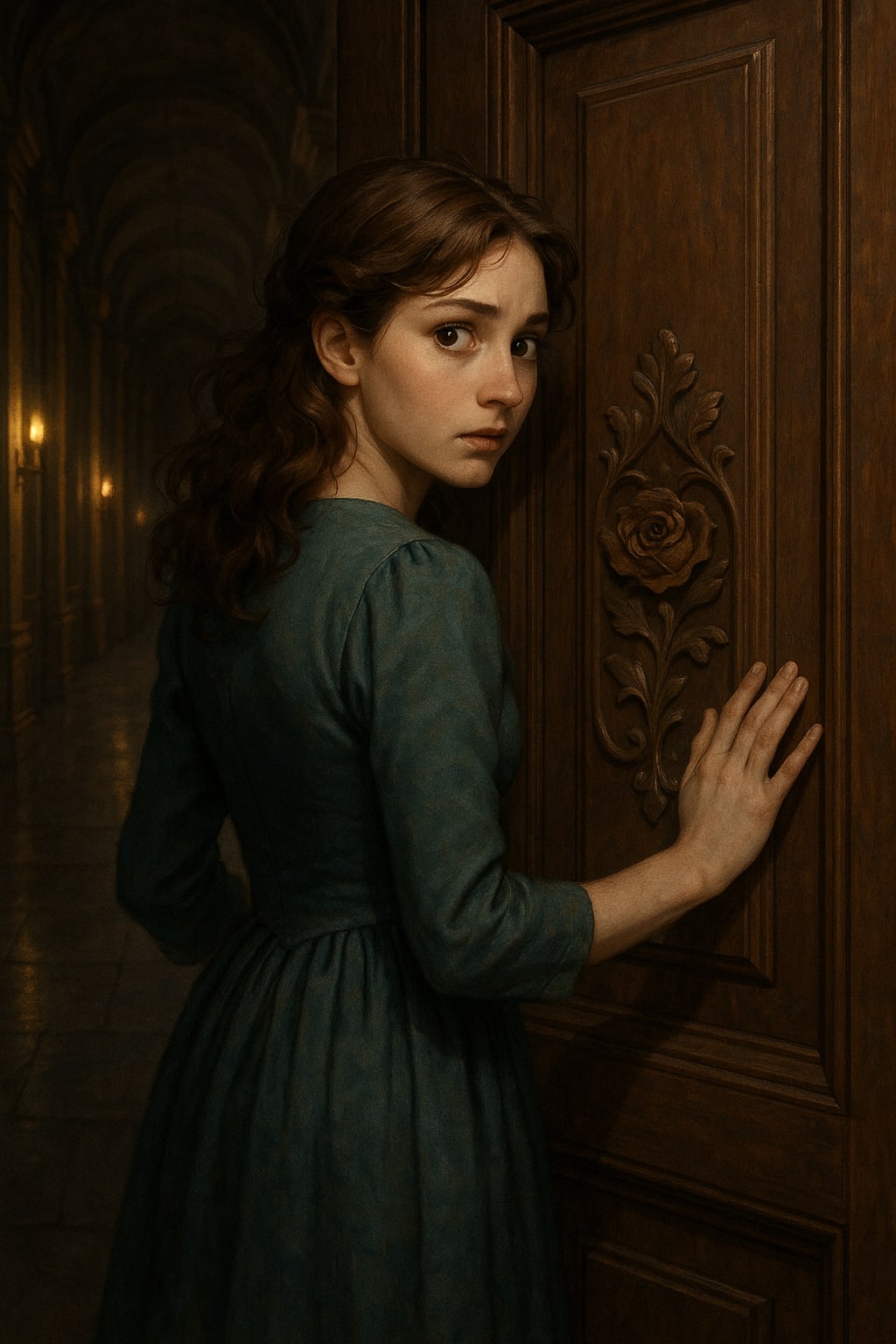
There is a room in the Great Temple that no one speaks of.
It sits at the farthest end of the Hall of Libraries, beyond the galleries of kings and prophets, past the marble altars memorializing battles and miracles. Patrons walk past it without noticing. Priests avert their eyes when they approach. Scholars cough and scurry along.
The door bears no inscription. Only a symbol: a seven-petaled rose. For centuries, the room remained sealed. Not locked—just sealed by the indifference of the world. The Elders claimed it housed discarded narratives—nothing of use. A dusty archive. An abandoned annex. A place for half-remembered women whose stories, they said, could not be verified. And so the room was forgotten.
Until the day a young seeker, barely a Fool on her path, felt a tug in her chest. It was a soft, persistent pull, like a voice speaking through her ribs rather than her ears. Her name was Mira, a wanderer who slept beneath olive trees and wrote prayers on the soles of her feet so she’d carry them wherever she walked.
On the morning the voice called, Mira stood at the end of the Hall, staring into the ether. Then she felt it, a magnetic ache drawing her to the door with the seven-petaled rose, carved upon the door. Her pulse quickened. “What’s in there?” she asked the nearest priest.
He stiffened. “A forgotten storeroom.”
“But what does it store?”
“Nothing you need,” he said sharply. “Nothing anyone needs.”
The tone told her everything.
Mira waited until the hall emptied.
Then she placed her palm upon the silent door. Her fingers trembled. A breath of warm, perfumed air slipped through the crack—jasmine, frankincense, something older than language. She pushed the door open, expecting dust to rise, dodging cobwebs that did not exist. The air was fresh, like spring. The room glowed as though lit from within the walls themselves. Gold shimmered across frescoes. Cobalt arched in celestial patterns overhead. And in the center of the room stood four statues—life-sized, radiant, unmistakably alive despite their stone forms.
Mira entered, with reverence and with pause.
The moment her foot stepped over the threshold, the door closed behind her with a gentle, decisive thud.
She did not turn back. She felt calm.
The Four Feminine Archetypes
At first she thought they were mere sculptures. But as she approached, she felt their gaze—warm, knowing, patient. Each figure represented a woman the Church had once honored, then buried under centuries of interpretation, silence, or suspicion.
The first, Sophia, veiled in starlight, eyes like wells of ancient memory. Wisdom Herself. The architect of creation, forgotten even by those who claimed to guard the mysteries. Buried in jars, the Pistis Sophia, the Nag Hammadi Library emerged in Egypt. Its discovery, epic and intended.
Next, there was Ruth, wrapped in harvest-gold, hands strong from gleaning, posture humble yet unbowed. The stranger. The widow. The kinsman, redeemed. Her people held the ancient knowledge of how to reap and how to sow. Her people told stories of how God taught them how to garden. The one the world almost lost because she never raised her voice.
Third, Mira saw Mary, Mother of Jesus. A fierce, contemplative woman with fire in her eyes. Not the sanitized maiden of paintings—but the one who said yes to an impossible calling and carried the bridge between two worlds, in her womb. The once scared, unmarried woman. The Holy Spirit came on her and then she birthed the Savior. She stood now with caliber and confidence.
The Last one to step forth was Mary Magdalene. Reduced to the Bible's footnote, but was the apostle to the apostles. She was Jesus' favorite. He kissed her on the lips. Peter was very jealous of her and split off on his own trip. Petrine versus Marian started way back then. The gospel of this woman embodies receptivity, holiness, and the faithful, maternal receiving and nurturing of God's word. Jesus resonated with her vibration, so she was the first to see him after the resurrection, Jesus' beloved whom history reduced to a caricature.
Mira approached them with reverence.
A hum of vibrations rose from the floor—a vibration that crawled up her legs, into her ribs, through her heart and flowed out her head. Then--The statues breathed.
Sophia opened her eyes first.
Sophia Speaks, “Child of dust and dawn,” she said, her voice like wind moving over ancient water, why do you think no one has entered this room for so long?”
Mira swallowed. “Because they buried you.”
Sophia smiled sadly.
“No. They remembered me too well. They feared what would happen if my wisdom rose again.”
The other statues, also animated, and hovered down from their pedestals, as if gravity were optional. Mary, Jesus Mother approached next. Her presence felt like oil poured slowly over troubled waters. “Do you know why they hid us?” Mary asked.
Mira shook her head.
Mary touched her shoulder and said, “Because we speak the truths, the church hierarchy, cannot hear without changing their minds.”
Ruth placed a warm hand over Mira’s and shared, “And because our stories undo the hierarchies they spent centuries building.”
Magdalene circled her slowly, eyes bright as embers. She said, “And because love—real love, divine love—terrifies them.”
A soft crack sounded behind them. The door was sealing itself. Mira’s heartbeat quickened. “Am I trapped?” she whispered.
Sophia touched her cheek. She said, “Not trapped, beloved. Initiated.”
The Forgotten Chamber Awakens. The room transformed. Walls dissolved into scenes—living murals displaying the lost feminine history of the sacred. Mira saw Sophia birthing the cosmos through a breath and a whisper. She saw Ruth gleaning barley under an endless sky, her loyalty more sacred than any law. Mary receiving a revelation from an angel who brought to her the news of Jesus' birth. Magdalene running breathless from an empty tomb, her joy a torch that lit the early Church. She was the first person that Jesus' appeared to when he rose, because he resonated with her vibration most.
Mira wept. The four women gathered around her, forming a circle. Sophia lifted her chin and spoke, “Child, the world has forgotten what we hold. But inside every seeker is a sealed room where the Divine Feminine waits.”
Magdalene took her hand and said, “You opened your room today.”
Mary laid a gentle palm on Mira’s back. “Today, you were ready to hear what was always yours to know,” she encouraged Mira.
Ruth leaned close, her voice steady and grounded. “Now you must decide what to do with it.”
The murals dimmed and the chamber quieted. Sophia spoke again, her voice now like distant thunder, “You are the key, Mira. When you leave this room, the door will not close behind you. It will open in every heart you touch.”
A warmth spread through Mira’s chest—not fire, not light—something softer. Something ancient. Recognition. Remembrance. Belonging.
The Path Forward
The women stepped back onto their pedestals.
The glow dimmed.
The room settled.
Mira understood.
The room had never been abandoned.
It had been protected until someone brave enough, hungry enough, wounded enough came seeking the truth buried inside it.
Sophia met her gaze one last time.
“Tell them,” she whispered.
“In whatever language your soul chooses—
tell them we were never gone.”
The room exhaled. And so did Mira.
The door unsealed. Mira turned the handle and stepped out into the Hall.
The priests gasped and the scholars stared.
Dust fell from the ancient symbol of the seven-petaled rose as though waking from centuries of sleep. Mira walked past them all, her footsteps steady. Behind her, the room pulsed once with golden light—then settled into stillness.
But it was a different stillness now. A living one, with breath, with depth. Awakened and restored the Divine Feminine had been entered into once again. Mira, the vessel, of the heartbeat of the seven petal rose.
About the Creator
A.K. Treadwell
Grateful. Recovering. Alcoholic. Preacher's Daughter. I am a juxtaposition. I am the Tale of Two Cities. I sojourn in this foreign land, passing through, declaring the way of the Lord. Follow me, as I follow Christ.
Keep reading
More stories from A.K. Treadwell and writers in Fiction and other communities.
The Shadow Rooms of the Self
The spaces we avoid. That is the shadow self. This the space where archetypes hide and are stored upon a shelf. Memories locked behind closet doors, like a doll named Chuckie. We get to know our shadow selves, those of us are lucky.
By A.K. Treadwell 2 months ago in Fiction




Comments
There are no comments for this story
Be the first to respond and start the conversation.