
*The Forgotten Bench*
Where memories linger long after footsteps fade.

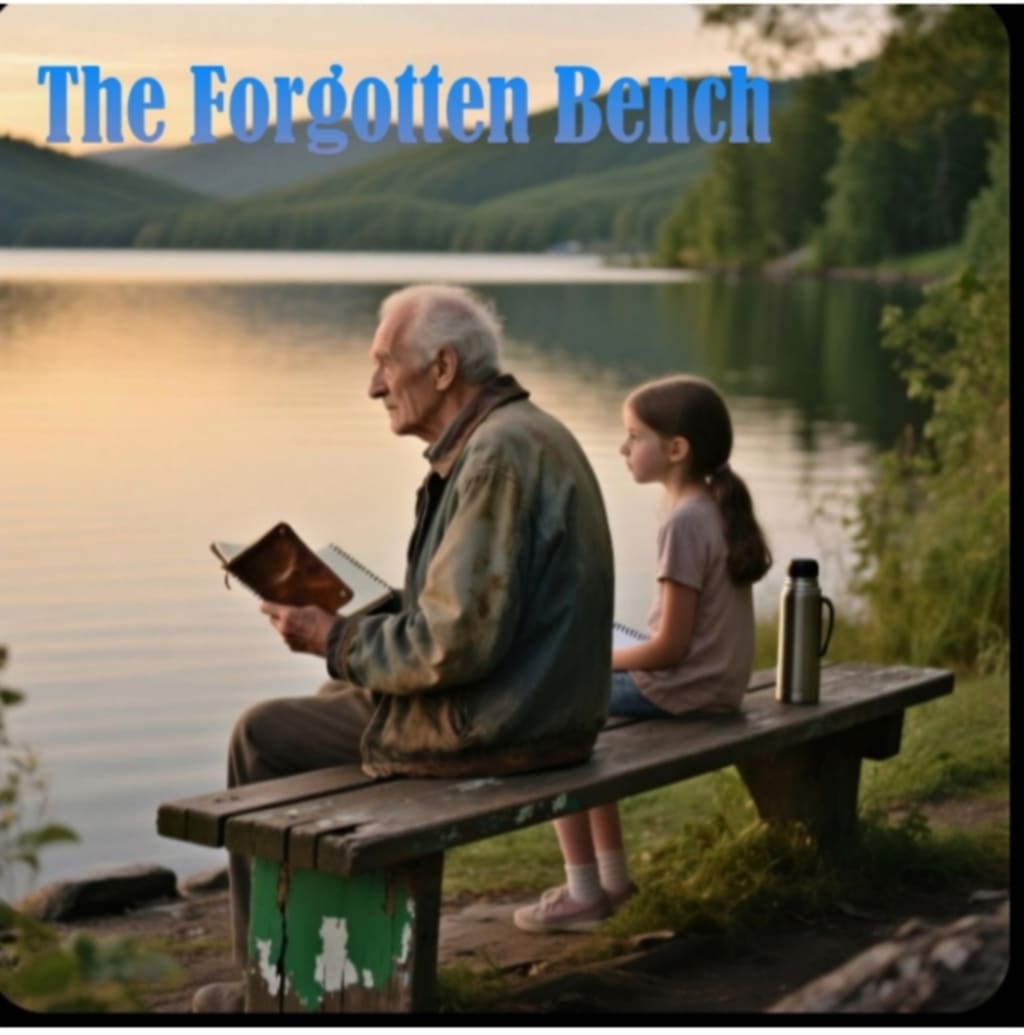
In a small town cradled by rolling hills and thick forest, there was a wooden bench by the lake. It wasn’t grand—its green paint had peeled, one leg was uneven, and the wood bore the soft scars of time. But if you sat there long enough, you might feel something linger in the air—quiet, familiar, like the echo of a laugh carried by the wind.
Every evening, an old man named Haroon came to sit there. He wore a faded jacket, carried a worn leather notebook, and never spoke to anyone. He’d open his book, read a few lines, then gaze out over the water, as if waiting for someone.
Most people barely noticed him. Children splashed at the shore, dogs chased sticks, and runners hurried past with their headphones on. But sometimes, someone would pause and wonder: Why this bench? Why every day?
Decades ago, this spot had been alive with color and conversation. That was when Haroon first met Amna.
She was an artist, always with a sketchpad tucked under her arm. One spring afternoon, she set up her easel near the bench, trying to capture the way the sunlight danced on the lake. Haroon, then a quiet man in his thirties who wrote stories no one read, had asked if he could sit nearby. She smiled and said yes.
They began talking—about clouds, about books, about the way silence could be just as meaningful as words. That day turned into another. And another. Soon, Sundays became their ritual. They met at the same bench, rain or shine.
He wrote stories inspired by her paintings. She painted scenes from his words. They dreamed of a book—half prose, half canvas—something that would carry their love into the world.
But life, as it often does, changed the course.
Amna grew tired. Then weaker. Doctors spoke in hushed tones. Haroon stopped writing. The bench sat empty.
Even when she could no longer come, he kept going—reading her old letters, whispering stories into the quiet. He’d bring her favorite tea in a thermos, pour a second cup, and leave it beside him, steaming in the cold.
After she passed, during the harshest winter the town had seen in years, people thought he’d stop visiting. But Haroon kept coming. Grief, he learned, doesn’t fade—it settles. And the bench became the place where his love could still breathe.
One afternoon, a girl named Laila sat on the grass nearby, watching him. She was twelve, thoughtful, with a notebook full of half-written poems.
“Do you come here to be sad?” she asked one day, sitting beside him.
Haroon looked at her, then at the lake. “No,” he said. “I come here to remember someone who taught me how to feel.”
She came back the next day. And the next. He read her a short story he’d written years ago—about a painter who painted the wind. She told him about a poem she couldn’t finish.
“Start again,” he said gently. “Write what you’re afraid to say.”
Slowly, the bench became more than a memory. It became a place of words, of quiet courage. Laila brought her notebook every week. Haroon offered no grand lessons—only patience, and the belief that stories matter.
Then one evening, he wasn’t there.
Or the next.
The townspeople spoke in soft voices. Haroon had passed, peacefully, in his sleep. In his hands was his notebook, the pages filled with new stories—some unfinished, some dedicated to her.
On the first page, in careful script:
“The bench is yours now.”
Laila returned the following evening. She sat where he used to sit. The wobbling leg had been fixed. Someone had repainted the bench in soft green. She opened her notebook and began to write.
Years later, if you walk by the lake at dusk, you might see someone sitting there—a teenager with a journal, an old woman sketching the trees, a child reading aloud to the breeze.
And on the side of the bench, a small brass plaque reads:
“In memory of love, words, and the art of never forgetting.”
About the Creator
meerjanan
A curious storyteller with a passion for turning simple moments into meaningful words. Writing about life, purpose, and the quiet strength we often overlook. Follow for stories that inspire, heal, and empower.
Reader insights
Outstanding
Excellent work. Looking forward to reading more!
Top insights
Compelling and original writing
Creative use of language & vocab
Easy to read and follow
Well-structured & engaging content
Excellent storytelling
Original narrative & well developed characters
Expert insights and opinions
Arguments were carefully researched and presented
Eye opening
Niche topic & fresh perspectives
Heartfelt and relatable
The story invoked strong personal emotions
Masterful proofreading
Zero grammar & spelling mistakes
On-point and relevant
Writing reflected the title & theme
Veil of Subconscious Awakening
Images slide behind my eyelids like film cadres, bursting with meanings. In one moment, I’m speeding down the highway, making the speedometer swing wildly like a frantic pendulum. The next moment, I’m plunging from a falling plane, slowly crashing earthward. At home, I meet black cat’s green, googly eyes staring at me from the cavernous hollowness of the kitchen. When I turn for a moment, it disappears, and all I can see is a pair of blue suede shoes set up against the wall. I pick them up and put them on. When I glimpse at them again, they’ve become black as night, making me blink and flinch.
By Moon Desert7 days ago in Fiction




Comments
There are no comments for this story
Be the first to respond and start the conversation.