
The Falcon's Son
Blessed by the gods cursed by fate


There weren't always dragons in the Valley. As he wiped the sweat from his brow, Tekem’s eyes lit up. His grandfather was about to tell him the story of the serpent dragons, which was his favorite.
There was a time when the Pharaohs were weak. The Hyksos had enslaved the proud people of Egypt. Breaking the shackles of slavery, a new dynasty arose restoring the dignity of the realm. The Pharaohs of the New Kingdom expelled the Hyksos from Egypt and drove them back to the Levant.
The Pharaohs wanted to ensure that their country would never again be humiliated. Egypt would no longer be a welcoming paradise to be taken advantage of, and they would fight back against those who disgraced them. To safeguard their nation, the rulers of Egypt waged a war against the kings of the Levant.
Years of bloody conflict with the Levantine rulers yielded little.
When Pharaoh Thutmose ascended the throne, everything changed. Thutmose rejected his ancestors’ ways of fighting. Egypt’s foes were forced to witness hell on Earth. The kingdoms of the Levant had to be punished. But his success depended on a divine intervention by the Sun-god, Ra. Thutmose approached Ra’s head sorceress, Senet, for help.
Senet summoned the forces of darkness. She invoked Apep, the king of demons who was a serpent dragon. Apep was the chief nemesis of Ra.
Tekem’s grandfather’s throat was parched. “Bring me the beer,” he bellowed. Tekem rushed to the house to get a pitcher and a glass for his grandfather.
“Apep and Senet struck a deal. The sons of Ra, the Pharaohs, wouldn’t hurt the demons in the future for Apep giving two of his dragons to the Pharaoh,” the old man remarked while chugging the beer.
The deal was a dark secret that was not supposed to leave the royal palace’s closed doors. But when you have two serpentine dragons blitzing through the sand faster than the wind, it is hard to hide the secret.
Pharaoh Thutmose led an enormous army to face off with the kings of Levant at Megiddo. Megiddo, in the Valley of Jezreel, controlled the trade routes between Egypt and Mesopotamia. After centuries of foreign rule, Egypt wanted to ensure that the Levantine kings did not dictate terms to the Egyptians. A titanic battle erupted between the sons of Ra and the lords of the Levant.
“The valley was soaked in blood, but the allies were too powerful. We were losing men. Our chariots were smashed. But Thutmose had one trick up his sleeve. The dragons of Apep” remarked the old man, now calm after having the drink.
“The dragons zipped through the desert and the narrow mountainous valleys. Even though they couldn't soar, they were awe-inspiring creatures. No mortal could touch them. The fearsome beasts turned the tide of the battle. We were victorious,” boasted Tekem’s grandfather.
The dragons burned Megiddo to the ground. Because of the devastation, the name of the battle became immortal as “Armageddon”. The victory was a turning point in Egypt’s history.
Tekem’s grandfather loved telling the story of Thutmose's triumph at Meggido to his grandson. When Tekem heard stories about Egypt’s glory, tears of joy streamed down his cheek. Since childhood, he aspired to become the Pharaoh’s bodyguard. He had the spirit of a warrior. Though he desired to be a servant of Ra, he knew his partial eyesight disqualified him from joining the army, let alone serving in the Pharaoh's elite guard.
The Pharaoh's burden
Ramses, the young Pharaoh, sifted through his papers. He was searching for an important scroll. Senet gave Thutmose a papyrus containing a magic spell. During times of war, any Pharaoh could use the spell to summon the dragons.
No one had seen the scroll in the two centuries since Armageddon. None of the Pharaohs who followed Thutmose required it. But Egypt was now facing a threat unlike any other.
The Hittites were a rising superpower based in Anatolia. They had razed the magnificent city of Babylon to the ground. City after city in the Fertile Crescent had fallen to their sword.
“What news do you bring?” a visibly distressed Ramses asked.
“O son of Ra, the Hittite ruler Muwatalli, is a skilled warrior. He has convinced a hundred nations to join him,” replied the spy, covered in sweat and dust.
“That is not news; I am well aware of the Lord of Hatti’s power,” Ramses said.
“O exalted one, the sword isn’t his only skill. The gods bless him. His magic is unparalleled in the realm. The kings surrendered to him because of his magic, not his sword. They were transfixed!”
The messenger was gasping for air as he told Ramses about the might of the Hittite king. The young Pharoah knew a war with the Hittites was inevitable. He dreaded the idea of facing a magician king who could use unknown spells on his soldiers.
“You can go now. Send in my advisers,” said an absent-minded Ramses as he forgot what he was searching for and started looking for his glass of wine.
The Pharaoh was only twenty-four years old when he took the throne from his father Seti. Egypt’s power had dwindled since the triumph at Megiddo. It has lost a lot of territory to the Hittites and the Nubians. The era of Thutmose and the dragons of Apep was long gone.
Generations later, complacency and fear had taken root. The kingdom had suffered because of Pharaoh Akhenaten’s misguided attempt to marginalize Ra and the other gods during his reign. Meanwhile, Egypt’s enemies grew stronger. Ramses knew he couldn’t repeat the mistakes of his ancestors. Thutmose was watching him from the Field of Reeds, the Egyptian afterlife.
The baby in the basket
On the banks of the River Nile, a reed basket touched Kelesh’s knee while he was bathing and praying to Ra. The basket was heavy. Lifting the object, Kelesh discovered a crying baby inside. No one knew who the parents were.
Kelesh dashed back to his house. He was a scribe who worked at the royal palace in Thebes. Years of hard work and study had earned him a prestigious position.
Kat, his father, worked as an accountant at the Temple of Horus. Kat kept track of the amount of grain, beer, meat, and silver farmers received as payment for their crops and livestock. He knew Kelesh was smart and talented from a young age. Kat sent his son to train as a scribe. It was the best job for Kelesh and guaranteed a good life.
Kelesh lived with his wife, Ara. They had been trying for a child since they were married. Unfortunately, Ra was yet to bless them.
“We’ll keep him,” Ara exclaimed upon seeing the baby. She was ecstatic. “No! We must find his parents!” Kelesh yelled. But common sense prevailed. The baby's parents had abandoned him.
“Let us name him Tekem,” Ara said, unable to hide her excitement. On the baby’s right wrist, Kelesh noticed a distinct mark. It was an eye. Kelesh did not know what the symbol meant. He had read in the texts that Horus, the falcon god, had lost his eye while fighting Set, the storm god. But Kelesh thought little about it.
A few minutes later, Kelesh noticed a falcon flying over his home. Was it a sign? Kelesh was not superstitious, so he ignored the bird. In Egypt, falcons were common.
Tekem grew up in a comfortable home with plenty of food. His father taught him to read and write at a young age. But Tekem liked to play with Kelesh’s wooden Khopesh, a sickle-shaped sword. Whenever soldiers passed by his house, Tekem would stand there and fantasize about joining them someday.
A plague struck Egypt when Tekem was nine years old. The epidemic claimed the lives of Kelesh and Ara. Tekem became ill, but he pulled through. He was weaker and lost sight in one eye. After recovery, he covered his blind right eye with a patch.
Soon after, Tekem moved in with his grandfather. Kat was literate, but not as knowledgeable as Kelesh. He did everything he could to keep Tekem in school. But when he saw how restless the boy was around soldiers, he hired a trainer for Tekem's weapons training.
Tekem proved he was a skilled fighter. Although he was blind in one eye, he quickly learned the basics of fighting. Tekem’s desire to join the Pharaoh’s guards seemed to be a distant dream, but he would not give up.
When he was fourteen, Tekem asked his grandfather for help with physical training. Kat was a wrestler in his youth and has continued to support the sport throughout his life. Impressed with Tekem's progress in weapons training, Kat decided to enroll his grandson in a local wrestling club.
Tekem couldn’t believe his luck. He felt like a caged bird who was set free. He could now train as a warrior instead of spending all his time reading.
The Lord of Kadesh
“Where are the assassins I sent to Hatti?” an angry Ramses remarked. His advisers were sweating. Though the Pharaoh was young he commanded respect and did not tolerate excuses from his advisors.
“Have you heard from them?” the Pharaoh inquired.
“Sire…..”
“Silence. I know you have failed” screamed Ramses.
“But O divine one, it was not because of our lack of trying. The Lord of Hatti sensed their energy and turned them into stone.” a sheepish voice murmured among the council of advisors.
“We’ve been losing territory since my father took over. You were supposed to advise him on how to win lands rather than lose them! Give me one good reason I shouldn’t feed you inept knuckleheads to the crocodiles. Maybe I’ll replace my advisory council with my lions, they have more courage than all of you!” roared the Pharaoh. His rage shook the palace halls.
“Sire, please forgive us. But the situation is not hopeless. We will strike Hatti before Muwatalli attacks us.” responded one of the council members gathering courage.
Ramses smirked at the idea. “And how do you propose we go about doing so? Just march our armies into the jaws of death against a hundred nation army led by a wizard warlord?”
“There is a solution, sire. The city of Kadesh has a king who is an opportunist. Muwatalli captured the city and forced The Lord of Kadesh to give his daughter’s hand in marriage to the conqueror. The show of force insulted the proud king. He is waiting to revolt. If a powerful emperor drives the Hittites out of his city, he will change sides “said Djeser, the seniormost advisor.
“And one more thing O son of Ra. The Lord of Kadesh holds the key to the enchanted forest, which contains the valuable cedarwood. With the help of the wood, we can construct the most powerful ships to take Hattusa, the Hittite capital, by storm.”
“You talk as if you have led such campaigns when you told my father to hold back. Why should I trust you?” said Ramses in a mocking tone.
“If I may say so, sire, I have contacted the Lord of Kadesh. He sends a message for the Son of Ra.” Djeser produced a letter from Kadesh’s king requesting the Egyptians to take his city from the Hittites.
Ramses’ eyes gleamed. He saw an opportunity. If the Egyptians conquered Kadesh, more cities would rise against the Hittite oppressors and declare independence.
But it would not be easy. If only Ramses could summon dragons like Thutmose. Ramses was not the type to play it safe.
“Begin war preparations, but do not inform the Lord of Kadesh. We don’t know if he’s luring us into a trap. He surrendered to the Hittites without a fight; perhaps the Muwatalli is using him as bait,” the Pharaoh said, as he walked away towards his private chambers
The serpent's eye
An announcer came to Tekem’s neighborhood.
“The Pharaoh wants all men over 16 who are healthy and able-bodied to join the army. He will pay you well and you have the chance to serve Ra. Horus is watching because he wants his best sons to defend Egypt,” announced the army recruiter.
Tekem’s eyes sparkled. Kat heard the announcement and knew his grandson wouldn’t be able to hold his excitement. Since he was twelve, the boy had been preparing for this moment. Kat had lost his son and daughter-in-law. Tekem was the only person who remained in his life. But he knew the gods had chosen Tekem for greater things. Kat didn’t have the heart to stop his grandson.
Tekem showed up at the recruiting games, eager to enlist. But the commanding officer for the new recruits stopped him.
“You can’t see with one eye, boy. You will be a liability. “
“Please give me a chance to prove myself. I beg of you.”
“Very well then. Do you see a spinning disc? It has a serpent with a ruby eye. Can you see it?”
“Yes sir,” said Tekem. The spinning disc was 400 yards away. The serpent’s head wasn’t fixed, it kept moving with the disc.
“Your mission is to take out the ruby from the serpent's eye with an arrow. So far, all new recruits have failed; if you succeed, you are in.”
Tekem knew the task was daunting. A one-eyed archer was unheard of. In the back of his mind, he had hoped for the chance to use the Khopesh in the sword challenge. But he was prepared for anything that came his way.
Tekem fixed his gaze on the serpent’s eye. Sweat streamed down his forehead. He looked up at the setting sun. The snake’s eye glowed like a scarlet star. Tekem looked at the eye-mark on his wrist. Deep down, he knew the gods had blessed him.
He let the arrow fly. Before anyone could blink, the arrow pierced the air and hit the ruby. The commanding officer was stunned. He had no choice but to keep his word now.
The crowd of soldiers watching the event became ecstatic. They saw Tekem as a divine leader. A 16-year-old boy had become their favorite.
“What is going on? Who is this boy?” said a hoarse voice. It was Ahmose, one of the Pharaoh’s generals, and also his distant cousin. “Sire, he has shown great skill unheard of in new recruits. He fights like a seasoned veteran.” said the commanding officer, bowing his head.
“Silence fool, he is blind, can’t you see? Those who can’t see have no place in the army. Do you want us to lose?”
Tekem’s feet sank. He had passed the test, but the curse of the plague was still following him. Tekem was about to walk away, resigned to being treated like a second-class citizen when he heard a voice.
“Wait, young man…. Who are you to say who should join my army?” Tekem froze. It was the Pharaoh.
“I’ve been watching the recruiting games from afar. This boy has surpassed everyone. Send him to the Ra division. He’ll join the mission to take Kadesh. Begin his chariot training,” said Ramses as he looked at Tekem with admiring eyes.
No one dared to speak after the Pharaoh if they valued their lives. Tekem was shell-shocked. Tears of joy rolled down his cheek. All he could think of was rushing back home and hugging his grandfather.
As he gazed up into the sky, a shadow fell on his eyes. A falcon was flying over him.
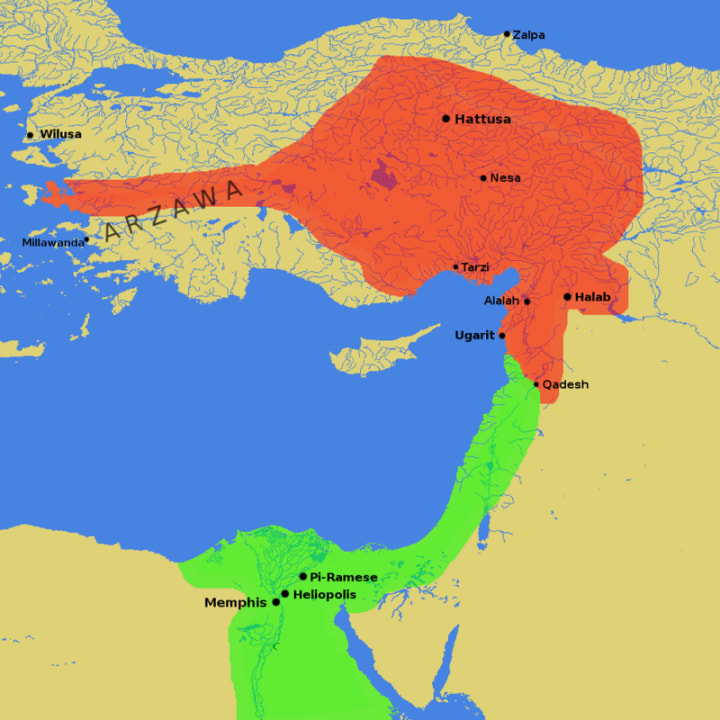
Map
About the Creator
Keep reading
More stories from Prateek Dasgupta and writers in Fiction and other communities.
Someone's Father or Uncle
Amy stepped of the train as the Broad Street Subway let her off at Philadelphia's City Hall stop and mixed her way into the more than 100 other people who were all moving like a flood to the steps. While most moved down the interchange concourse that lead to the “L” train, she moved towards the escalator in the other direction, along with a small handful of other people that took her out into the City Hall courtyard.
By Timothy E Jones6 days ago in Fiction


Comments
There are no comments for this story
Be the first to respond and start the conversation.