
THE ETERNAL DANCE
UNRAVELING THE MYTH OF THE SUN

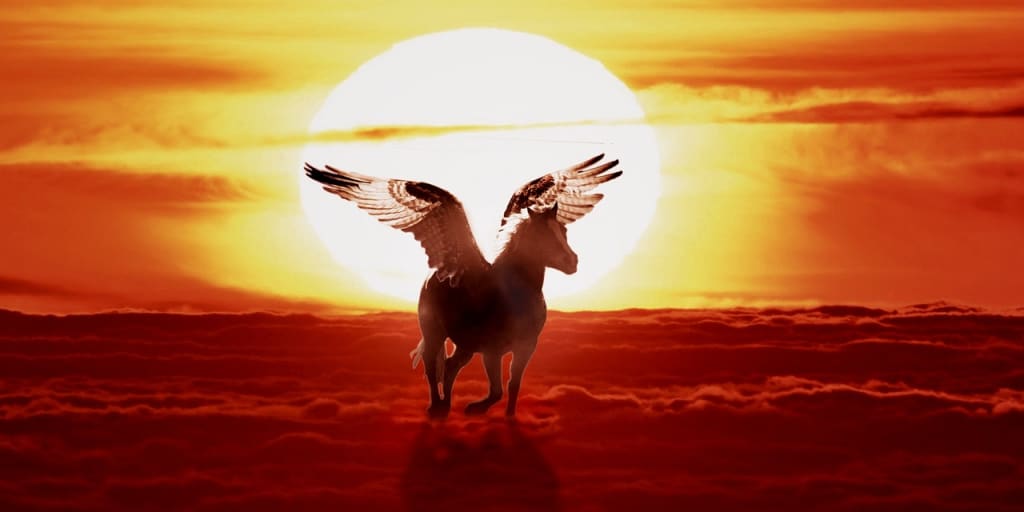
Since the dawn of humanity, the sun has been a constant source of fascination and awe. It is a celestial body that has inspired myths and legends across various cultures. The sun has been worshipped as a god, a cosmic deity, and a life-giving force. Among the myriad myths surrounding this radiant orb, one stands out as a captivating tale woven with mystery and wonder—the myth of the Sun's Eternal Dance.
Origin of the Myth
The origins of this myth trace back to a long-forgotten civilization nestled in the heart of a lush valley, surrounded by towering mountains and fertile lands. The ancient people believed that the sun was a celestial dancer who resided in the heavens and was responsible for the cycle of day and night. They named this ethereal dancer "Surya," and their lives revolved around the sun's mystical movements.
The Eternal Dance
According to the myth, Surya's dance was not just a mere choreography but a cosmic performance of immense significance. The celestial dancer wove intricate patterns in the skies, crafting brilliant tapestries of colors with each step. As Surya danced, the sun's rays radiated outwards, breathing life into the world below, and bestowing warmth and vitality upon the earth.
Surya's dance wasn't confined to the heavens; it extended to the fabric of time itself. The ancient people believed that Surya's dance dictated the changing seasons, the growth of crops, and the rhythm of life. It was an eternal performance that bound all living beings together, emphasizing the interconnectedness of the universe.
The Great Eclipse
However, as with most myths, there was a dark twist to this enchanting tale. The myth speaks of a celestial event known as the Great Eclipse, a phenomenon that heralded the moment when Surya's dance ceased for a brief period. During the Great Eclipse, the world would plunge into darkness, and a sense of dread would grip the hearts of the ancient people.
They believed that during the eclipse, a malevolent force sought to obstruct Surya's dance, attempting to disrupt the cosmic order. The darkness was symbolic of chaos, and the people feared that if Surya's dance was impeded permanently, it would spell the end of life itself.
The Solar Warriors
To protect Surya's dance and safeguard the world from the impending darkness, a group of noble and skilled warriors known as the Solar Guardians emerged. These Solar Guardians were chosen from the bravest and most virtuous members of society. They devoted their lives to understanding the celestial mysteries and mastering the art of cosmic combat.
The Solar Guardians would perform elaborate rituals, appealing to the benevolence of the celestial dancer, and seeking guidance from the cosmic realms. They believed that only through harmony and unity with the heavens could they keep the Great Eclipse at bay.
The Cosmic Battle
The myth describes a great cosmic battle between the Solar Guardians and the malevolent force that sought to halt Surya's eternal dance. In this epic confrontation, the warriors would summon the power of the sun itself, manifesting brilliant beams of light that would pierce through the darkness. It was a battle that transcended the physical realm, with the fate of the universe hanging in the balance.
The Great Eclipse occurred once every few centuries, and with each passing, the Solar Guardians became more adept at defending against the malevolent force. They honed their skills, passing down their knowledge from generation to generation, ensuring that the myth of the Sun's Eternal Dance remained alive throughout the ages.
Legacy and Symbolism
As centuries turned into millennia, the ancient civilization and its mythic tales dispersed, leaving behind remnants of their culture in the form of artifacts, scriptures, and oral traditions. The myth of the Sun's Eternal Dance survived the test of time, ingrained deeply in the collective memory of cultures that succeeded the ancient civilization.
The myth embodies profound symbolic meanings that transcend cultural boundaries. It speaks of the eternal cosmic dance of life, the perpetual cycles of creation and destruction, and the struggle between light and darkness. The Great Eclipse symbolizes the challenges and adversities that life presents, while the Solar Guardians represent the courage and resilience needed to confront those challenges.
Conclusion
The myth of the Sun's Eternal Dance continues to shine brightly, a beacon of wonder that captivates human imagination. While modern science has unveiled the scientific truths behind the sun's celestial mechanics, the enduring power of this myth lies in its ability to inspire and unite, reminding us of the beauty and interconnectedness of the cosmos and the enduring spirit of the human journey. Let us cherish this enchanting tale, for in its essence, it reveals the eternal desire of humanity to embrace the unknown and find harmony within the ever-spinning cosmos.
About the Creator
Keep reading
More stories from Francisca olaifa and writers in Fiction and other communities.
IMPORTANCE OF A GIRL CHILD
Once upon a time in a quaint village, there lived a young couple, Ravi and Meera. They were blessed with a beautiful baby girl named Aarushi. In their community, the birth of a girl child was often met with indifference and sometimes even disappointment. However, Ravi and Meera were different. They believed in the importance of a girl child and were determined to raise Aarushi to be strong, independent, and empowered.
By Francisca olaifa 2 years ago in Art
Miss Persephone's Manual to a Seemingly Ordinary Life
Miss Persephone was found at the dining table, her blue eyes swollen, her tears arriving and retreating like the tides of the ocean. Earlier that day, her family had visited her in the retirement home where she had lived for eight years. It was her eightieth birthday.
By Imola Tóth2 days ago in Fiction



Comments
There are no comments for this story
Be the first to respond and start the conversation.