
The Echo That Wore My Name
When the Past Whispered Louder Than the Present
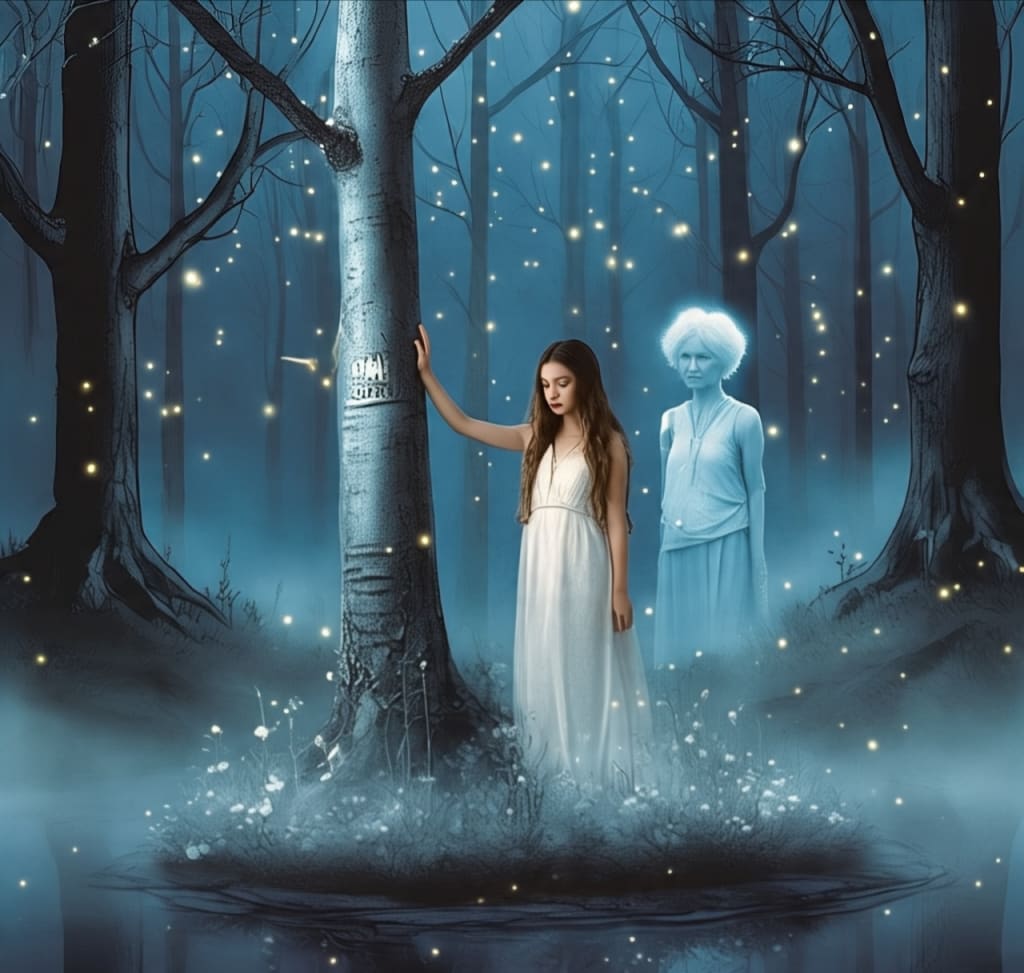
I first heard it on a Tuesday, somewhere between sleep and sunrise—the unmistakable sound of my name echoing from the woods behind my childhood home. “Lena…” It was soft, stretched, almost reverent, like the trees were remembering something I had forgotten.
I hadn’t planned to return to Maple Hollow. But when my mother passed, the house became mine, along with its secrets, creaking floorboards, and a history that refused to stay buried. I arrived with suitcases full of city clothes and an empty heart, expecting dust and grief. What I didn’t expect was the voice.
It didn’t scare me at first. Ghosts, after all, weren’t real—only metaphors for guilt and longing. But the voice was neither guilt nor longing. It was familiar. Not like my mother’s or my father’s. No, it was like my own—except aged, deeper, as though it had lived longer than me.
The second time it came was during the rain. I stood under the eaves of the porch, sipping tea, watching droplets slice through the dusk. Then it came again—closer, more insistent.
“Lena…”
I dropped the mug. The sound of porcelain shattering should’ve jolted me back to logic. Instead, I stepped off the porch and into the mud, following the sound.
The woods behind the house had grown thick in the years since I’d played in them. Vines clung to old oaks like forgotten promises. Every step felt like a memory unearthing itself. Here was where I built my first fort. There, the stump where I pretended to be queen of the forest. But it was deeper—much deeper—where I found the clearing.
It wasn’t large. A circle of bare earth, perfectly round, where no plants grew. In its center stood a tree I didn’t recognize. Silver bark, smooth as glass. And carved into it, deep and old, was my name. Not the full one—Lena Marie Holt—but just “Lena,” etched in the kind of cursive I hadn’t used since the fourth grade.
I ran.
But running from a voice is like trying to outrun your reflection. Back at the house, I locked the doors, buried the memory, and convinced myself it was a dream. People see strange things in grief, I told myself. The mind is clever. It can recreate your voice, twist it in the silence until it sounds like someone else.
But it wasn’t just the voice.
Days passed. Then a week. And things began to shift. Mirrors fogged when I hadn’t showered. Lights flickered at 2:13 a.m. every night. And the birds—those sweet, chattering songbirds I once loved—fell silent each morning at dawn, like they too were listening.
The final straw came when I opened the attic.
Boxes of old toys. A trunk of my mother’s scarves. And one box, taped shut, labeled in handwriting I didn’t recognize: FOR LENA — WHEN SHE REMEMBERS.
Inside was a cassette tape. A pink one, the kind I hadn’t seen since the '90s. Alongside it, a note:
> “This is the part of you you buried.
Let it echo.
Let it live again.”
I didn’t own a cassette player. But the next day, as if summoned by fate or something more intelligent, I found one at the local thrift store. A dusty Walkman, with batteries still inside. I pressed play.
The voice that came out was mine. But younger. Softer. Laughing.
Then it shifted.
“You found the tree, didn’t you?” the tape said. “Good. That means the time loop worked. I knew you’d forget. That’s what growing up does. But I buried the memory there—along with everything we promised not to forget.”
There was silence, then a whisper:
“You are not just Lena. You are the echo of every version of her who came before. And now, she needs you.”
The tape ended.
It didn’t make sense. Or maybe it did in a way only the forest, the fog, and a forgotten childhood could explain.
That night, I returned to the clearing.
The tree was still there. Silver and tall, humming softly like it was alive. I placed my hand on the bark and said the only thing I could:
“I remember now.”
The tree shuddered. Light bloomed from its base, crawling up its spine like veins of stars. And then I saw her—me—but not quite. She was older. Wiser. Wearing a smile I hadn’t known in years.
She didn’t speak. She didn’t need to. She simply nodded. Then faded.
From that day on, the woods never whispered again. The birds sang at dawn. The lights behaved. And I—Lena—finally understood.
The echo wasn’t haunting me.
It was calling me back.
To become whole again.
---
About the Creator
Keep reading
More stories from Jane Smith and writers in Fiction and other communities.
I tried living like a book character for 7 days
It all started with a late-night scroll through TikTok and a video captioned: "Live like your favorite book character for a week. I dare you." I laughed, scrolled past, then scrolled back. The idea clung to me like a plot twist I didn’t see coming. I grabbed a notebook, flipped through my bookshelf, and whispered to myself, “Why not?”
By Jane Smith 8 months ago in Fiction
Review of 'Man on the Run'
My wife and I saw Man on the Run, a nearly 2-hour documentary on Amazon Prime, about Wings, Paul McCartney's group that flew around the world from shortly after The Beatles broke up in early 1970 to shortly after John Lennon was murdered at the end of 1980, making a Beatles reunion forever impossible.
By Paul Levinson2 days ago in Beat



Comments
There are no comments for this story
Be the first to respond and start the conversation.