


The air in Neo-Veridia hummed with a thousand unspoken narratives, each fragment bought, sold, and traded in the vast, glittering expanse of the Mnemosyne Exchange. In this sprawling metropolis, memory was not merely a recollection but a commodity, a vibrant data stream that could be experienced, inherited, or even discarded. Children wore the academic prowess of long-dead scholars, lovers exchanged synthesized ecstasies, and the grief of millions found solace in packaged forgetfulness.
Kael, a sculptor whose studio clung to the city’s lesser-lit periphery, found himself increasingly adrift in this ocean of vicarious living. His hands, perpetually stained with clay and pigment, sought to craft authenticity in a world obsessed with curated experience. His sculptures, often raw and angular, defied the sleek, polished aesthetic of Neo-Veridia, mirroring his own quiet rebellion against the city’s pervasive influence. He saw people living not their own lives, but echoes of others, their identities a patchwork of borrowed triumphs and sorrows. How could one forge a soul, he often pondered, when its very building blocks were available for purchase?
He avoided the Mnemosyne Exchange, its towering crystalline edifice a constant reminder of what he perceived as humanity’s ultimate self-betrayal. Yet, its influence permeated every facet of life. Artists bought "inspiration" memories – the precise moment a master first conceived their greatest work. Engineers downloaded complex schematics directly into their neural pathways. Even joy, the simple, unadulterated kind, was now more often a purchased experience than an organic occurrence. Kael yearned for something real, something untainted by the digital hum of transferred thought. He longed for the kind of deeply personal struggle that forged true art, not the pre-packaged narrative.
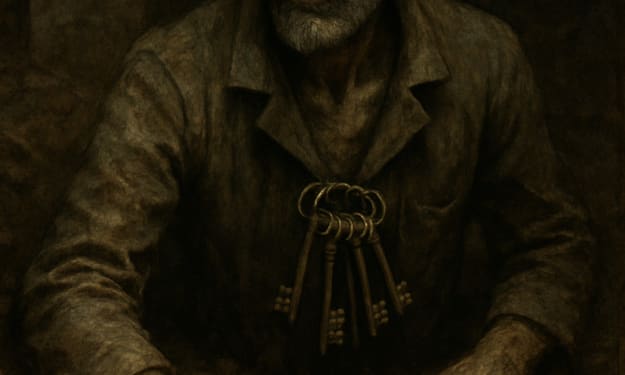
One rain-slicked afternoon, seeking respite from the endless glow of public memory displays, Kael stumbled into a small, forgotten district – a place where the antique was still tolerated. There, hunched over a steaming cup of synth-tea in a dim, dusty café, sat Elara. Her face was a tapestry of wrinkles, each line etched with stories untold, unshared. Her eyes, unlike the vacant, often glazed gazes of those saturated with transferred memories, held a profound, singular depth. Kael was captivated. He watched her for days, sketching her profile, feeling an unfamiliar resonance. She was an anchor in a fluid world, a monument to the unbought life.
He learned she was a "Memory Purist," a relic from a time before Mnemosyne became ubiquitous. She carried every joy, every heartbreak, every mundane moment of her nearly century-long life within her own mind, untransferred, unedited. She was a living archive, and Kael felt an almost desperate need to understand the source of her unwavering presence, her singular self. He approached her, cautiously at first, then with an artist's earnest hunger for truth. Elara, surprisingly, was not averse to sharing stories, though never in the standardized, transferable format of the Exchange. She spoke of hardship, of love, of the quiet dignity of simply *being*. Kael felt a profound shift within him. Her narratives, raw and unadorned, were more vivid than any purchased "experience."
But time, even for a Memory Purist, was finite. Elara fell ill. Her family, descendants who had embraced the modern ways, saw her decline not as a tragedy to be grieved privately, but as an opportunity. They decided to liquidate her memories. "A legacy for the future," her grand-niece explained to Kael, her eyes gleaming with a mixture of reverence and mercantile ambition. "Her wisdom, her joy, her unique perspective – it will all be available. Think of the insight she can provide, the capital it will generate for her care!"
Kael felt a cold dread seep into his bones. He saw it not as preservation, but dissection. He tried to reason with them, arguing that to parse out a life, to package its essence for sale, was to dismantle the very soul. He spoke of the sanctity of individual experience, the irreplaceable tapestry of a mind. His pleas, however, were met with polite, almost pitying smiles. He was an anachronism, a sentimentalist clinging to outdated notions. The family, like society, saw only value in the transferable.
The "Legacy Extraction" was set for the following week, a public event advertised with respectful solemnity on every holo-screen. Kael felt a profound sense of powerlessness, watching as Elara’s life was prepared for the market. Specialized technicians, their faces clinical and detached, hooked her up to the gleaming Mnemosyne apparatus. Kael was there, tucked away in the shadows of the viewing gallery, a knot of despair tightening in his stomach. He watched as the machine hummed to life, projecting ephemeral, shimmering data streams onto the gallery’s translucent walls – each a captured memory, labeled and priced.
He saw her first steps, a brilliant flash of toddler joy. Her youthful courtship, a tender, vibrant echo of first love. The searing pain of loss, a wave of profound sorrow that washed over the room, instantly muted by an algorithm for those who merely wished to observe, not truly feel. He watched as her defining moments, the very pillars of her identity, were extracted, categorized, and made ready for transfer. It was a deconstruction, a public autopsy of a soul. He saw the audience, some with tears in their eyes, some with calculating expressions, others simply consuming the spectacle, their own identities blurring further with each vicarious experience.
As the final, most profound memories – the core beliefs, the philosophical insights Elara had held – were harvested, Kael felt a wrenching sensation, as if a piece of his own spirit was being torn away. He saw not just the end of a life, but the complete, irreversible commodification of existence. The ultimate loss wasn't just the memory, but the *personal ownership* of experience, the inherent value of a life lived solely by its original inhabitant.
Days later, Elara lingered, but her eyes held a new, quiet serenity – a blankness Kael found more unsettling than any pain. Her mind, now a curated landscape, no longer held the chaotic, vibrant tapestry of her authentic self. The "Legacy" was immensely successful; her memories fetched record prices.
Kael returned to his studio, the weight of what he had witnessed pressing down on him. The clay felt different in his hands now. The old yearnings for perfect form or aesthetic beauty had vanished. He began a new sculpture, abandoning all previous commissions. It was a crude, almost violent piece at first – a figure, undeniably human, but fractured, its form a collage of broken shards. As he worked, week after week, the initial anger began to yield to a profound understanding.
He sculpted a figure holding a single, unbroken sphere against its chest – a heart, a soul, a core that remained defiantly unyielding, untransferred. Around it, other fragments swirled, representing the borrowed experiences, the shared narratives of his world. But the central form, though battered, held. Kael finally understood. True identity was not an accumulation of external experiences, but the unwavering core that processed and interpreted them, the singular, inimitable lens through which one’s own, unbought life was lived.
His art became a testament to the sanctity of that singular lens. He no longer sought external inspiration or tried to mimic beauty. He sought the raw, the authentic, the deeply personal process of creation. Some truths, Kael understood, were meant to be singular. Some journeys, unshared. Some souls, indivisible. And in that realization, he found not despair, but a quiet, fierce purpose: to live, and to create, his own unbought life.
About the Creator
Algomehr
Founder of Algomehr. I write stories and essays exploring the intersection of science, philosophy, technology, and the human condition. My work aims to unravel the mysteries of our universe and imagine the possibilities of our future.
Put Emotion on Hold
I am taking a break, for I have been thinking too much, about everything and things are coming unglued. So this is my attempt to glue them back together again. In the grand scheme of things, no one cares who I leave my little treasures too, and perhaps I think too much, after all they are just things in the long run,
By Susan Payton5 days ago in Fiction


Comments
There are no comments for this story
Be the first to respond and start the conversation.