
The Departed: A Cinematic Symphony of Deception, Loyalty, and Tragedy
The movie of love and tragedy.

The Art of Deception
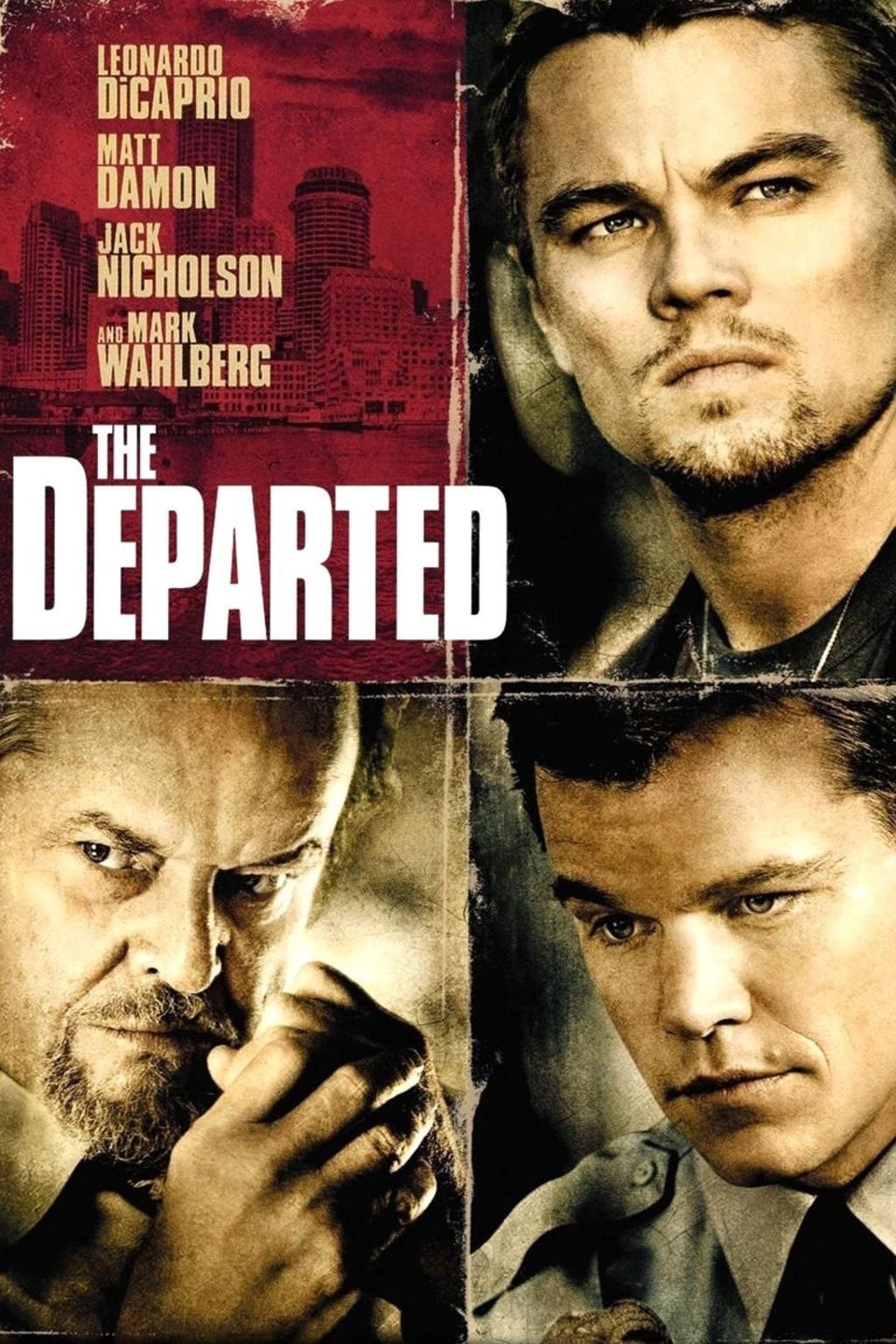
"The Departed" is a masterclass in the art of deception, a theme that reverberates through every corner of its narrative. Directed by the legendary Martin Scorsese, the film immerses its audience in a world where truth is elusive, and trust is a precious commodity. Set in the gritty backdrop of Boston, the story revolves around two moles operating on opposite sides of the law—Billy Costigan (Leonardo DiCaprio), an undercover cop in a criminal syndicate, and Colin Sullivan (Matt Damon), a criminal mole within the police department.
From its opening scenes, the film establishes an intricate web of deceit. Billy's journey as an undercover operative is both harrowing and heart-wrenching. His ability to maintain his cover while navigating the volatile world of mob boss Frank Costello (Jack Nicholson) is a testament to his resilience and intelligence. Each move he makes is a calculated risk, with life-and-death stakes hanging in the balance.
Conversely, Colin Sullivan’s duplicity unfolds in a chillingly calculated manner. Groomed from a young age by Costello, Colin seamlessly integrates into the Massachusetts State Police, manipulating events to protect his criminal benefactor. His charm and intelligence make him a formidable adversary, and his duplicity creates a stark contrast to Billy’s earnestness.
The dual narratives of Billy and Colin epitomize the concept of "the mask," a recurring motif in the film. Each character wears a metaphorical mask to survive in their respective worlds. For Billy, the mask is a necessity to infiltrate Costello's syndicate and gather intel. For Colin, it is a tool to maintain his facade of legitimacy while serving his criminal master.
Scorsese’s direction and William Monahan’s screenplay ensure that the tension of this dual deception never wanes. Every conversation, every glance, and every action is laden with potential discovery, creating a palpable sense of suspense. The film’s editing, helmed by Thelma Schoonmaker, reinforces this tension with sharp cuts and juxtaposed scenes that highlight the thin line between truth and lies.
Loyalty in a Fractured World
Amid the pervasive deception, "The Departed" delves deep into the concept of loyalty, exploring its nuances and complexities. Loyalty, in the world of "The Departed," is a double-edged sword—a virtue that binds characters to their respective causes but also blinds them to the treacheries around them.
Billy Costigan’s loyalty to the police force is tested at every turn. Despite enduring physical and emotional torment, he remains steadfast in his mission. His loyalty is not born of blind faith but of a deep-seated sense of justice. Yet, his isolation as an undercover agent—cut off from his colleagues and his identity—takes a toll on his psyche.
Frank Costello, on the other hand, commands loyalty through fear and manipulation. His charisma and ruthlessness ensure that his associates remain devoted, even as his paranoia grows. Jack Nicholson’s portrayal of Costello is both menacing and magnetic, capturing the essence of a man who thrives on control.
Colin Sullivan’s loyalty is perhaps the most complex. While he appears devoted to Costello, his ambition and desire for self-preservation drive him to make decisions that undermine this loyalty. His relationship with Madolyn (Vera Farmiga), a police psychiatrist, further complicates his loyalties, as he struggles to reconcile his criminal activities with his personal life.
The theme of loyalty also extends to the film’s exploration of familial and cultural ties. The Irish-American identity of the characters plays a significant role in shaping their allegiances. This cultural backdrop adds a layer of authenticity to the narrative, grounding the characters’ choices in a shared history and community.
Tragedy and the Cost of Dual Lives
At its core, "The Departed" is a tragedy—a tale of ambition, betrayal, and the ultimate cost of living dual lives. The film’s Shakespearean undertones are evident in its depiction of flawed characters caught in a relentless cycle of violence and retribution.
Billy’s tragic arc is marked by his relentless pursuit of justice, which comes at the expense of his personal well-being. His sacrifices and suffering culminate in a heart-wrenching climax that underscores the futility of his struggle. Despite his heroism, he is unable to escape the shadow of his undercover identity, and his death serves as a poignant reminder of the high stakes of his mission.
Colin’s downfall is equally tragic, albeit self-inflicted. His ambition and duplicity lead to his undoing, as his carefully constructed facade crumbles under the weight of his lies. The film’s final moments, where Colin meets a grim end at the hands of Sergeant Dignam (Mark Wahlberg), serve as a cathartic resolution to his arc, emphasizing the inevitability of justice.
The tragic dimensions of "The Departed" are amplified by its exploration of moral ambiguity. The characters inhabit a world where the lines between good and evil are blurred, and the pursuit of justice often comes at a personal cost. This moral complexity resonates with audiences, as it mirrors the imperfect realities of human nature.
Scorsese’s use of music, particularly the recurring motif of "I’m Shipping Up to Boston" by Dropkick Murphys, heightens the film’s tragic tone. The song’s driving rhythm and rebellious spirit encapsulate the characters’ struggles, serving as a sonic representation of their inner turmoil.
Conclusion
In "The Departed," Martin Scorsese crafts a cinematic masterpiece that transcends the boundaries of the crime genre. Through its intricate narrative, complex characters, and unflinching portrayal of deception, loyalty, and tragedy, the film leaves an indelible mark on its audience. As the credits roll, viewers are left pondering the fragile nature of identity and the profound cost of living a life shrouded in lies.
About the Creator
Keep reading
More stories from Willow Writer and writers in Fiction and other communities.
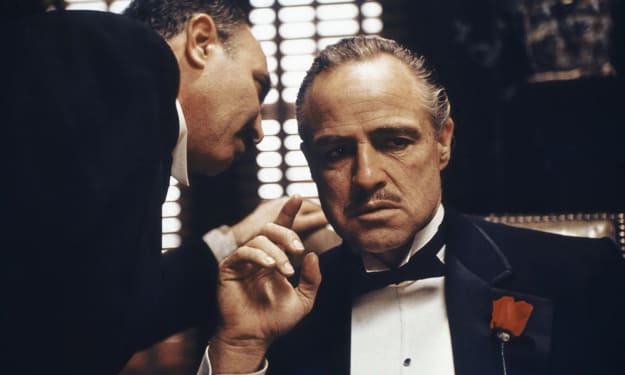
The Timeless Appeal of The Godfather: A Cinematic Masterpiece
Few films in history have managed to transcend their era and remain as iconic as Francis Ford Coppola's The Godfather (1972). Adapted from Mario Puzo's bestselling novel, this masterpiece is not just a story about organized crime but a deep dive into family, loyalty, and power. With its remarkable storytelling, unforgettable performances, and hauntingly beautiful score, The Godfather continues to captivate audiences decades after its release. Let’s explore its brilliance through three key subtopics.
By Willow Writerabout a year ago in Fiction
Miss Persephone's Manual to a Seemingly Ordinary Life
Miss Persephone was found at the dining table, her blue eyes swollen, her tears arriving and retreating like the tides of the ocean. Earlier that day, her family had visited her in the retirement home where she had lived for eight years. It was her eightieth birthday.
By Imola Tóth4 days ago in Fiction



Comments
There are no comments for this story
Be the first to respond and start the conversation.