
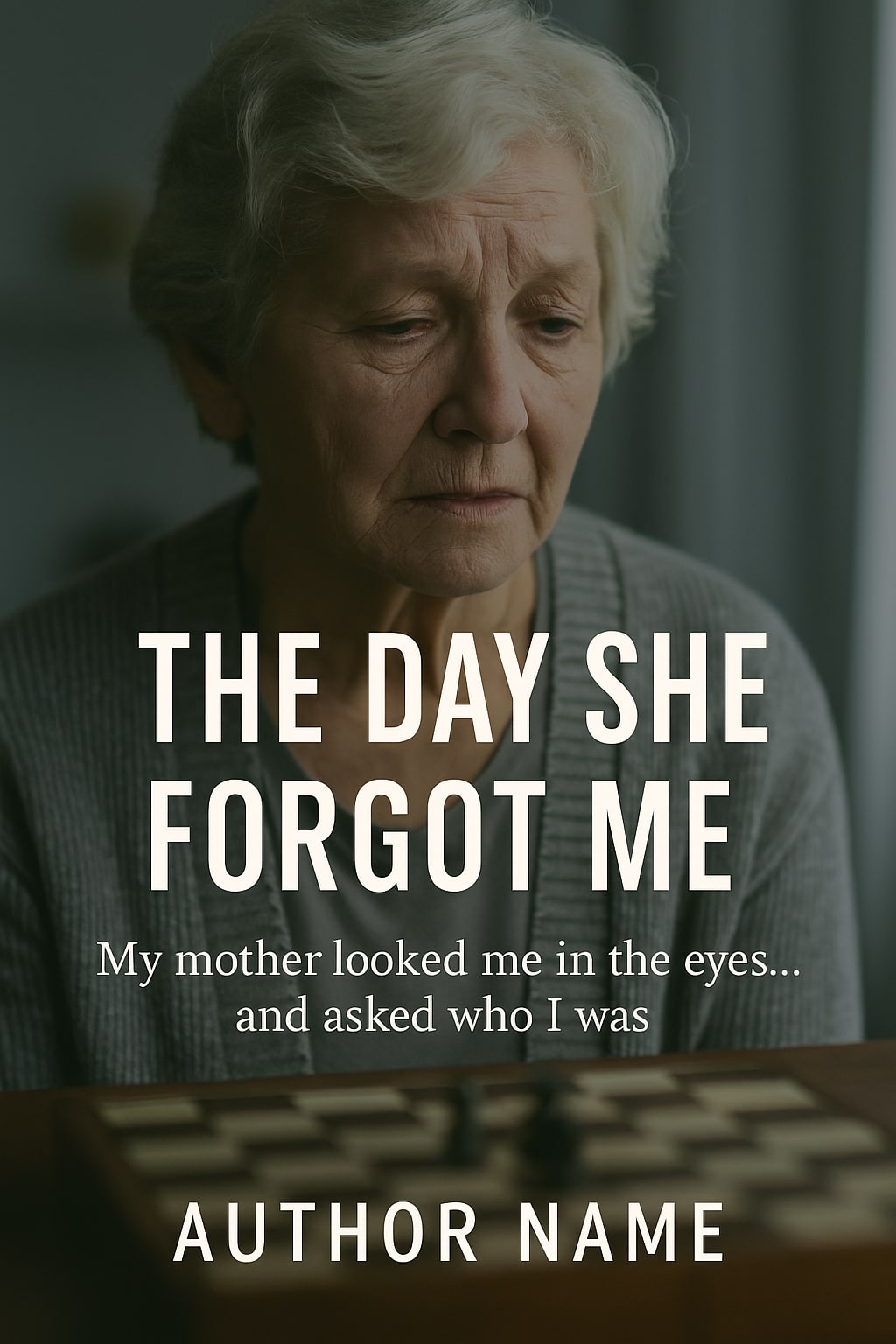
The Day She Forgot Me
My mother looked me in the eyes… and asked who I was.

The first time my mother forgot my name, I laughed.
It was small — just a hesitation, a flicker in her eyes. She called me "darling" instead of “Lina,” then asked if I was her neighbor’s daughter.
I smiled, joked about her “senior moment,” and brewed us both some tea.
But when I brought the cups to the table, she was standing in the hallway, staring at a photo on the wall.
“Who’s that little girl?” she asked.
“That’s me, Mum.”
She didn’t say anything. Just nodded, sat down, and sipped her tea in silence.
I told myself it was nothing. That everyone forgets things now and then.
But then came the mix-ups.
She thought my father — gone for eleven years — was just upstairs napping.
She asked if I’d walked the dog. We never had one.
And once, at the market, she whispered, “Let’s get strawberries for Lina.”
I touched her hand and said, “I am Lina.”
She blinked, eyes wide, like she was seeing me for the first time.
They say dementia doesn’t arrive all at once.
It creeps in slowly, like fog through an open window — soft at first, until you can’t see what’s real anymore.
And my mother?
She was once the sharpest woman I knew.
She could beat anyone at Scrabble. She once corrected a doctor on the Latin name for a bone.
She remembered everyone’s birthday — even my old school friends.
So when she began to unravel, it felt like losing a library, a lighthouse, a lifeline — all at once.
I moved in to take care of her.
Gave up the tiny flat I loved, the job I hated, the freedom I didn’t realize I’d miss.
Our days became rituals.
Tea in the morning. Music from her youth in the afternoons. Short walks. Long naps.
Some days were good. She’d hum along to Nat King Cole and tell me how my father proposed — in the rain, with a melting ice cream cone.
Other days… she didn’t recognize me.
She’d call me “nurse,” or “the lady,” or once, chillingly, “that stranger.”
The worst day was her birthday.
I’d made her favorite — carrot cake with thick cream cheese frosting. Set out her best china.
I even found the pearl earrings she hadn’t worn in years.
She opened her gift — a hand-knitted shawl — and smiled politely.
“For me?” she asked.
“Of course,” I said. “It’s your birthday, Mum.”
Her smile faltered.
“I don’t know who you are,” she whispered.
“But thank you. This is lovely.”
She thought I was a kind stranger.
A volunteer, maybe.
Not her daughter.
I didn’t cry in front of her.
But that night, I sat in the kitchen, cake untouched, and sobbed into my arms.
How do you mourn someone who’s still breathing?
Still smiling at you?
Still here… but not really?
Weeks later, on a rainy Tuesday, something strange happened.
She was quiet all morning. Watched me closely. As if trying to place me.
I turned off the radio and helped her into her cardigan. She looked at me and said,
“You have his eyes, you know. Your father’s.”
I froze.
“Lina,” she said softly.
“That’s your name. Isn’t it?”
I nodded. Too stunned to speak.
“I forget sometimes. I hate that I forget.”
“It’s okay, Mum.”
“It’s not. You’re the most important part of my life. And sometimes, you disappear. That terrifies me.”
I took her hands and pressed them to my cheek.
“Even if you forget me a thousand times, I’ll remind you a thousand and one.”
She passed away six months later.
Peacefully. In her sleep.
I held her hand until the last breath. Told her stories of my childhood, her strength, her laughter.
And when I whispered, “It’s me, Lina,” she gave the faintest smile.
Maybe she remembered. Maybe she didn’t.
But I’ll always believe, in that final moment — she knew.
About the Creator
Keep reading
More stories from Hasnain Ul Haq and writers in Fiction and other communities.


Comments
There are no comments for this story
Be the first to respond and start the conversation.