
The Covenant of the Unspoken
When the Old Men Went Crazy

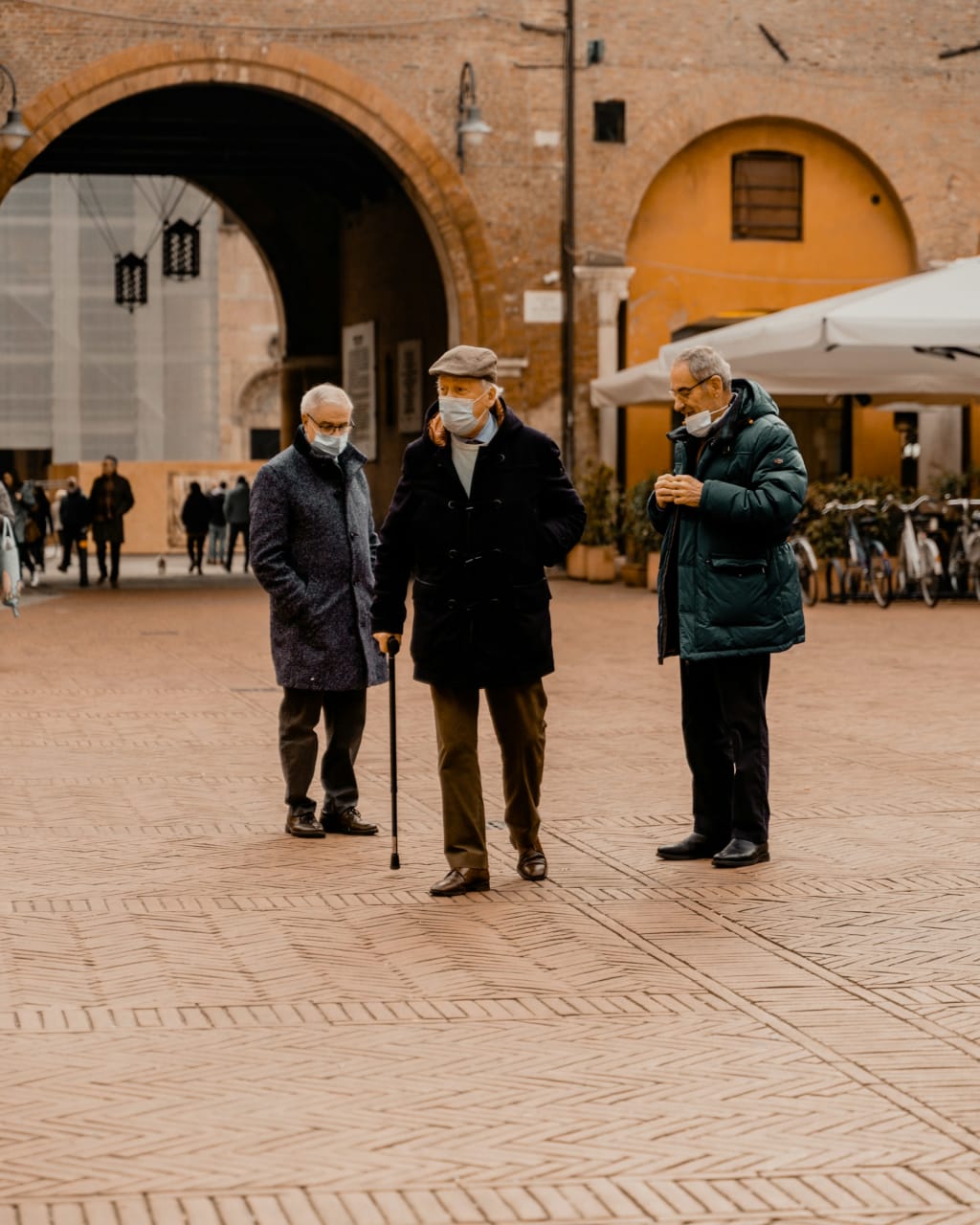
The world had been waiting for the old men to break long before anyone admitted it. Their unraveling felt less like a collapse and more like a tide returning to a shore that had forgotten the moon. People said it began suddenly, but that was only because they had not been paying attention. The truth was simpler: the seams had been thinning for years. The weight had been accumulating for decades. And the men themselves had been carrying a burden older than their own bones.
The morning it began, the light came in sideways. It slipped through windows as if it had grown tired of entering politely. It cast long, slanted shadows that made familiar rooms look like places that had been waiting for confession. The old men walked through that strange light with their eyes wide open, seeing things no one else dared look at directly. They touched the sides of buildings as though checking for a pulse. They greeted trees like comrades returning from a war no one had documented. They laughed at the wrong moments and wept at the right ones, which confused everyone, because no one remembered what the right moments were supposed to be.
People whispered that the old men had gone mad. But madness was too small a word for what was happening. Madness implied error. Madness implied deviation. Madness implied something had gone wrong. What the old men were doing felt more like something finally going right.
The Weight They Had Carried
Long before they were fathers or husbands or men with stiff collars and quiet eyes, they had been chosen. Not formally. Not ceremonially. But chosen all the same. The land had a way of selecting its keepers, and it always chose the ones who looked as though they could bear it. Boys who stood too straight. Boys who never cried. Boys who learned early how to swallow their own sorrow without choking.
The elders taught them how to carry grief without letting it leak into their eyes. They taught them how to bury fear beneath the sternum. They taught them how to hold the ache of generations without letting it show in their hands. The land trusted them. The town depended on them. And the men endured.
But covenants made in silence always come due.
The old men had been holding the unspoken for so long that their bodies had become vaults. Their ribs had become shelves for unshed tears. Their shoulders had become beams supporting the weight of everything no one else wanted to feel. They had been praised for their strength, admired for their stoicism, and quietly sacrificed on the altar of everyone else’s comfort.
When the seams finally split, it was not chaos. It was release. It was the sound of a locked room opening after decades of darkness.
The First Signs
People first noticed the change in the way the old men walked. They moved as though gravity had shifted, as though the world had tilted a few degrees to the left. They paused in the middle of streets to listen to something no one else could hear. They stood at the edges of fields with their palms open, as if waiting for the wind to place something in their hands.
At the pier, they gathered at dusk like a parliament of battered prophets. They told stories that had been buried under decades of duty. They confessed fears they had never spoken aloud. They admitted tenderness they had been taught to hide. Their voices cracked, not from weakness but from the strain of finally being honest.
The younger men lingered at the edges, pretending they were only out for air. But they listened. And something inside them softened, the way metal softens when heated long enough.
The Land Remembers
The land had been waiting too.
It remembered the covenant. It remembered the boys who had been chosen. It remembered the grief it had asked them to carry. And when the old men finally broke open, the land exhaled.
The trees leaned closer. The sea rose a little higher on the rocks. The wind shifted direction, carrying the scent of something ancient—something like forgiveness.
People said the old men had been touched by something otherworldly. Some claimed the sea had spoken to them. Others believed the trees had finally answered their decades of quiet greetings. A few whispered that the men had stepped sideways into a different kind of seeing, one that revealed the hidden architecture of sorrow and the secret scaffolding of love.
But the truth was simpler. The land had called its debt. And the old men, faithful to the end, had returned what they had been holding.
The Town’s Uneasy Awakening
At first, people tried to correct them. They offered chairs, blankets, cups of tea—anything to coax the men back into the shape they had once held. But the old men refused to shrink again. They refused to return to the smallness that had been demanded of them.
Their wildness was not destruction. It was clarity. It was the kind of clarity that makes lies impossible.
The town changed in increments.
People apologized without being cornered. They forgave without being begged. They let themselves be seen without armor. Conversations grew longer. Silences grew softer. The air felt less brittle. The nights grew quieter, not with suppression but with rest.
The old men became something like living thresholds. Anyone who sat beside them found themselves speaking truths they had never dared name. The men didn’t offer advice. They didn’t fix anything. They simply listened with a presence that made pretending impossible.
And in that presence, the town remembered itself.
The Deeper Story Beneath It
What no one said aloud was that the old men had not gone crazy at all. They had simply stopped lying. They had stopped pretending the world had not wounded them. They had stopped carrying the burden of being the ones who held everything together.
Their unraveling was a return to something original, something ungoverned, something holy.
The younger men felt it first as a kind of ache. Not pain. Not fear. But an ache like the loosening of a knot that had been tied too tightly for too long. They found themselves crying in the dark for reasons they could not name. They found themselves reaching for softness they had been taught to avoid. They found themselves longing for a world where they did not have to be steel.
The old men had opened a doorway. And the younger men stepped through it without knowing they were crossing a threshold.
The Forgotten Goddess
The oldest stories—older than the town, older than the land, older than the men themselves—spoke of a goddess who had once walked among them. She was not a goddess of war or harvest or hearth. She was the goddess of the Unspoken. The keeper of everything people refused to feel. The guardian of everything buried beneath the ribs.
Her temples had been made of silence. Her altars had been built from withheld tears. Her worship had been unintentional but constant.
When people stopped speaking their truths, she grew powerful. When men swallowed their grief, she grew vast. When generations learned to hide their tenderness, she became immense.
But gods who grow on silence eventually starve.
The old men’s unraveling was her hunger breaking open. She had waited centuries for someone to release what had been stored in her name. And when the old men finally did, she rose—not in wrath, but in relief.
Some said they saw her in the sideways morning light. Others felt her in the tremor beneath their feet. A few heard her voice in the rustling of leaves, a voice that sounded like a sigh after a long-held breath.
She did not demand worship. She did not ask for offerings. She only wanted the truth.
The Night Of The Great Unburdening
The turning point came on a night when the moon hung low and red over the sea. The old men gathered at the pier, their faces illuminated by a light that seemed to come from within them. The younger men followed, drawn by something they could not name.
The air felt charged, as though the world itself were holding its breath.
One of the oldest men—Thomas, who had not spoken more than a handful of words in years—stepped forward. His voice was rough, unused, but steady.
“We were never meant to carry it alone,” he said.
The words rippled through the crowd like a stone dropped into deep water.
Another man—Elias, whose hands had always trembled from the weight of everything he had never said—lifted his palms to the sky.
“It was never ours,” he whispered.
The sea answered with a wave that crashed higher than any wave had crashed in decades.
The men began to speak then. Not in unison, not in ritual, but in a cascade of truths that had been waiting for release. They spoke of fear. They spoke of shame. They spoke of love they had never expressed. They spoke of grief they had carried for fathers who had carried grief for their fathers before them.
The younger men listened, and something inside them broke open too.
The goddess listened. And the land softened.
The Aftermath
The next morning, the light came in straight again. The world felt steadier. The old men looked lighter, as though they had shed decades of invisible weight. They walked with a kind of ease that made them look younger, not in body but in spirit.
The town did not return to what it had been. It could not. Something fundamental had shifted.
People spoke more openly. They touched more gently. They forgave more quickly. The old men became something like elders—not in authority, but in presence. They were not leaders. They were not prophets. They were simply men who had survived themselves.
And in their survival, they had given everyone else permission to do the same.
The Legacy
Years later, people would speak of the time the old men went crazy as though it had been a miracle. They would tell the story to their children and their children’s children. They would speak of the sideways light, the trembling earth, the night of the Great Unburdening.
But the truest part of the story was the simplest.
The old men had not gone mad. They had gone honest. They had gone holy. They had gone back to the beginning, to the place where men were allowed to feel the world instead of carrying it.
Their unraveling had been a mercy. Their liberation had been a blessing. And in their liberation, everyone else found a doorway they had not known they needed.
About the Creator
Julie O'Hara - Author, Poet and Spiritual Warrior
Thank you for reading my work. Feel free to contact me with your thoughts or if you want to chat. [email protected]
Keep reading
More stories from Julie O'Hara - Author, Poet and Spiritual Warrior and writers in Fiction and other communities.
Naked Succubus
Lola always chose her men the way other women chose handbags—something pretty, something flattering, something that made her feel more important when she walked into a room. He was no different. In fact, he was her favorite kind of ornament: young, beautiful, eager to please, and dazzled enough by her attention and clever manipulation that he never noticed the cost.
By Julie O'Hara - Author, Poet and Spiritual Warrior18 days ago in Fiction
Pearl
1980 something. we all hung out at Pearl and you and i were nothing special, or so i thought. i mean we all danced, drenched in our own sweat, our own saline solution of fear, too many beers, shots, laughter, tears, fucks in the bathroom and i don't know when we began to be afraid. do you?
By ROCK aka Andrea Polla (Simmons)3 days ago in Fiction



Comments
There are no comments for this story
Be the first to respond and start the conversation.