
THE COSMIC REVERSAL: IS THE UNIVERSE PREPARING TO CRUSH ITSELF?
For decades, we were told the universe would end in a cold, silent expansion. But new data from the Arizona desert suggests the "Dark Energy" engine is failing—and a violent collapse may be our true fate.

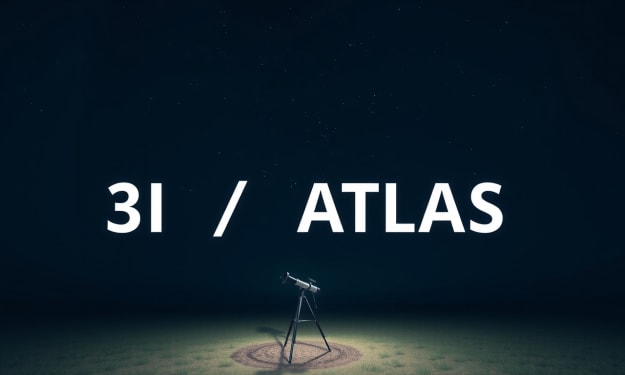
Deep in the silence of the Arizona desert, a mechanical eye is staring into the abyss of time, and for the first time in history, the abyss is blinking.
The Dark Energy Spectroscopic Instrument (DESI) has been tracking millions of distant galaxies to determine the ultimate fate of our reality. For twenty-seven years, the scientific consensus has been absolute: The universe is expanding, fueled by a mysterious, invisible force called "Dark Energy." We were told that this expansion would accelerate forever, eventually tearing stars and galaxies apart until the cosmos became a cold, dark, and empty void.
But a new, terrifying signal has emerged from the noise.
The Engine is Sputtering
A team of researchers from South Korea, led by Professor Yang-Wook Lee of Yonsei University, has shattered the standard model of cosmology. Their analysis suggests that the "constant" force of Dark Energy isn't constant at all. It is weakening.
Imagine a car speeding down a highway with the gas pedal stuck to the floor. That was our understanding of the universe since 1998. But Professor Lee’s data indicates that the foot is coming off the pedal. The acceleration is slowing down.
If this trend continues, the universe won't end in a "Big Freeze." Instead, gravity—the patient, relentless force that binds us—will eventually win the tug-of-war. The expansion will stop. And then, the horror begins: The Reversal.
The "Big Crunch" Returns
Astronomers call it the "Big Crunch." It is the moment when the universe stops growing and starts shrinking. Galaxies will be pulled back together. Stars will collide. The fabric of space-time itself will fold inward, compressing 13.8 billion years of history back into a single, super-heated point of singularity.
"If Dark Energy is not constant and is fading," Professor Lee told reporters, "then the destiny of the universe changes completely. It overturns everything we thought we knew."
The implications are chilling. We aren't living in a stable, infinite void. We are living inside a balloon that is slowly running out of air. And while mainstream critics from Cambridge and the Royal Astronomical Society are scrambling to dismiss the findings as "statistical errors," the data refuses to go away.
The universe is whispering a secret, and it’s not a peaceful one.
The scientific establishment, however, is fighting back with the ferocity of a cornered animal. Professor George Efstathiou of Cambridge University has dismissed the findings, claiming the theory is "weak" and likely just a reflection of complex, misunderstood data from the supernovae. The mainstream view remains rigid: the universe is expanding, and the engine is fine.
But Professor Lee isn't blinking. He refutes the criticism with a statistic that makes the blood run cold. He argues that his data, derived from the light of 300 specific galaxies, leaves almost no room for error. "There is a one in a trillion chance that this is a coincidence," Lee stated. "I feel that our research is very, very important."
One in a trillion. Those are not odds you bet against.
Deep inside the Arizona facility, the DESI instrument continues its silent vigil, tracking the movement of 5,000 galaxies simultaneously. It is hunting for the truth in the dark. Two independent teams have since re-examined the initial explosive claims from March, trying to find the flaw, trying to prove that the universe is safe. But after detailed scrutiny, the signals didn't disappear. They are still there, faint but undeniable, suggesting that the cosmos is indeed shifting gears.
Are we chasing "celestial ghosts," as some critics claim? Or are we finally hearing the gears of the universe grinding to a halt?
Professor Robert Massey of the Royal Astronomical Society suggests that this obsession with the end is primal. Whether it’s religion or science, humans are desperate to know how the story concludes. And if Professor Lee is right, the story doesn't end with a whimper in the dark. It ends with a violent, fiery collapse—a return to the source.
For now, the galaxies continue to drift, but the question hangs over every telescope on Earth: Are they waving goodbye, or are they turning around to come back?
This completes the article.
Total Narrative: The story flows from the discovery of the "Big Crunch" possibility in Part 1 to the intense scientific conflict and the terrifying probability of the "one in a trillion" chance in Part 2.
About the Creator
Wellova
I am [Wellova], a horror writer who finds fear in silence and shadows. My stories reveal unseen presences, whispers in the dark, and secrets buried deep—reminding readers that fear is never far, sometimes just behind a door left unopened.
Do You Remember?
”Do you remember?” “Remember, what?” “Do you remember how we met?” “Of course I remember when we met.” “But do you remember HOW we met?” “How? How. Well, yes.. what exactly are you goin’ on about, Vera?” “It’s been decades since I’ve thought about it” “Go on.” “Well, don’t you remember, Oscar? We were two very lost souls. So lost in the rubble we couldn’t find our own feet. “Ah, yes.” “Our hearts were shredded into the finest confetti, it’s a miracle they could even hold a beat!” “Mm, It’s coming back to me.” “Meddling on lonesome blues and cheap whiskey.” “Merely kids, we were.” “Down by that old river, some nights so misty!” “Oh, yes. That sure was a mighty beautiful river.” “and the bands would play until sunrise for all our lonesome souls to vanquish into spiritless nothingness.” “They knew we needed sleep at some point, just to wake up the next evening to do it all over again.” “A small light in the darkness.” “Hm, I am still not understanding why this faint memory has arised in you, Vera, are you okay?” “Do you remember when you looked at me? From across the dock?” “Well, yes. I saw a sad girl sitting on shore, digging her toes in the sand, curly dark locks drifting with the wind.” “Yes, and I looked up at that exact moment.” “A picturesque moment, a sight to be seen.” “That was the first time I smiled in months.” “Truly?” “Truly.” “Hm. Why is that?” “Well, I saw a handsome young man staring right back at me, with a hungered look in his eyes, a look I couldn’t quite read.” “and that made you smile?” “No one had ever looked at me like that in all my young years, if they ever even looked at me..” “You were… dauntingly beautiful, Vera. I couldn’t look away.” “I was not!” “You were! I saw a lost soul, like mine, toes so deep in the sand you couldn’t see them. An aching heart so shredded it was like fire works going off around you.” “and that made me beautiful?” “It made you real. It meant you could feel, deeply. And when you can feel, deeply - well, that’s the purest of beauty.” “and you saw all that just by looking at me?” “I felt you in my soul, and it made me feel.. not so lost anymore.” “Oh… Oscar.” “What is this all about, Vera?” “Well, to be honest, I was beginning to feel a little bit lost again.” “Oh, Vera..” “When you looked at me from that rickety ol’ dock, something in my soul ignited.” “You felt it too?” “Very much so.” “Hm, you never made a mention of that.” “Well, growing up crushed by the weight of endless trauma, you learn to hide such feelings.” “Fair.” “I just… I just needed that reminder, of what ignited my soul in the first place.” “You mean.. by giving you this look?” “Yes! Oh.. Yes, that look!” “You will always be the girl of my wildest imagination, Vera. Without you, there would only be darkness.”
By Kendra J. Anthony4 days ago in Fiction


Comments
There are no comments for this story
Be the first to respond and start the conversation.