


The most tragic part of all this peculiarity was when the writers of my favorite sitcom cut out the dialogue. When I watch now, I can hear the shadows of the jokes and the ghosts laughing and whooping in the studio audience. It took some time to adjust to my new routine—I’d always sit down on Thursday evening with a fresh sandwich from the deli (the lady working there always knows what I want now) at 6:55 when I’d watch the last few minutes of the news report (also newly silent) before the latest episode aired. Now, I have to make room on the coffee table for my laptop so I can read the comments of everyone else watching and piece together the plot with messages like “I can’t believe Nick thought that about Jackie” and “I think Dan is gonna let that thought slip while the lawyer is around LOL.” It’s much less fulfilling now, watching the exaggerated, wordless expressions of the ensemble change as they relay information to each other, often unintentionally (which is beginning to become repetitive as a joke, but I guess everyone can relate to that now). I’m sure the quality of the show hasn’t dropped at all for the rest of its audience, though.
When everything changed, my brother and his wife didn’t hesitate to separate. Even without a sixth sense, it was easy to see what they thought of each other. I’m surprised they managed to keep their opinions private when they could (I like to joke to myself that I could read their minds before it was possible). Once that barrier broke, there wasn’t so much as a single secret between them, and I imagine that created divides between tons and tons of people all at the same time. Even my few friends grew apart quickly, and they tried to come to me for advice at first but gave up when they couldn’t articulate their exact feelings to me. They got so frustrated when I couldn’t tell, even when I’d remind them over and over that they have to explain it to me out loud, that I can’t understand unless they’re explicit.
“Shhhhh,” they’d complain, “you don’t have to talk so loud. I can hear you just fine.” Their unused voices were always raspy and quiet. Even mine was starting to go by the end of the first month of this all. It wasn’t really that I lost the need to communicate, more that I didn’t have anyone left that still communicated the way I did.
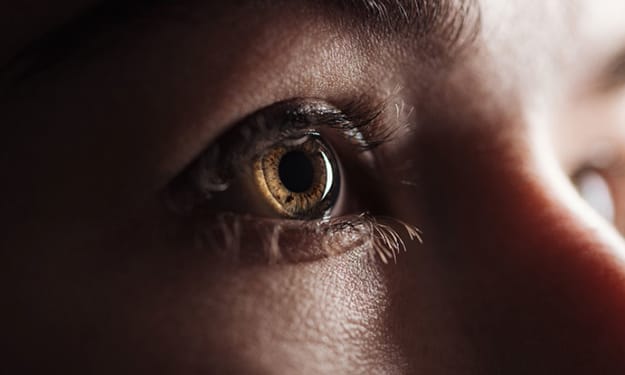
I don’t like going out into the world anymore. I don’t know if I even liked it much before, but now I can’t stand it. All the eyes are always darting around, meeting each other for moments at a time, the expressions around them modulating so fast, so fast. Everyone knows everyone, and mostly everyone hates everyone else. Arguments start and end in seconds, and even I can see it happen, when two people look away from each other rolling their eyes and scoffing like they’d simultaneously insulted each other in such a way that crossed the line. I don’t think anyone really wants to be friends anymore, except some groups of two or three who all roll their eyes and scoff in unison, then look at each other and laugh like a clique of high school bullies might. I can’t really believe that any group of people really all think exactly the same (I can’t know, because I can’t hear them, and it makes going outside very frustrating), but it’s harder to believe that a group of people could overcome their differences, no matter how slight, when they’re all on display, all the time. I stay inside as much as I can now.
I go outside every Thursday for groceries, and the deli. I was on the train (where I typically bury my head in a book or my phone in an attempt to avoid interaction) when I began to feel a set of eyes settle on me. I shouldn’t have, but it was still my instinct to look up and meet whoever it was I felt was watching me. An elderly woman was beaming at me, a distant and nostalgic grin like she was reminiscing about the good old days. Her eyes, weathered and crystalline, were trained on my forehead, but as I noticed her, they drifted down to meet mine. It was then that I realized, for the first time in as long as I can remember, I wasn’t thinking about thinking. For once, the silence of the world—the rattling of the train and the shuffling of clothing and the quiet, hoarse coughs and the whirring of the car doors—felt like home.
Her voice was hardly any sound at all. It was more like an idea that was on the tip of my tongue, that just as quickly faded, never to be remembered again save for a painful awareness of its absence.
“Lucky you.”
About the Creator
Keep reading
More stories from Steven K. Jr. and writers in Fiction and other communities.
Affection and Healing for Yourself
During the night of the last quarter moon, I gathered my ritual supplies. I carefully handled the chunk of black tourmaline that would protect me from your overall negative and narcissistic energy. I carefully walked the house with my stick of selenite in hand, asking the universe to cleanse our working space.
By Alisha Wilkins ✒️🦋🖋️6 days ago in Fiction



Comments
There are no comments for this story
Be the first to respond and start the conversation.