
The Consequences of Disobedience
Learning the Value of Punishment and Discipline

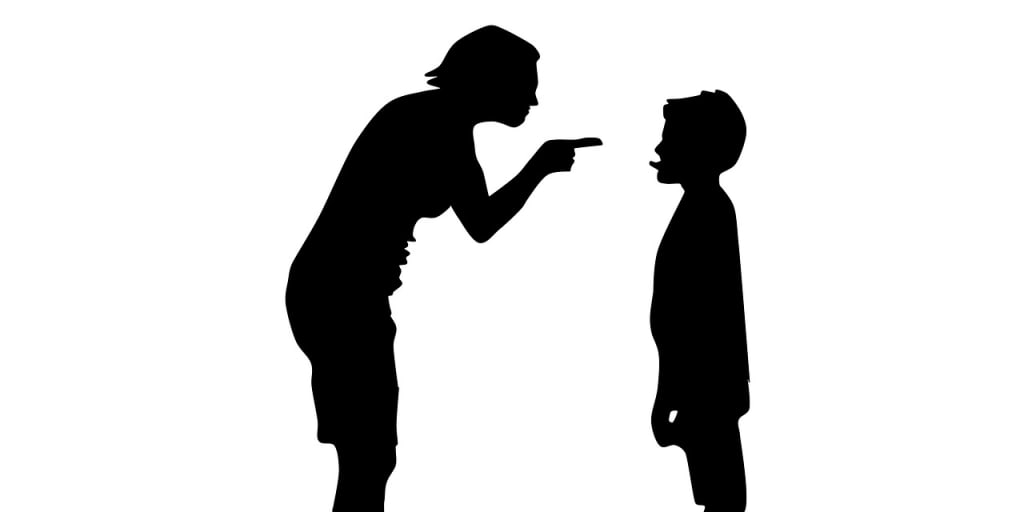
Once upon a time, in a small village located deep in the mountains, there was a young boy named Timmy. Timmy was known for his mischievous behavior and his inability to follow rules. He would often skip his chores and play pranks on his neighbors. His parents had tried everything to correct his behavior, but nothing seemed to work.
One day, Timmy decided to play a prank on the village elder, who was known for his strict rules and disciplinary actions. Timmy sneaked into the elder's house and painted his walls with different colors. When the elder saw what had happened, he immediately summoned Timmy's parents and demanded an explanation.
Timmy's parents were embarrassed and ashamed of their son's behavior, and they knew that he needed to be punished. The elder offered to discipline Timmy himself, and they agreed. The elder took Timmy to his house and locked him in a room with nothing but a bed and a table. Timmy was not allowed to leave the room until he had learned his lesson.
The first few hours were easy for Timmy, and he spent most of his time playing with his toys. But as time went on, he began to feel the effects of his punishment. He became bored and restless, and his thoughts turned to his misbehavior. He realized that his actions had consequences, and that he had hurt people with his pranks.
The elder visited Timmy every day, and they talked about his behavior and the importance of following rules. Timmy learned that punishment and discipline were not meant to hurt him, but to teach him a lesson. He began to understand the value of consequences and the importance of obedience.
After a few days, the elder released Timmy from his punishment. Timmy went back to his parents, and they were surprised to see a change in their son's behavior. He was more responsible, and he started to take his chores seriously. He apologized to his neighbors and promised to be a better person.
From that day on, Timmy became known for his good behavior and his willingness to follow rules. He learned that punishment and discipline were not meant to be cruel, but to help him become a better person. He learned that his actions had consequences, and that he needed to take responsibility for his behavior.
In conclusion, the story of Timmy teaches us the importance of punishment and discipline. While it may seem harsh at times, it is necessary to teach children the value of obedience and the consequences of their actions. Punishment and discipline should not be seen as a form of cruelty, but as a means of helping children grow and become responsible adults.
As parents, it is our responsibility to guide our children and teach them right from wrong. It is not always an easy task, but it is a necessary one. We must be willing to enforce rules and regulations, even if it means punishing our children when they step out of line.
Punishment and discipline are not meant to be a form of retaliation or revenge. They are meant to be a way of teaching our children the difference between right and wrong. When we punish our children, we are not punishing them because we are angry or upset. We are punishing them because we want them to learn from their mistakes and become better people.
In the end, the story of Timmy reminds us that punishment and discipline can be effective tools for teaching children important lessons. It is important to use these tools in a way that is fair and just, and to always keep in mind that the ultimate goal is to help children grow and learn from their mistakes.
Punishment and discipline can also help children develop a sense of responsibility and accountability for their actions. When children understand that their actions have consequences, they are more likely to think before they act and to consider the impact their behavior will have on others.
It is also important to remember that punishment and discipline should not be the only tools we use to teach our children important life lessons. We should also take the time to talk with our children and to help them understand why certain behaviors are unacceptable. We should praise them when they do well, and encourage them to make good choices.
In the end, the story of Timmy is a reminder that as parents and caregivers, we have a responsibility to guide our children and to help them become responsible, respectful, and compassionate individuals. By using punishment and discipline in a fair and just manner, and by taking the time to talk with our children and help them understand the impact of their actions, we can help our children grow and thrive.
About the Creator
Geralgin
A dedicated wife & mother with a degree in HR Development & Management. Excels in recruitment, training & talent management, while balancing the demands of parenthood. Passionate about family, community, cooking, and travel.
Rage
Content Warning: Domestic Violence, Assault Rage D. A. Ratliff “Who did this?” My voice echoed through the house. All I wanted was a cup of tea, but one of the twins, running through the house like maniacs, knocked it over. My nerves tingled, and every muscle in my body felt coiled like a spring. Survival seemed out of reach.
By D. A. Ratliff7 days ago in Fiction
Until You Understand
You wake somewhere new. No memory of the night before. Light arrives from no visible source and refuses to cast shadows. The walls are pale, unmarked, faintly warm. The room has edges but no corners. Sound travels too cleanly. There is a door behind you. You know this without turning. You turn. The door is sealed. No handle. No seam. Only a rectangle slightly darker than the wall around it. A clock without hands is mounted at eye level. It ticks anyway. In the center of the room is a board set into the floor. Black and white squares. Perfectly even. A chessboard large enough to stand on. There is a desk made of glass along the far wall. On it rests a single sheet of paper. It wants a signature. You do not touch it. A tone sounds. It is calm. The board hums. Pieces rise from the floor. They do not slide into place. They emerge as if the room exhales them. Pawns first. Then rooks. Knights. Bishops. The King. The Queen. They arrange themselves. The tone sounds again. You understand without being told: it is your turn. You hesitate. The clock ticks louder. A sign fades into the wall beside the board. Stand here. Wait your turn. You step onto a white square. The room stills. A pawn moves on its own. The tone sounds. You are expected to respond. You choose a pawn. It is close. It seems harmless. You move it forward one square. The tone stops. The board hums. Nothing else happens. You wait. Another pawn advances. The tone sounds. You move again. The rhythm establishes itself. Tone. Move. Silence. You begin to anticipate. You think one move ahead. Then two. The board allows this. It does not resist. It simply answers. A bishop disappears. Not taken. Gone. You do not notice. Two turns later, a square darkens. The light narrows. The room feels smaller by a margin you cannot measure. You do not connect this to the bishop. The clock ticks. You keep playing. A knight vanishes. The hum deepens. The air grows denser. You adjust. You protect your King. You sacrifice a pawn. You gain space. The Queen is gone. You do not miss it yet. You will later. The board continues. You begin to understand the tones. One is for urgency. One is for error. One is for delay. You learn when to breathe. You learn when to wait. A rook disappears. The wall behind you warms. You turn. The door remains sealed. You play faster. You try to win. The board does not reward this. Three moves later, a row of squares becomes inert. You step onto one by habit. Your foot does not lift. The board holds you in place until the tone releases you. You stop rushing. You begin to watch. You notice that when a piece vanishes, the room changes later. Never immediately. Always delayed. Always proportional. You begin to count. One piece lost: light shifts. Two pieces lost: sound tightens. Three pieces lost: space contracts. The board is not punishing you. It is teaching you scale. You test it. You sacrifice a pawn. Nothing happens. You sacrifice another. The clock ticks louder. You sacrifice a third. The ceiling lowers by a breath. You recover a piece. The ceiling halts. You stop thinking about winning. You start thinking about cost. The board does not care about victory. It cares about consequence. A piece you save now will matter later. A move you make now will close a door you cannot yet see. You play more slowly. You let a knight fall because you understand what it will buy you. The room warms. The ticking softens. You learn that every square is a future. You learn that speed is not control. You learn that reaction is not choice. The tone sounds. You wait. Not because you are told. Because you see the board. You see the path your hand almost took. You see what it would have cost. You choose differently. The room exhales. The clock grows quiet. The door does not open. You are not finished. You make a move you have already lost. You see it this time. You do not take it. The board waits. The room waits. The tone does not sound. You move anyway. Not to escape. Not to win. To accept that every square you touch becomes the world that follows. The door unlocks without a sound.
By Tifani Power 6 days ago in Fiction




Comments
There are no comments for this story
Be the first to respond and start the conversation.