
The Color Thief
What a change a little spark of hope made to a gray world.
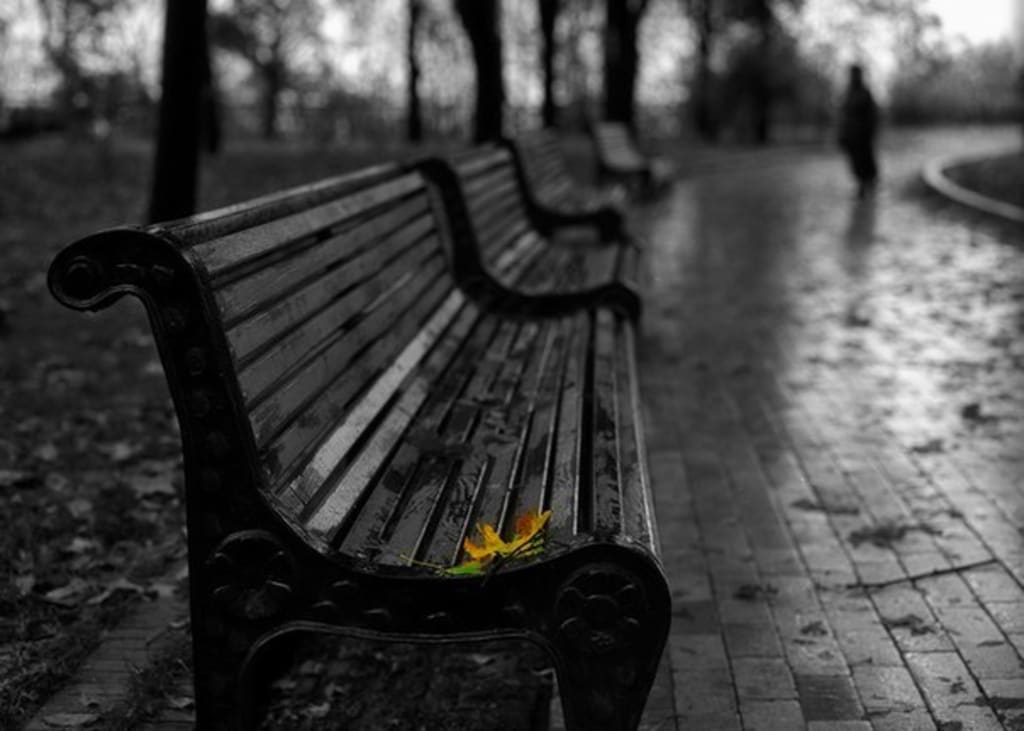
It was a colorless world. The gray skies of winter not the grey days themselves, but this was the place, where everything, even pleasure, had turned black and white and grey. The streets where life was once rich now lay quiet away in monotony. There were now those gardens that bloomed with reds, yellows and purples, but now lay dead, with leaves rotting to dust, and under the earth the flowers could not be differentiated. Laughter also had lost its sound, and in its place was a hollow echo, which felt as though standing right behind your ears.
In the middle of this world was Elias, a young man in his twenties, the life of whom, since he could remember, had been black and white. It had emptied his clothes and his food, even the water that he drank. He was a ghost that wandered the city unnoticed and unremarkable, and was a perfect blend of grayscale living. He had long since lost hope, on pleasure, on having faith in any thing that might warm the cold sterility.
Then came a time when, on a morning, as he was strolling through a park, where there used to be green grass and a garden of flowers, he caught sight of a motion, which caused his heart to almost jump out of his breast. On a bench sat a little fellow, who was probably seven or eight years old, and was humming to himself, and painting the air with invisible paint-sticks. At every stroke of his hands there were lengthening strokes of rich colour momentarily held in suspension before they had been transferred into the soil, and the life was restored to the land in which he lived. The lawn was again green, the sky a blue, hopeful, pale, the flowers opening as they seemed to fall in a shower of rich colors.
Elias froze. He had never imagined that he could still see what color was. He rubbed his eyes, and believed it was some deceit of light, but the colours remained. The boy raised his eyes, and his big eyes glowed with a wicked light.
Hello, said the boy, whose voice bore the negligent airless innocence of a child. "Do you want to play?"
Elias hesitated, unsure. He had never lived in color, neither had he ever believed in anything extraordinary. But the smile of the boy was contagious, and pulled at a part of him, which he had lost the knowledge of. He held up his hand tentatively and imitated the action of the boy.
At first, nothing happened. The air remained gray. But, then, there was a gleam of orange on the side of the sidewalk, a sparklet, which seemed to be vibrating with life. Shocked, Elias repeated himself, with greater confidence in his movements. The colors answered, and went like a wave all over the park. Red, purple, blue, yellow--all the colors were back, as though the world had been waiting, and was waiting until somebody could bring them back.
The boy clapped. "See? You can do it too!"
It was the first time in decades that Elias had something in him, awe, excitement, a strange and warming hope. That made the boy giggle and the world itself to breathe; he laughed, a genuine laugh. The birds came and sang melodies he had not heard in many years. The smells of flowers, earth, rain all the colors came back not only to the eyes, but to life.
Weeks became days and Elias started trailing the boy day by day. The combined effort put back color in the streets, the parks as well as the buildings. It was initially small lines, deliberate strokes. However, very soon whole neighborhoods started thriving. Individuals emerged out of their houses blinking to the array of colors they had long since forgotten, some would cry, some laugh, all admiring the coming back of color.
But with the prosperity of the city Elias discovered something troubling. Whenever he emptied some of the gray in the world, a corner of him darkened. The paleness increased in his hands, and his image in puddles became less clear. The greater he yielded, the more he turned into a conduit of the lost colors. The boy, though, apparently not at all affected, was a perpetual generator of light and color, moved with impunity.
One day, one evening, a color-giving sun set down upon a park which was now in color, Elias sat on a bench glaring at his hands. "Why is it like this?" he asked the boy quietly. Why should I forfeit myself whenever the world advances in anything?
The boy was sitting next to him, bending his head. "Because you care. You give willingly. The colors, such as you, they have faith in you. But you can not take without any giving back to yourself.
Elias frowned, confused. "Giving back?"
The boy smiled knowingly. You must discover what makes you live, not the surrounding world. Otherwise, some day, you too will be gray.
Elias spent the night alone trying to find what would give him a sense of being again. He went back to childhood locations, the old library, the riverbank and the old theater. He stroked the dusty books, and the water, the tattered seats, and saw sparks, little spots of the colors which had been within him. Gradually he was starting to comprehend. The boy had not only repossessed the world with color, he had demonstrated to Elias how to reclaim it.
Elias was different by the following morning. There were tinges of brown in his hair, green sparkles in his eyes, and his laugh was clear. His meeting with the boy again did not require him to imitate him. They both painted the city in sweeps of pure and vibrant life.
And even though the boy did not tell how he had come into the world or how he could color the world, Elias did not ask him anymore. It did not really count how happy it made people, how alive it made them, and how many possibilities it could get them to do without binding themselves to them. And in the centre of the rebuilt city there were two characters, one who had lost all, and one who had never lost anything, who reminded one another that hope was something that had to be made, each day, in each color.
About the Creator
Keep reading
More stories from Shahd Sameh and writers in Fiction and other communities.
The Last Letter
Clara had never recklessly used her heart. She wrote her emotions in notes and pieces of paper and slipped them in drawers, boxes and even the back pockets of her backpack at times. There was their safe place, no one touched them, they were carefully folded so that the world could never read them. all the same some of the words were too strong to tell, so delicate that they might be rejected or be misunderstood.
By Shahd Sameh2 days ago in Fiction
Ludacris and Nelly draw backlash over bookings at MAGA-coded music festival
Ludacris and Nelly headlining a mostly right-wing event is good for them. It’s also great for the genre of hip hop. The two rap veterans have showcased their talents on other stages. Why can’t they perform for mostly MAGA folks and grab that bag?
By Skyler Saunders6 days ago in Beat


Comments
There are no comments for this story
Be the first to respond and start the conversation.