

The shop was easy to miss.
Wedged between a boarded-up bakery and a pharmacy that never seemed to open, the little storefront bore only a faded sign: A. Marlowe, Horologist.
I would have walked past if not for the sound. A faint ticking, dozens of clocks ticking together in impossible harmony. Something about it pulled me in.
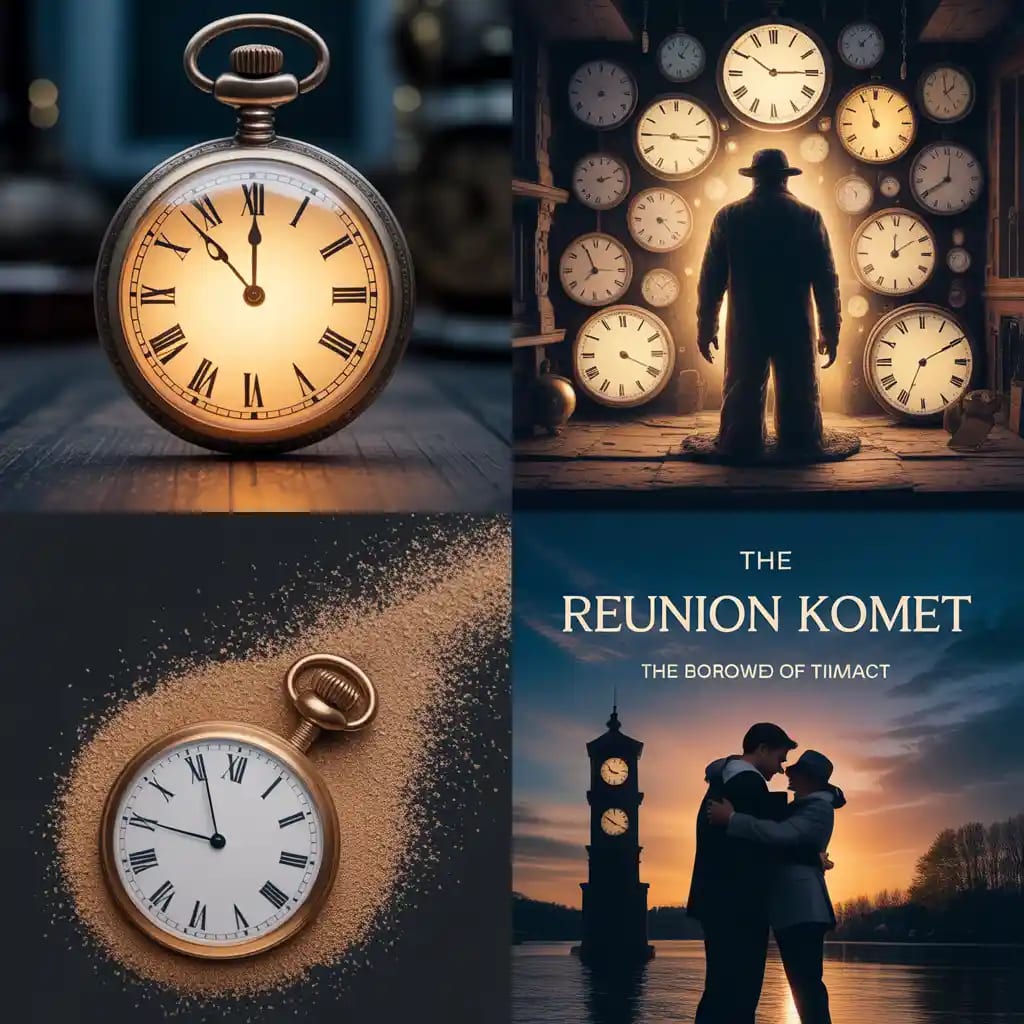
Inside, the air smelled of brass and cedar shavings. Hundreds of clocks lined the walls—grandfather clocks with solemn faces, pocket watches gleaming like coins, cuckoos frozen mid-leap. Time seemed to slow as I stepped inside.
Behind the counter stood an old man with silver hair tied neatly at his nape. His eyes were dark, steady, the kind that seemed to measure not just the hours but the years in you.
“Good evening,” he said, though outside the sun still burned. “What have you lost?”
I blinked. “I—what?”
He tapped the counter gently. “People don’t come to me for clocks. They come for moments. So, tell me—what moment have you lost?”
I wanted to laugh, to leave, but instead my throat tightened.
“My brother,” I whispered. “He died. Three months ago. A car accident. We fought the night before, and I never got to—” My voice broke.
The clockmaker regarded me with a patience that felt both comforting and terrible.
“I can give you a day,” he said.
I froze. “What do you mean?”
He lifted a pocket watch from the counter, its hands spinning backward, then pausing at midnight. “One day. With him. As though death never touched him. Twenty-four hours, exactly.”
My heart lurched. “How? That’s not—”
“Possible?” His lips quirked. “Time is elastic, my dear. It tears, it mends. I stitch the seams.”
I should have run. But grief makes fools of us all.
“What’s the cost?” I asked.
“There is always a price,” he said simply. “Time given must be time taken. I cannot say what it will be—only that you must accept it.”
I thought of my brother’s laugh, the way he used to play guitar on the porch, the unfinished apology I owed him. My hands trembled.
“Yes,” I whispered. “I’ll pay it.”
The clockmaker nodded once, solemn. He set the pocket watch in my palm.
“When you wake tomorrow, the day will be yours. At midnight, it will end. Cherish it well.”
I woke to sunlight and the sound of music.
My brother sat on the porch, strumming his guitar, alive and whole as though nothing had happened.
I stumbled outside, tears already blurring my eyes. “Sam—”
He looked up, grinned. “You’re up early. Come sing with me.”
I collapsed into his arms, clinging to him like a drowning woman. He laughed, baffled, but didn’t let go. For the rest of the day, I followed him like a shadow.
We ate pancakes drowned in syrup. We drove out to the lake, where he teased me for still being afraid of swimming. We sat on the hood of his car, watching the sky bruise into twilight, and I finally said the words I’d swallowed that night we fought.
“I’m sorry.”
He ruffled my hair. “You worry too much.”
But I didn’t. Not that day. I let myself laugh, let myself feel the sunlight on my face, let myself believe he was truly there.
Night fell too quickly.
The clock inside me ticked louder with every passing hour. At 11:58 p.m., as we sat in the living room watching some terrible sitcom, I realized the truth.
The price was coming.
At midnight, Sam leaned back, eyelids heavy. “I’m tired,” he murmured. “We’ll hang out tomorrow, okay?”
Tomorrow. The word stabbed me.
I opened my mouth to scream, to beg time to stop, but the air went still. The second hand froze at twelve.
And then, like a candle snuffed, he was gone.
I woke the next morning to silence.
The house felt colder, emptier, as though the day before had been a dream. But on the porch, the guitar still leaned against the chair where Sam had left it. Proof.
I stumbled back to the clockmaker’s shop, clutching the instrument like a lifeline.
He looked up as I entered. His face softened at the sight of me. “Did you spend it well?”
Tears streaked my cheeks. “Yes. But… the price. What did it take?”
He shook his head. “Not all costs are immediate. Sometimes time waits before it collects its debt. You will know when it comes.”
A chill spread through me. “So I’ll lose something else? Someone else?”
He folded his hands. “Perhaps. Or perhaps it will be your own time that is shortened. But remember—life is measured not in length, but in depth. Did you fill the day?”
I thought of Sam’s laugh, the warmth of the sun on our faces, the apology finally spoken. I nodded. “Yes.”
The clockmaker smiled faintly. “Then the debt is worth it.”
I left the shop with the guitar heavy in my arms.
For weeks, I waited for the price to fall—an accident, an illness, some cruel twist of fate. But it never came. Life carried on, ordinary and fragile.
And yet, in quiet moments, I swear I hear ticking in my ears. Not the steady tick of clocks, but the heartbeat of borrowed time.
I don’t know when it will stop.
But when it does, I will remember the day I was given.
And I will know it was enough.
About the Creator
Keep reading
More stories from ALEX_BLACK and writers in Fiction and other communities.
“The Stranger Who Changed My Day”,
The Stranger Who Changed My Day by Hamid Safi I woke that morning already defeated. The alarm hadn’t gone off, the coffee machine sputtered and died halfway through its cycle, and by the time I reached the bus stop, I knew I would be late for work again. The sky was gray, the kind of gray that presses down on your shoulders and makes you wonder why you bother trying at all.
By ALEX_BLACK6 months ago in Fiction
The Silence Between Footsteps
Chapter One: The Body at Briarwood Manor Briarwood Manor had always felt like a place that watched you. It sat on the edge of the lake, all stone walls and tall windows, like it had secrets built straight into its bones. People in the nearby town called it historic. Others called it cursed. Detective Rowan Hale called it inconvenient—especially when the call came in at 6:12 a.m.
By Imran Pisani4 days ago in Fiction
The BAFTA Awards
By now, in a stunning departure from recent years, most of the world is aware of what happened at the BAFTA film awards. Social Media Headlines will tell you the bare bones: that John Davidson, a Tourette's Syndrome advocate, shouted a racial slur at two Actors of Colour, Michael B Jordan and Delroy Lindo.
By Natasja Rose4 days ago in Psyche


Comments
There are no comments for this story
Be the first to respond and start the conversation.