
The City's Last Bench
Two strangers, one bench, and the weight of everything unsaid
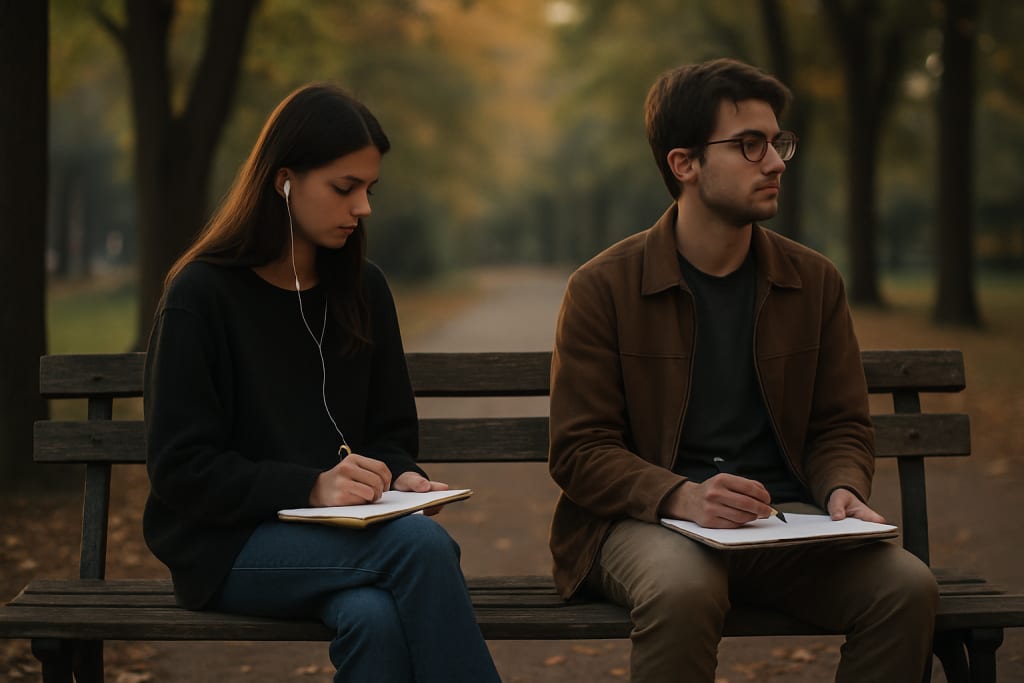
Every evening, I find myself on the same old park bench — tucked away in a forgotten corner of the city. No crowds, no chatter, no influencers snapping selfies. Just a worn-out bench, its wooden planks chipped and scarred, and me.
My relationship with this bench began when I was 14. I’d been yelled at by my mother that day — just for liking painting more than football. I remember running through the narrow alleys of the neighborhood, tears drying on my cheeks, until I landed here.
Since then, this bench has seen every version of me: the broken, the hopeful, the heartbroken, and the dreamer. Maybe it knows me better than most people do.
The First Time She Came
It was last November, on one of those gentle autumn afternoons. I was sketching in my notebook when she appeared — headphones in, diary in hand, and sadness quietly tucked behind her tired eyes.
She didn’t say anything. Just sat there, a few feet away, and tried to hide that she was crying. I could tell. I remembered being 14, on that same bench, trying to hide the same tears.
I whispered, without looking up, “If you need someone to talk to, I’m right here.”
She didn’t answer. Just smiled — a faint, fragile thing — and walked away.
And Then She Kept Coming Back
Not daily. But enough that I started noticing patterns. She always came around 4:30 PM. She’d sit in the same spot. Sometimes she'd scribble furiously in her diary, other times she’d just stare into the distance.
I’d bring my sketchbook and draw quietly.
One day, she broke the silence.
“Why are you always so quiet?”
I shrugged. “I’m not hiding from people. I’m hiding from the city’s noise. What about you?”
She looked down at her notebook. “I’m hiding from my past.”
That’s when it hit me — maybe we all have a bench where we hide our pain.
Her Name, Her Story
Her name was Ira.
She was a journalist. Sharp, brave, and too honest for her own good. She had uncovered corruption, exposed it — and paid the price. She was fired, threatened, and slandered. A hero turned pariah. The city she loved had pushed her out.
“This bench is the only place I feel safe now,” she once told me. “It doesn’t judge. It doesn’t ask questions. It just listens.”
I didn't say much that day. But I drew her — sitting quietly, diary in her lap, headphones tangled around her fingers — and kept the sketch.
And Then She Vanished
One week she didn’t show up. Then another. I waited, maybe out of habit, maybe out of hope.
The bench felt colder without her.
Then one rainy afternoon, I found a small diary tucked under the bench. I recognized her handwriting on the cover.
“Your silence taught me how to breathe again.
Your sketchbook gave me back the courage to live.
Maybe one day, we’ll meet again — on a different bench, in a different city.
Whether you remember my face or not, just know this:
Your quiet presence meant more than words ever could.
— Ira”
Today
Today, I’m back on the same bench — not waiting, not hoping, just… remembering.
Some people think benches are just for sitting. I think benches are quiet witnesses. They absorb stories. They hold onto pieces of us long after we’ve gone.
I still carry that diary and the sketch of Ira in my backpack. I haven’t seen her again, but I still talk to her sometimes — in my mind.
And this bench, old as it is, still listens.
About the Creator
Keep reading
More stories from The Doctor and writers in Fiction and other communities.
Forgive Me, Mother — For Everything I Never Said
It’s been five years since you left, and I still can’t find the right words. Maybe that’s the real tragedy — how easily we speak in anger, but fall silent in love. Maybe I never told you what you truly deserved to hear.
By The Doctor7 months ago in Confessions
Autonomy Is The Real Privilege
Good morning, freedom-seekers! Today we’re gonna be looking at autonomy. A strange word, I know; one many would probably look at blankly and run away from on sight. We’re gonna figure out what it actually means, consider how it’s achieved, and decipher just how deeply most of us are tangled up in dependence without realising it.
By That ‘Freedom’ Guy6 days ago in Humans


Comments
There are no comments for this story
Be the first to respond and start the conversation.