
The Ciphered Murders
When ancient scripts become a serial killer’s signature, only a linguistic genius can crack the code before time runs out

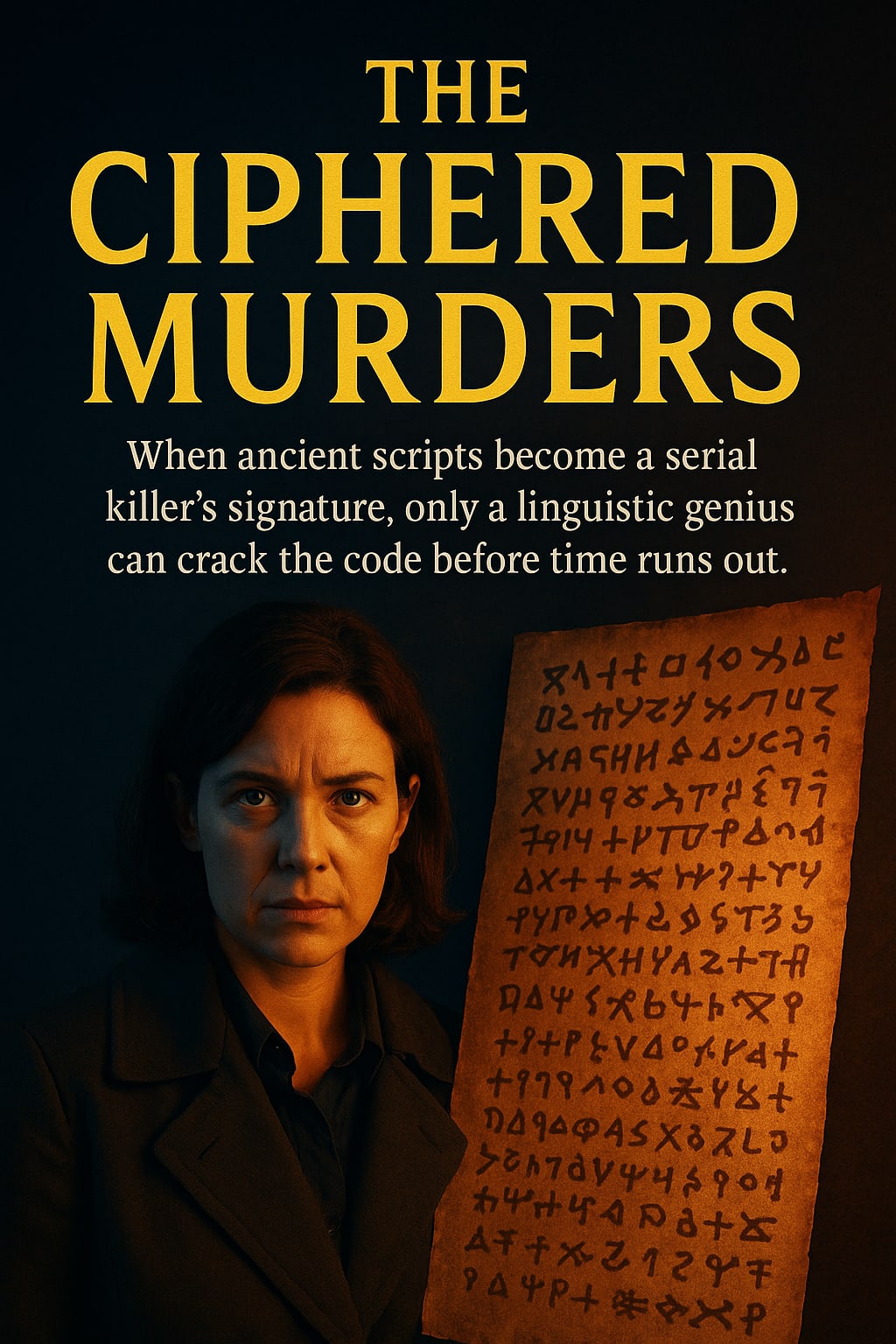
Dr. Elise Morgan had built her reputation on decoding forgotten languages—her office at the British Museum was filled with clay tablets, papyrus scrolls, and tattered codices. She never expected her skills would be called upon by the police, especially not for a murder case.
But the call came on a rainy Wednesday.
“Dr. Morgan,” said Inspector Daniel Reeves over the phone, “we’ve found something… unusual.”
The body of the first victim had been discovered in a London flat, lying peacefully in bed. No wounds. No signs of a struggle. The only anomaly was a note left on the nightstand—three lines of elegant script, clearly ancient, but unreadable to the investigating officers. Reeves brought it to Elise that afternoon, his face drawn and pale.
“This isn’t just a message,” Elise said after a moment of study. “It’s in Linear B… an early form of Greek, used around 1400 BC. Not many people could write this.”
The words translated roughly to: The balance must be restored. Blood for blood, truth for lies.
The next body turned up two days later in Manchester. Another note, this time in Etruscan. Then a third in York, written in Old Persian cuneiform. Each time, Elise decoded the messages, which grew darker and more ritualistic.
The press dubbed the killer The Polymath Butcher. Social media buzzed with theories—occult societies, disgruntled professors, AI gone rogue. Elise dismissed them all. This wasn’t random. It was deliberate, targeted.
As the pattern unfolded, she realized the messages weren’t just symbolic—they formed a narrative. A story of vengeance across generations. Someone was re-enacting historical betrayals, using language as both weapon and shield.
The turning point came when the fourth victim was someone Elise knew: her former mentor, Dr. Andrew Kessler. Found in his Cambridge library, the message was in Phoenician and read: The disciple must watch the master fall.
Elise understood then—it was personal. The killer was someone from her academic past. Someone who believed he had been wronged, possibly discredited or ignored. Her mind raced back through old conferences, quiet rivalries, rejected journal articles.
The final clue led her to an abandoned chapel in Edinburgh, once a meeting place for an obscure scholarly society. Inside, amid broken pews and damp stone walls, she found the killer—Dr. Lucas Varnell, a once-brilliant linguist turned recluse, whose research had been dismissed as fringe pseudoscience.
“You never understood,” he whispered, holding up a final scroll written in Sanskrit. “Languages carry power. Their symbols are older than gods. Each death is a syllable. Each message, a chant.”
Elise stalled him long enough for the police to arrive, her heart pounding not out of fear, but sadness. Varnell hadn’t been mad—just consumed by the need to be heard in a world that had silenced him.
Thank you for reading.
If this story intrigued you, feel free to leave a comment or share it. I appreciate every reader who dives into these mysterious worlds with me.
About the Creator
Lucian
I focus on creating stories for readers around the world
Out of the loop
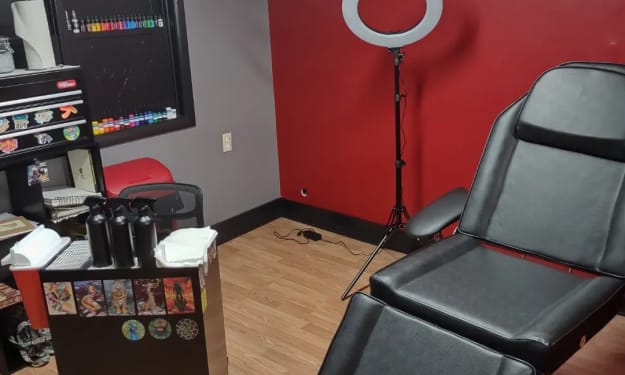
I couldn't let my nerves win, This big opportunity just landed out my front door and I would not let it pass without a solid effort. I held onto my portfolio and stepped into the small dilapidated building that had "Tattoo Artist Wanted" crudely written across its windows in decorative holiday paint.
By Mollie Harrisonabout 16 hours ago in Fiction



Comments
There are no comments for this story
Be the first to respond and start the conversation.