

The day I spoke my first word is a day that I cannot remember all that well. I know it is a real day, or else I would not have been able to speak at all, and I am glad that I can. If it did happen, I must have a memory of it somewhere, would I not? I have been told I have a stellar memory, but I am not so sure I would believe it if God told me himself, just because I cannot remember such an important day. Granted, I was only a babe at the time.
If I could have counted my first steps or audibly heard my mother's first laugh, maybe time would have traveled more slowly. No one had ever told me that the years would travel by so fast; perhaps I could have cherished my life more if I had remembered my first few years. But then again, I was very young.
On the long dirt roads that snake through a small town just south of a large river where the fish thrive, I remember my first skinned knee. It is one of the first memories I can remember vividly and without confusion.
In a wild race between the fastest runners in the small town, Billy and I were neck and neck when a ginormous boulder- which I now realize was merely a tiny rock- hopped out and caused me to stumble the last few steps. In the rumble and tumble, my little life flashed past my eyes as my knee tore against the dry gravel. Tears ran down my face, and I tried to bear the terrible pain. I thought I was going to die that day.
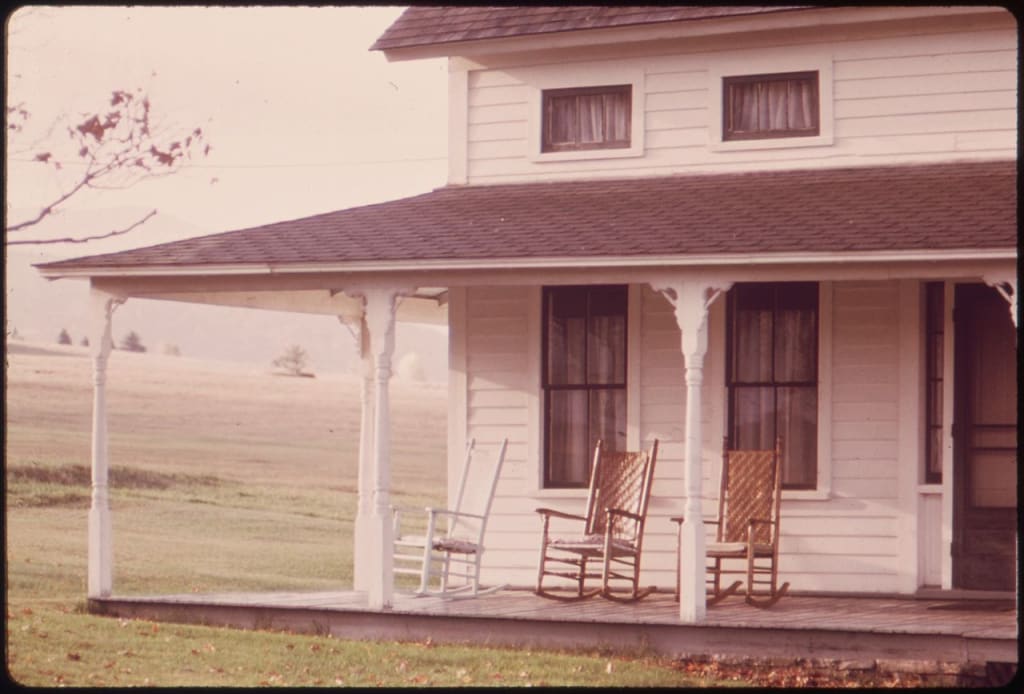
I was eight the day that I sat on my grandfather’s lap, eyes still misty from the fall. We sat on the old wooden porch of a run-down home in a carefully crafted chair my grandfather made himself. Through crusted-over blood and skin, he picked out shards of gravel, and I tried my hardest not to squirm too much. He held my hand through my gasps and cries, and he told me not to worry. If there were any greater pains on the earth than that I felt, I had no idea.
“It’s all right, son. There, there,” he would tell me. Then, after he took the gravel out of my knee and washed my tender skin, he sat me up and looked into my big, round eyes.
“You are quite brave, yes you are! Much braver than I was when I was your age.” Shifting me over to his other leg, he took off his shoe, showing me his foot. Where I thought there were flesh and bones, he showed me plastic and metal bars running down his leg.
“Have I ever shown you this? It’s not a story I tell often, but I’m sure you are eager to listen, aren’t you?” I nodded.
He told me about a time, long ago, when war shredded the country into pieces. The war itself was not fought on home soil, but the ground where we stood could feel the quakes of the battling. He told me of a time when he sat in a small trench around many other men. Some hurt, others dead, others fearing for their lives. Hardly any in between, and everyone eager to be over with their night of hell. He told me it must have been stormy out because he could hear thunder booming in the distance and flashes of light all around him.
“There was fire that rained down on us, and it was fire that took my leg.” He looked off into the distance and gazed at the moon, not quite complete but a beautiful crescent. Stars peppered the sky around us as the last of daylight said goodnight.
“That really was quite the night.” He appeared as if he was trying to remember it clearly. “I remember rockets of fire coming down on me and my comrades, and I remember hearing the screams- not just my own, but my friends. It was the worst night I have ever experienced. I was in a blur when they lifted me out hours later and tried to fix my leg, but they didn’t do a good enough job, apparently!” He chuckled and looked at his foot.
Lifting me from his good leg, he stood up and carried me on his shoulder to my bedroom. “It would be about time you go to sleep, wouldn’t it? Brave soldiers need rest, you know.” He playfully flicked my nose and laid me on the cotton linens.
“Grandpa?” My small voice rose from under the blankets.
“Yes?”
“Will I have to lose my leg?” He looked at me carefully and with loving eyes.
“Not yet. And God willing, never.” He ruffled my hair and laid my head down softly on the pillow. “No one should have to go through anything like that. But sometimes we must. And if we must do it again, I know you’ll be brave.” He wandered to the hallway and turned off the lights, leaving the door parted slightly, letting light through the crack.
In the darkness, I heard the faint sound of music outside my window. Looking out, I saw my grandpa with an instrument up to his mouth- a trumpet. With beautiful notes arpeggiating a gorgeous song, the notes sang me to sleep. That night I dreamt of fireballs from the sky and of men, crying as they feared for their lives and prayed for their family, who waited eagerly for their husband, father, brother, or son to return.
That day was a long time ago, but it was the first memory I remember clearly. It is my first memory of my loving grandfather doing what he was best at- caring for people. That day was my first memory of fear; my first memory of a nightmare that woke me up in the night; my first memory of hope. My grandpa held me that night, cooing me in my tears and holding me until I fell back asleep.
I remember the song he played that night. The sweet music emanated from the trumpet bell: such simple notes, simple chords, yet so much history and beauty. I had no idea at that time that I would be falling asleep to that song for most of my life.
“Grandpa,” my small voice rose to his ears. “That song that you played last night on the porch; what was that song?” After I woke him up, we sat on the porch as I tried to hide back tears. I sat on his lap again, and we watched the stars spin around the sky.
“That’s a good question. We call it Taps, but it’s gone by many names over the years.”
“Taps. That’s a funny name. What does it mean?”
“Well, for some, it means night has come. It used to be played in every army base during the war, and it told people to go to sleep.”
“Like a rooster crow in the morning?” I said with a sad smile.
“Yeah, kind of like that! Roosters’ calls signal morning, Taps are a signal for everyone to go to bed. So when people think of the night and sleeping, they come to it with happiness—a chance to rest after a long and tiring day. But on the other hand, it can mean sorrow. A fallen soldier.”
“Why did they fall, grandpa?”
He looked at me with sober eyes. “They didn’t just trip and fall. It means that they went to sleep for a long time.”
“Oh, I see.”
“So when I play that song, I pray to God. I pray for those who are sleeping, and I pray for those who are about to go to sleep.”
“Will you go to sleep?”
“Yes, someday. And someday you will too.”
I looked at the stars and tried not to cry. I thought about how I did not want to go to sleep. A tear trickled down my cheek, and he wiped my face with his sleeve.
“Don’t worry, I won’t die for a long time, and you won’t for even longer. But I do wait for it eagerly.”
I looked up at him with fearful eyes.
He let out a small chuckle. “It doesn’t mean I want to die, son. On the contrary, I want to spend as much time as I can with the people I love most.” He poked me on the nose. “But I am eager for what comes after! Somewhere, very far away- but not that far- is a place where no one cries or gets hurt. Everyone is happy and joyful. Someday, I will go there, and I’m excited to get there. To meet my father.”
“Your dad? Have I met your dad?”
“I don’t think you’ve met my dad on earth, he was very old when you were born, but I’m talking about God. He is our Father, and he loves you very much.”
“He sounds cool.”
“Yeah, he is.”
As time moved on, twelve years went by faster than I could have imagined. So much happened, from school days to summer nights. Through relationships, I learned how to love; through heartbreak, I learned how to cry. The reality of life shook me in my shoes, and an eight-year-old would not understand the commotion of it all.
Every night, from starry skies to thunderous nights, from bitter cold to blazing heat, my grandfather sat on his wooden rocking chair with his trumpet, and choruses of angels sang along to his playing. He laughed while playing and cried while playing; I could not begin to imagine the thoughts and memories playing through his mind. The poems he spoke in the form of musical notes rang out over the small town and resonated in the hearts of everyone who heard it. The words changed into notes, and the trumpet was only a tool to access and express his emotions. Each day was different; it could be jazzy one day or a slow, melancholic ballad the next.
Every night, along with the emotions he circulated into the city, he played Taps, and every night I knew what it meant. He was not just signaling the time to sleep; he played for his fallen friends.
When I was thirteen, he approached me with his trumpet and asked me to try a few notes.
“I won’t be here for long, you know this,” he began to say. “The town needs a messenger, and if not a messenger, something to look forward to every night. So here,” he handed the instrument to me and pursed his lips. “Make your mouth like this and blow into the mouthpiece.”
I did, and all that came out was a tiny squeak that sounded like a cow passing gas.
“Put some air through it!” He exclaimed. “Don’t be scared!”
I blew a little harder. I cannot say it was the most beautiful note, but it was a step up from the previous try.
“Brilliant, boy! I will make a musician out of you yet!”
For years he tried to teach me how to play successfully, to no avail. I practiced and practiced to try and do as he taught me, but I lacked musicality. I had practiced for hours on end, and he taught me everything he knew. He taught me why specific notes sound good together; why the trumpet makes a sound at all; he taught me the difference between emotionless music and a story.
“If a song does not have feeling, it is no song at all! You need to tell a story. Listen here,” he played me a major arpeggio. “What emotions do you think of when you hear this?”
“Um, I hear happy emotions.”
“Okay, listen to this.” He played me the same notes, but more slowly and somberly. “What do you think?”
“That sounds sad or gloomy. It’s not a mad-sad, or even necessarily sad-sad. Almost nostalgic, or...um, I don’t know.”
“No, you’re right! I could play those notes over and over, but if I add feeling to it, the listener thinks of a totally different emotion!” He went on to minor scales and blues scales, and each time I understood what it meant, I just could not play with emotion. So my music was only notes on a page, no more, no less.
When I turned nineteen, there was a day I walked in the door, and my grandfather was lying on the floor. Running to him, I turned him over and tried to make sure he was okay. His face was pale, and his skin was burning hot. Quickly calling an ambulance, we rushed to the hospital.
In a blur of events, they ran him through revolving doors and hooked him up to machines straight from a horror movie. They ran him through white-washed halls with doctors running here and there, between him and me. They asked me questions that I knew how to answer, but at the moment, the words never came to my lips. Finally, they rushed him into a room and told me to sit in the waiting area. The last thing I wanted to do was wait.
In chairs that were supposed to be comfortable, I felt more uncomfortable than I did in my health class in middle school. I had no control of my body at that moment; my eyes stared at the television screen, watching the news I could not understand, my hands laid limply at my sides, my mouth hung agape. If someone said anything to me at all, I was unaware of it.
It was hours before a doctor came out to me and grabbed my attention. He spoke quietly and stoically, but the words that came from his mouth did not register with me. He guided me to a different room than my grandfather had begun that night, and I immediately regretted walking through the door. I saw my grandfather under a pure white blanket, wearing a hospital gown. He had an IV coming from his arm and plastic tubes pumping air into his nose. He still looked pale, but now he had dark blotches under his eyes. He saw me come in and gave me a sad smile, ushering me closer to him.
He spoke to me with a hoarse voice, and I sat there next to him. I said nothing- I was in shock. He put his hand on my knee and assured me that everything was all right, that he would be okay. That night I stayed next to him and watched him sleep peacefully through the night. I tried to keep my tears a secret, though no one cared to see me a wreck.
I got little to no sleep. Sometimes in the chair next to my grandfather, other times in the waiting room of the hospital. People came who cared about my grandfather; some I knew, others I did not. They urged me to go home and get sleep, but I cried and feared, and rest rarely came when I finally did.
The following day I woke up late in the afternoon when the phone beside me rang. I knew what they said before the words reached my ears.
I do not know if I was too tired or just too dehydrated to cry, but I just sat in dumbfounded silence without thinking in my head. I felt my stomach growl at me, but I did not feel hungry; I felt my tongue cry out for water, but I felt no thirst.
I remember that week clearly like it just happened yesterday. I revisit it every day. It is a memory I never want to give up.
That night I walked out to the porch and saw an empty rocking chair with a trumpet case sitting right next to it. The instrument was carefully tucked away in its home without a sound. I sat in the chair, opened the case, and stared at the glistening brass shine from the full moon rising in the east. Then, picking up the trumpet, I dampened my lips and pressed my mouth against the mouthpiece.
At first, only sounds came out, no words or emotions. Then, tears slid down my face, and my heart burned with sorrow. I remember all those times when my grandfather begged me to learn how to tell a story with a song. He taught me jazz, classical, and rock. He taught me just to play my notes and not need a paper to tell me what to play. He taught me how to play Taps.
Remembering the simple notes of Taps, I played the first phrase with as much emotion I could handle. Then the following expressions, and the next, until the song was over. But I just kept playing.
“Whatever feelings you have, use them in your notes.” My grandpa had told me. “Express your emotions.”
I played Taps and remembered the fallen soldiers, the soldiers that had fallen asleep. I remembered the stories that my grandfather told me. I remembered his sorrow for his family and friends.
I remembered my Grandfather. A soldier. A now sleeping soldier who sleeps in eternal peace. And everything was all right.
I do not remember much about the day I first learned to speak, but I know my Grandfather remembers. I may not remember the first words I said, but he held on to those words forever. I can barely remember the first day I tried to play trumpet, but I remember the first day I learned to speak through music, and stories were born.
About the Creator
Justin Wolters
Hello! I am a college student majoring in elementary education and minoring in theology! I love to read and write, and I spend much of my time outdoors. God bless!
Instagram: wolters.justin
Keep reading
More stories from Justin Wolters and writers in Fiction and other communities.
COVID-19 Versus Senioritis
Whether you are waiting for your high school diploma, taking those last few college credits to earn your degree, or have been retired for years, the term 'Senioritis' is nothing new. Defined by Google as a decline in motivation upon reaching the final year of school, 'Senioritis' is one of the most contagious viruses known to man. Symptoms of 'Senioritis' include chronic laziness, persistent missing assignments, and deadly apathy, with very few remedies for existing conditions. According to the Mental Apathy Treatment Hotline (MATH), global pandemics increase the severity of symptoms unparalleled to previous data and 2020/21 patients are unlikely to recover.
By Justin Wolters5 years ago in Education



Comments
There are no comments for this story
Be the first to respond and start the conversation.