
The Artemis Moon Mission Humanity Return to the Lunar Surface
The Artemis Moon Mission symbolizes a new era of lunar exploration with ambitious goals that extend beyond simply returning to the Moon.
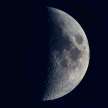

In the annals of space exploration, the Apollo missions hold a storied place, marking humanity's first steps on the Moon. Over half a century later, NASA's Artemis program aims to reignite that spirit of exploration and push the boundaries even further. Named after the twin sister of Apollo in Greek mythology, Artemis symbolizes a new era of lunar exploration with ambitious goals that extend beyond simply returning to the Moon.
The Artemis Moon Mission
The Vision and Objectives of Artemis
The Artemis program's overarching goal is to establish a sustainable human presence on the Moon by the end of the decade. This mission is not merely about landing astronauts on the lunar surface but about creating a lasting infrastructure that will enable ongoing exploration and utilization of lunar resources.
1. Returning Humans to the Moon: Artemis aims to land the first woman and the next man on the lunar surface, marking a significant milestone in human space exploration and promoting diversity and inclusion in space endeavors.
2. Sustainable Exploration: Unlike the short-term visits of the Apollo missions, Artemis seeks to establish a sustainable human presence on the Moon. This includes developing habitats, rovers, and life support systems that can support long-duration stays.

3. Lunar Economy: Artemis aims to lay the groundwork for a lunar economy, utilizing the Moon's resources to support future missions. This includes extracting water from lunar ice, which can be used for life support and converted into hydrogen and oxygen for rocket fuel.
4. Preparation for Mars: Artemis is seen as a stepping stone to Mars. The technologies, strategies, and experiences gained from lunar exploration will inform and facilitate future manned missions to the Red Planet.
Components of the Artemis Program
The Artemis program comprises several key components and missions, each playing a crucial role in achieving its ambitious goals:
1. Space Launch System (SLS) :
The SLS is NASA's new heavy-lift rocket designed to carry astronauts and cargo to the Moon and beyond. It is the most powerful rocket ever built, capable of launching the Orion spacecraft, astronauts, and supplies necessary for lunar missions.
2. Orion Spacecraft:
Orion is NASA's new crewed spacecraft designed for deep space missions. It will carry astronauts from Earth to lunar orbit and back, providing life support, navigation, and safety systems for the crew.
3. Lunar Gateway
The Gateway is a planned space station that will orbit the Moon, serving as a staging point for missions to the lunar surface. It will provide living quarters, laboratories, and docking ports for visiting spacecraft, enabling sustained exploration and experimentation.
4. Human Landing System (HLS)
The HLS is the lunar lander that will carry astronauts from the Gateway to the Moon's surface. Several companies, including SpaceX with its Starship, are developing competing designs for this critical component.
5. Artemis Base Camp
Located at the lunar South Pole, the Artemis Base Camp will be a long-term habitat supporting extended stays on the Moon. It will include living quarters, laboratories, and power generation facilities, designed to be a permanent outpost for human exploration.
Artemis I

The Artemis program officially began with the Artemis I mission, an uncrewed test flight that successfully launched on November 16, 2022. This mission was a critical first step in validating the SLS and Orion systems, paving the way for future crewed missions. Artemis I sent the Orion spacecraft on a journey beyond the Moon and back, testing its systems and ensuring its readiness for carrying astronauts.
Artemis II

Following the success of Artemis I, Artemis II is set to be the first crewed mission of the program. Scheduled for launch in 2024, Artemis II will take astronauts on a journey around the Moon, testing the spacecraft's life support systems, communication capabilities, and overall performance in a deep space environment. This mission will mark the first time humans have traveled beyond low Earth orbit since the Apollo missions.
Artemis III

Artemis III, planned for 2025, will be the historic mission that returns humans to the lunar surface. This mission will land astronauts at the lunar South Pole, a region of particular interest due to its permanently shadowed craters that are believed to contain significant quantities of water ice. The presence of water ice is crucial for sustainable lunar exploration, providing a potential source of drinking water, breathable oxygen, and rocket fuel.
Read more:
About the Creator
Galaxiesbuzz
Welcome to Galaxiesbuzz your one-stop destination for exploring the wonders of space, staying healthy, discovering new travel destinations, and staying informed with the latest knowledge. Our blog offers everything for everyone
Keep reading
More stories from Galaxiesbuzz and writers in Fiction and other communities.
What are Meteor Showers?
Meteor showers are one of nature's most spectacular celestial events, captivating sky watchers for centuries. These dazzling displays occur when Earth passes through streams of cosmic debris left by comets or asteroids, resulting in streaks of light across the night sky. In this blog, we will delve into the science behind meteor showers, highlight some of the most prominent ones, and offer tips on how to best observe these breathtaking phenomena.
By Galaxiesbuzz2 years ago in Fiction
Pandora’s Burden
“My brother warned me to not accept gifts from the one who commissioned you,” said Epimetheus to the woman clad in silvery raiments standing at the entrance to the temple. Her silver tiara and the silver rings on her fingers and toes glinted in the firelight cast by torches set on either side of the doorway. Lingering in the shadows, beyond the reach of the flames as she was, he could not tell what she held in her hands. At first what appeared to be a box was perhaps a funerary urn, or maybe merely an apple.
By J. Otis Haasa day ago in Fiction
LHS Class of 01 The Reunion
Joan stared at the glossy invitation that had arrived two weeks earlier, feeling a familiar flutter in her chest that she hadn’t experienced since senior year. The high school reunion, scheduled for a balmy Saturday night at the old gymnasium-turned-event hall, promised more than just food and music; it promised a reunion of three lifelong friends whose paths had diverged after graduation. As she imagined Emily’s bright laugh and Megan’s quick wit, Joan could almost hear the echo of their hallway jokes reverberating through the corridors of memory. “It’s going to be like stepping back in time,” she whispered to herself while scrolling through old yearbook photos, each snapshot a reminder of late‑night study sessions, prom night drama, and the countless times they had leaned on one another for support. The excitement was palpable, a mix of nostalgia and anticipation that made her heart race a little faster each time she imagined the moment the three of them would finally stand together again under the soft glow of the reunion lights.
By Forest Greena day ago in Fiction
My First Time Skiing and I Got Lost, Alone, in the French Alps
Looking back, I can trace some of my life’s biggest adventures to a simple action from my sister. She’d introduced me to Tommy (a very long time ago), a colleague of hers, who had overshared his penchant for Italian-looking women, and I ticked that box.
By Chantal Christie Weissa day ago in Humans


Comments (1)
Hey, just wanna let you know that this is more suitable to be posted in the FYI community 😊