
What are Meteor Showers?
What are Meteor Showers? Meteor showers are one of nature's most spectacular celestial events, captivating sky watchers for centuries.
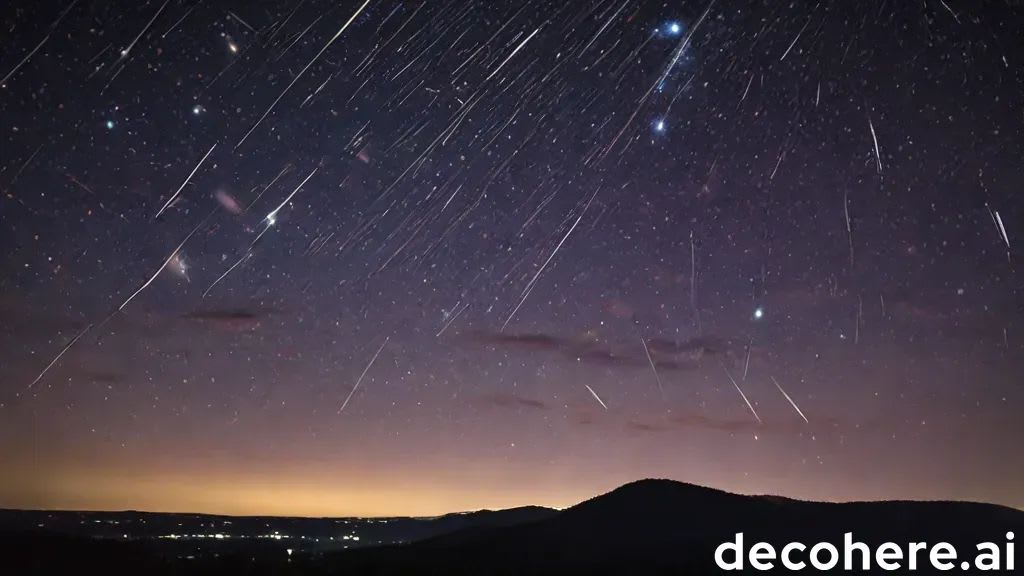
Meteor showers are one of nature's most spectacular celestial events, captivating sky watchers for centuries. These dazzling displays occur when Earth passes through streams of cosmic debris left by comets or asteroids, resulting in streaks of light across the night sky. In this blog, we will delve into the science behind meteor showers, highlight some of the most prominent ones, and offer tips on how to best observe these breathtaking phenomena.
What are Meteor Showers?
Meteor showers are the result of Earth's orbit intersecting the trail of debris left by a comet or, less commonly, an asteroid. As these small particles, often no larger than a grain of sand, enter Earth's atmosphere at high speeds, they burn up due to friction with the air, producing bright streaks of light known as meteors or "shooting stars."
The source of a meteor shower is typically a comet. As a comet approaches the Sun, the increase in temperature causes it to shed dust and debris, forming a trail along its orbit. When Earth crosses this debris trail, the particles collide with our atmosphere, creating a meteor shower. The point in the sky from which the meteors appear to originate is called the "radiant," and meteor showers are usually named after the constellation in which their radiant lies.
Major Meteor Showers
Several meteor showers occur annually, each associated with a specific comet. Here are some of the most notable ones:
1. Quadrantids (January)
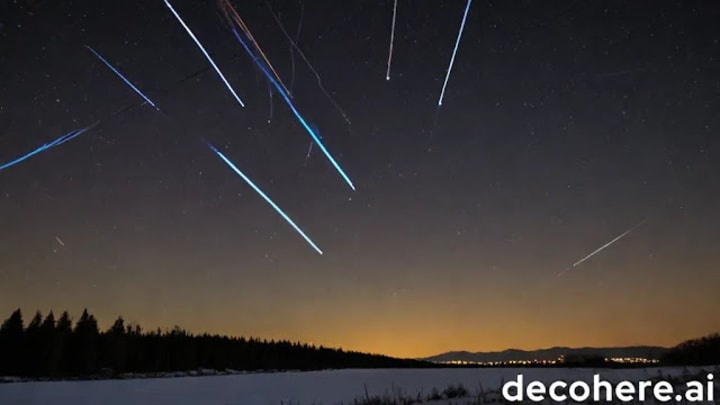
The Quadrantids are one of the year's first major meteor showers, peaking in early January. They are named after the now-obsolete constellation Quadrans Muralis. Unlike many other meteor showers, the Quadrantids have a relatively short peak period of just a few hours, making it crucial to observe them at the right time. The shower's parent body is believed to be the asteroid 2003 EH1, which may be a fragment of a comet that broke apart centuries ago.
2. Lyrids (April)
The Lyrids, visible in mid-April, are one of the oldest recorded meteor showers, with observations dating back to 687 BCE. They are associated with Comet C/1861 G1 Thatcher, which orbits the Sun every 415 years. The Lyrids are known for producing bright meteors with persistent trails, and their radiant is located near the bright star Vega in the constellation Lyra.
3. Eta Aquariids (May)
The Eta Aquariids peak in early May and are associated with Halley's Comet, one of the most famous comets in history. This shower is best viewed from the Southern Hemisphere, where it can produce up to 50 meteors per hour at its peak. In the Northern Hemisphere, the Eta Aquariids are less intense but still visible in the pre-dawn hours.
4. Perseids (August)
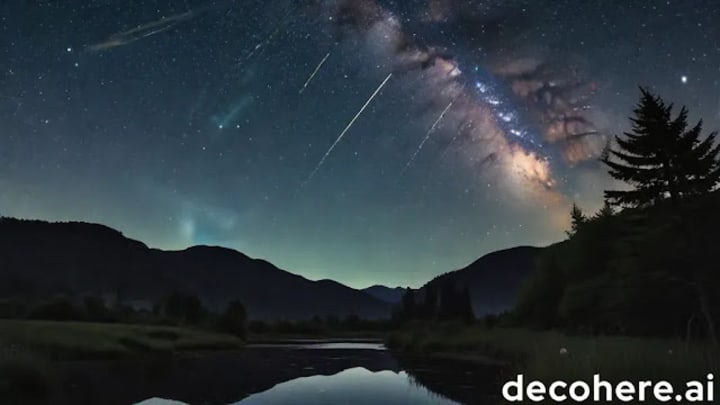
The Perseids, peaking in mid-August, are perhaps the most well-known and widely observed meteor shower. They originate from the debris left by Comet Swift-Tuttle, which has a 133-year orbit around the Sun. The Perseids are renowned for their high rate of bright, fast-moving meteors and are best observed from the Northern Hemisphere. On a clear night, observers can see up to 100 meteors per hour at the shower's peak.
5. Orionids (October)
The Orionids, another meteor shower associated with Halley's Comet, peak in late October. They are known for their fast meteors, which can leave glowing trails that last for several seconds. The radiant for this shower is located near the constellation Orion, one of the most recognizable constellations in the night sky.
6. Leonids (November)
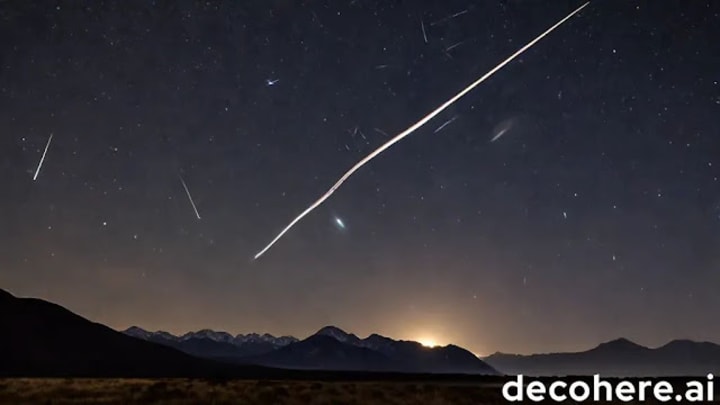
The Leonids, peaking in mid-November, are famous for producing meteor storms—events with rates of thousands of meteors per hour—roughly every 33 years. These storms occur when Earth passes through dense streams of debris left by Comet Tempel-Tuttle, which has a 33-year orbit. The most recent Leonid meteor storm occurred in 2001. During non-storm years, the Leonids typically produce a more modest rate of 15 meteors per hour.
7. Geminids (December)
About the Creator
Galaxiesbuzz
Welcome to Galaxiesbuzz your one-stop destination for exploring the wonders of space, staying healthy, discovering new travel destinations, and staying informed with the latest knowledge. Our blog offers everything for everyone
Keep reading
More stories from Galaxiesbuzz and writers in Fiction and other communities.
How are galaxies destroyed?
There are several ways through which galaxies die, depending with the type of galaxy involved. In the great ocean of the universe, galaxies are the great clusters of stars, gas and dark matter held together and shaped by gravity and the unyielding power of cosmic processes of transformation. Of course, the more majestic spiral, or the sleek elliptical can look like it is immovable, but this is far from the truth.
By Galaxiesbuzz2 years ago in Fiction



Comments
There are no comments for this story
Be the first to respond and start the conversation.