
The AI Revolution: Transforming Drone Technology
How the Integration of Artificial Intelligence is Enhancing Drone Autonomy and Efficiency Across Various Applications

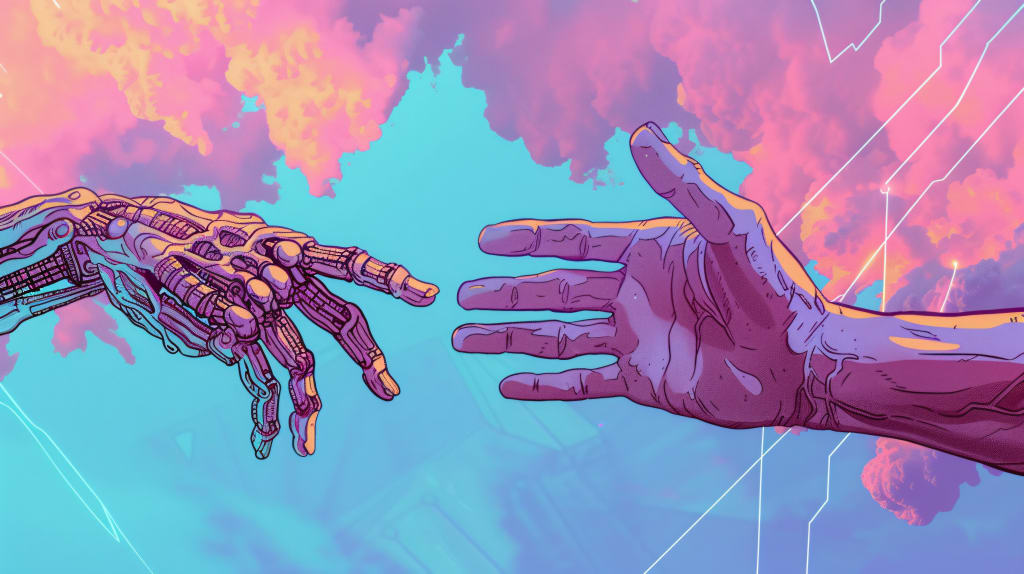
The development of AI in drones has both significant advantages and significant disadvantages, and is outlined below:
**Pros:**
- **Increased autonomy**: AI allows drones to perform complex tasks autonomously, improving efficiency in areas such as delivery, agriculture, and surveillance.
- **Innovative applications**: The integration of AI is expected to lead to new applications, transform industries, and enhance military capabilities.
**Cons:**
- **Ethical concerns**: The use of AI in drones raises issues such as privacy violations and biased decision-making, particularly in surveillance and military contexts.
- **Increased risks**: The potential for misuse in combat and the risk of accidents or errors can pose a threat to civilian safety and security.
**The upside of AI development in drones**
- **Operational efficiency**: AI enhances the ability of drones to process data in real-time, enabling faster decision-making and providing improved operational efficiency in a variety of fields, including agriculture, logistics and emergency response.
- **Autonomous navigation**: Drones equipped with AI can navigate independently in complex environments, which is crucial for applications such as search and rescue operations, infrastructure inspections and delivery services.
- **Data collection and analysis**: With AI, drones can collect and analyze a lot of data, giving valuable insights to industries like agriculture, urban planning, and environmental monitoring. - "Swarm technology": The ability of multiple drones to work together can make tasks like large-scale mapping and coordinated surveillance more effective and efficient. **Consequences of Drone AI Development** - **Privacy Issues**: Deploying AI-powered drones for surveillance raises significant privacy concerns, as they can monitor individuals without consent, leading to potential abuse of power.
- **Accountability and Liability**: As drones become more autonomous, it becomes more difficult to determine who is responsible for accidents or unintended consequences, which raises legal and ethical concerns. - **Decision-Making Bias**: AI algorithms can inherit biases from their training data, which can lead to unfair or discriminatory outcomes in applications such as law enforcement or military operations.
- **Security Vulnerabilities**: AI-powered drones are susceptible to cyberattacks, which could compromise sensitive data or lead to unauthorized control of the drones, posing a risk to public safety.
(Special note: Despite the absence of cutting-edge technology like drones, individuals still excelled in their respective roles and responsibilities. Change is needed and progress is needed. Is it right to eliminate the existence of humanity while keeping pace with change and progress?)
About the Creator
MD.A.R Neaz
Welcome to my Channel . Friends and viewers where we explore the intersection of creativity, culture, and innovation! My channel is dedicated to sharing thought-provoking articles, inspiring stories, and insightful commentary .
Keep reading
More stories from MD.A.R Neaz and writers in Fiction and other communities.
Who is known as Allah's Sword?
In the early history of Islam, Khalid ibn al-Walid, also known as "The Sword of Allah," was a legendary military leader. He fought a lot of battles and lived a way of life that showed his devotion to Islam and military excellence. A comprehensive overview of his wars and life: ### Major Wars and Battles
By MD.A.R Neaz11 months ago in Fiction



Comments
There are no comments for this story
Be the first to respond and start the conversation.