
Staring at the Papers
A Journey from Betrayal to Unseen Desolation

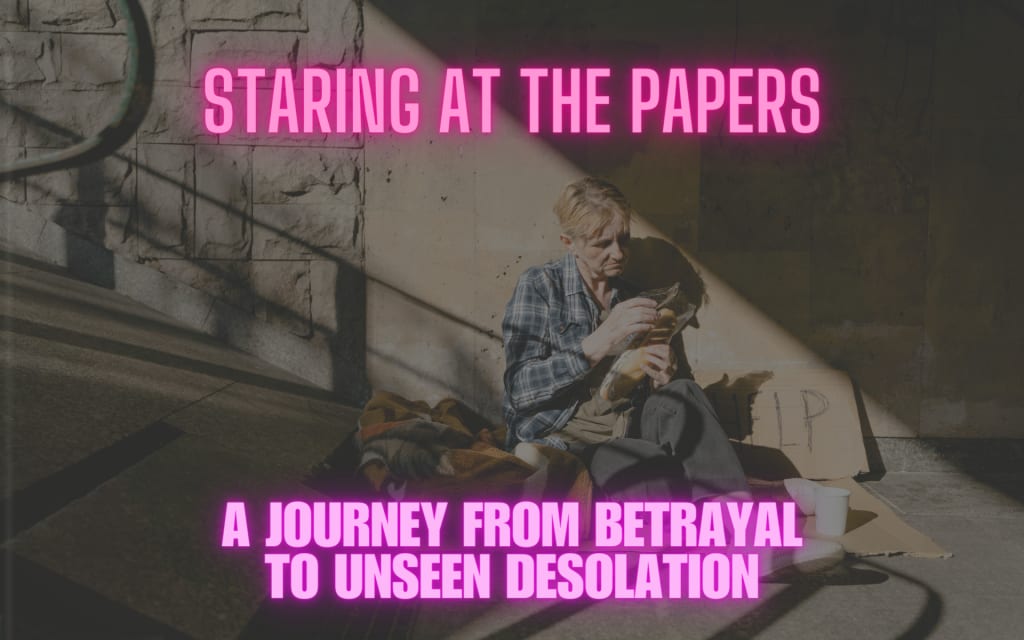
As the city's skyline bled into hues of crimson and gold, she perched on her bed's edge, the papers in her lap in stark contrast to the fading light. Her heart drummed an anxious rhythm in her chest, while her mind whirled with a tempest of thoughts and queries. The words inked on the paper seemed alien, yet they were all too real—her husband had been having an affair. And not just with anyone—with her best friend.
A sickening wave of realization crashed over her as she grappled with this painful truth. She'd always sensed something amiss but never could have fathomed this degree of betrayal. Her hands trembled as she picked up a photograph that captured their shared laughter, oblivious to the agony they'd inflicted upon her.
Tears welled up in her eyes, staining the incriminating evidence in front of her. How could he shatter their sacred vows? They had spent more than ten years weaving a life together, only for it to unravel so cruelly. She sat there for what felt like eternity before rising from her bed and walking towards the living room.
She reached into the cupboard and pulled out a bottle of wine, forgoing any semblance of decorum by drinking straight from it. The bitter liquid burned down her throat—a harsh comfort against the gnawing pain inside her.
As she slumped onto the couch, she felt as if an entire universe had collapsed onto her shoulders. She had lost everything—her husband, best friend, and even worse—their unborn child. Amidst his infidelity's chaos, she had suffered a miscarriage—a loss too profound to comprehend.
She took another swig from the bottle; its warmth spreading through every inch of her body couldn't mask the relentless waves of pain crashing within. Alone in this ordeal, no one would understand what she was going through.
By the time she fell into a restless sleep, the bottle was half-empty. She dreamt of happier times, a life she thought would remain constant. But now, everything has changed.
She woke up in the middle of the night to an oppressive silence. Stumbling back to her bedroom, she collapsed onto her bed in a daze. The following morning, I greeted her with a throbbing headache and a looming sense of dread. She couldn't face reality, so she buried herself under her covers, intermittently sleeping and drinking throughout the day.
As days blurred into weeks, her apartment morphed from organized chaos into a pit of despair—empty wine bottles littering the floor and unwashed dishes piling up in the sink. Her personal hygiene took a backseat as she let herself drift aimlessly through life.
One day, an eviction notice arrived from her landlord—she had forgotten to pay rent amidst her self-imposed exile. She packed what little belongings she had left and stepped out of her apartment one last time.
With no destination in mind, she wandered aimlessly through the city's bustling streets. As people rushed past with their lives' purposeful strides, envy gnawed at her heartstrings.
Her first night on the streets was spent huddled on a park bench. From comfort to homelessness within weeks, it was too much to bear. Anger towards him gradually turned into grief as days turned into weeks—mourning not only for their lost marriage but also for their unborn child that would never be.
Each passing day numbed her further until all that remained was an empty shell, merely existing rather than living.
Then one day, while begging on street corners and sleeping in alleyways or abandoned buildings, someone reached out to help—a woman dressed in business attire handed over a card that read "Hope House: A Shelter for Women in Need."
Holding onto this lifeline tightly, something stirred within her. This was more than just a card; it was a beacon of hope, a reminder that home isn't always a physical place; sometimes, it's within oneself. She didn't want to go to a shelter, and she didn't want to admit that she needed help. But as the days went on, she found herself getting weaker and weaker. She was getting sick; her body was unable to handle the harsh living conditions.
Finally, one day, she made the decision to go to Hope House.
As she made her way into the room, she was greeted with smirks and sneers from the other residents. Despite being offered a bed, she could feel the cold emptiness of the shelter deep in her bones. The meals were bland, the showers were dirty, and the staff didn't seem to care about anyone's struggles.
She stayed for a few weeks before leaving without a word. She couldn't take the constant reminder of her brokenness and the false sense of hope that the shelter provided. Without an ounce of confidence or direction, she aimlessly roamed the streets once again.
Months passed, and she found solace in drugs and alcohol instead of therapy. She no longer had any desire to rebuild her life; she simply wanted to numb the pain. As she lay on a street corner, gasping for air through her final labored breaths, she realized that she never truly had a home within herself. And now, as she took her last moments on this cruel earth, she knew that her homelessness would never end—even in death.
About the Creator
HorizonEdge News Central
HorizonEdge News Central: Unveiling a dynamic perspective on global events. Our mission is to offer insightful coverage with in-depth analysis and diverse perspectives. where our news informs and inspires.
Keep reading
More stories from HorizonEdge News Central and writers in Fiction and other communities.
Ripples of Injustice
In the quaint town of Elmridge, where the sun cast long shadows on the cobbled streets, a darkness lurked beneath the surface—a problem hidden behind the facade of normality. The Thornfield family, a wealthy and influential clan, held the town in an iron grip, making life unbearable for its residents.
By HorizonEdge News Central2 years ago in Fiction
Miss Persephone's Manual to a Seemingly Ordinary Life
Miss Persephone was found at the dining table, her blue eyes swollen, her tears arriving and retreating like the tides of the ocean. Earlier that day, her family had visited her in the retirement home where she had lived for eight years. It was her eightieth birthday.
By Imola Tóth3 days ago in Fiction


Comments
There are no comments for this story
Be the first to respond and start the conversation.