
Spartan Training: Forging Legendary Warriors
How the Agoge Shaped Boys into Unbreakable Soldiers

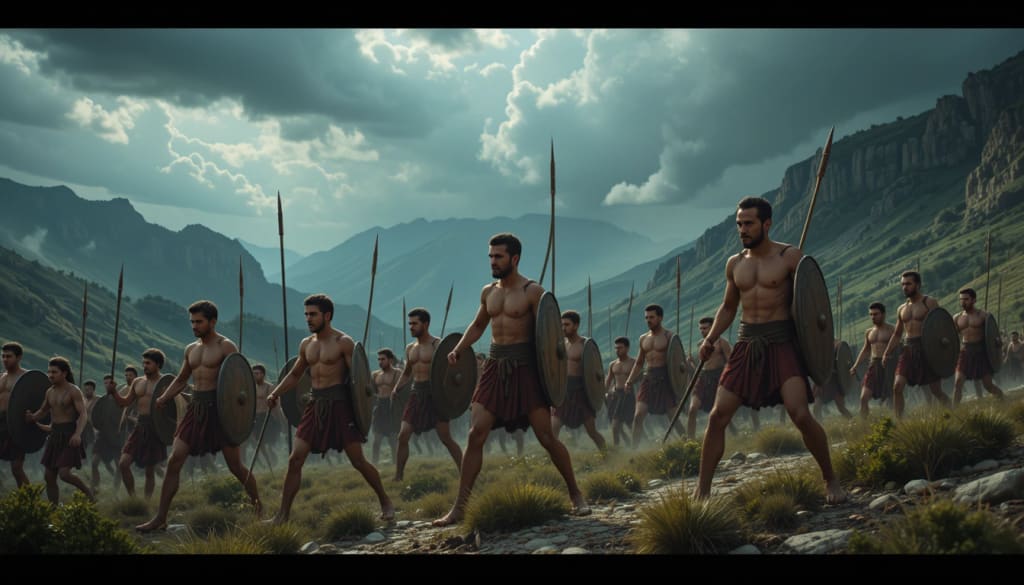
In the annals of history, few societies have captured the imagination quite like ancient Sparta. Renowned for their military prowess and unyielding discipline, the Spartans weren't born warriors—they were meticulously forged through one of the most grueling training regimens the world has ever known. This system, known as the *agoge*, was more than just physical preparation; it was a comprehensive indoctrination into a life of austerity, loyalty, and combat readiness. Let's delve into the fascinating—and often brutal—world of Spartan training, exploring how it shaped not only individuals but an entire culture that stood defiant against overwhelming odds.
The Foundations of the Agoge: From Birth to Boyhood
Spartan training began literally at birth. In a practice that shocks modern sensibilities, newborns were inspected by elders for any signs of weakness or deformity. If deemed unfit, the infant might be abandoned on the slopes of Mount Taygetus, left to the elements. This eugenic approach was rooted in the belief that only the strongest could contribute to Sparta's survival in a hostile world surrounded by potential enemies.
For those who passed this initial test, the real journey started at age seven. Boys were removed from their families and enrolled in the agoge, a state-sponsored education system designed to produce elite soldiers. Unlike the intellectual pursuits of Athens, Spartan training emphasized endurance, cunning, and martial skills. The boys lived in barracks, slept on reed mats, and were given minimal clothing to toughen them against the cold. Food was scarce, deliberately so, to teach resourcefulness. In fact, stealing food was encouraged—as long as you didn't get caught. Detection meant severe punishment, not for the theft itself, but for the failure in stealth.
This early phase instilled a sense of communal living and hierarchy. Older boys mentored the younger ones, often through harsh hazing, fostering a bond of brotherhood that would later translate to unbreakable unit cohesion on the battlefield. Physical exercises were relentless: running, wrestling, and mock combats built stamina and agility. Education wasn't entirely absent; they learned basic reading, writing, and poetry, but always with a military slant—memorizing verses that glorified heroism and sacrifice.
Adolescence: Honing the Warrior's Edge
As boys entered their teens, the training intensified. Around age 12, they underwent the *krypteia*, a rite of passage where select youths were sent into the wilderness to live off the land, evade capture, and even hunt helots (Sparta's enslaved population) as a form of guerrilla warfare practice. This wasn't just survival training; it was psychological warfare, teaching them to operate independently while instilling fear in potential rebels.
Combat drills became more sophisticated. Spartans mastered the phalanx formation, a tightly packed infantry line that relied on perfect synchronization. They trained with heavy bronze shields (hoplons), spears, and swords, learning to thrust and parry in unison. Gymnastics and athletics were daily rituals, not for leisure but to enhance battlefield mobility. Pain tolerance was key—floggings and endurance tests were common, often in public to build resilience under scrutiny.
Women in Sparta, though not warriors themselves, underwent their own physical training to produce strong offspring. This holistic approach ensured the entire society was geared toward military excellence, with mothers famously telling their sons to return from battle "with your shield or on it."
Adulthood and the Pinnacle of Spartan Might
By age 20, graduates of the agoge became full Spartan citizens, eligible for the syssitia—communal mess halls where they dined together, reinforcing social bonds. But training never truly ended. Even in peacetime, Spartans maintained rigorous daily exercises, and military service continued until age 60. This lifelong commitment culminated in legendary feats, like the stand at Thermopylae in 480 BCE, where 300 Spartans under King Leonidas held off a massive Persian army for days, buying precious time for Greece.
The agoge's success lay in its psychological depth. It wasn't merely about building muscle; it cultivated a mindset where death in battle was preferable to cowardice. Spartans viewed themselves as part of a greater whole, with individual glory secondary to the state's survival. This ethos made them feared adversaries, as seen in their dominance during the Peloponnesian War.
Legacy and Lessons for Today
The Spartan training system, while effective, came at a human cost—high mortality rates among trainees and a society rigidly focused on war at the expense of arts and innovation. Yet, its influence echoes in modern military academies, sports training programs, and even corporate team-building exercises that emphasize resilience and unity.
In an era of comfort and convenience, the Spartans remind us of the power of disciplined preparation. Whether you're an athlete pushing limits or a leader forging a team, there's something timeless about their unyielding pursuit of excellence. The agoge wasn't just training; it was transformation—a blueprint for turning ordinary boys into extraordinary warriors who etched their names into history.
About the Creator
Shohel Rana
As a professional article writer for Vocal Media, I craft engaging, high-quality content tailored to diverse audiences. My expertise ensures well-researched, compelling articles that inform, inspire, and captivate readers effectively.
Keep reading
More stories from Shohel Rana and writers in Fiction and other communities.
The Missing Ledger
In the small town of Millford, Ohio, where the days blended into one another under a canopy of maple trees, 38-year-old Ellen Porter arrived in the spring of 2025. After years as an accountant in Cleveland, where the city’s noise and pressure wore her down, she’d taken a job at Millford’s town hall to escape the grind. The town was unremarkable—neat lawns, a single diner called Betty’s, and a library that doubled as a community center. Ellen, with her practical mindset and reserved nature, wanted a life with less chaos, even if it meant embracing boredom.
By Shohel Rana6 months ago in Fiction


Comments
There are no comments for this story
Be the first to respond and start the conversation.