
Mahishasura, also known as Mahisha, was once a great and powerful king who ruled a vast kingdom in ancient India. He was known for his wisdom and fairness, and his people loved and respected him. However, as time passed, Mahisha became increasingly ambitious and desired more power.
He began to perform severe penance and austerities to please Lord Brahma, the creator god. His devotion and determination were so strong that Brahma was pleased and granted him a boon. Mahisha asked for immortality, but Brahma, aware of the consequences of such a request, gave him a boon that he could not be killed by any man or god.
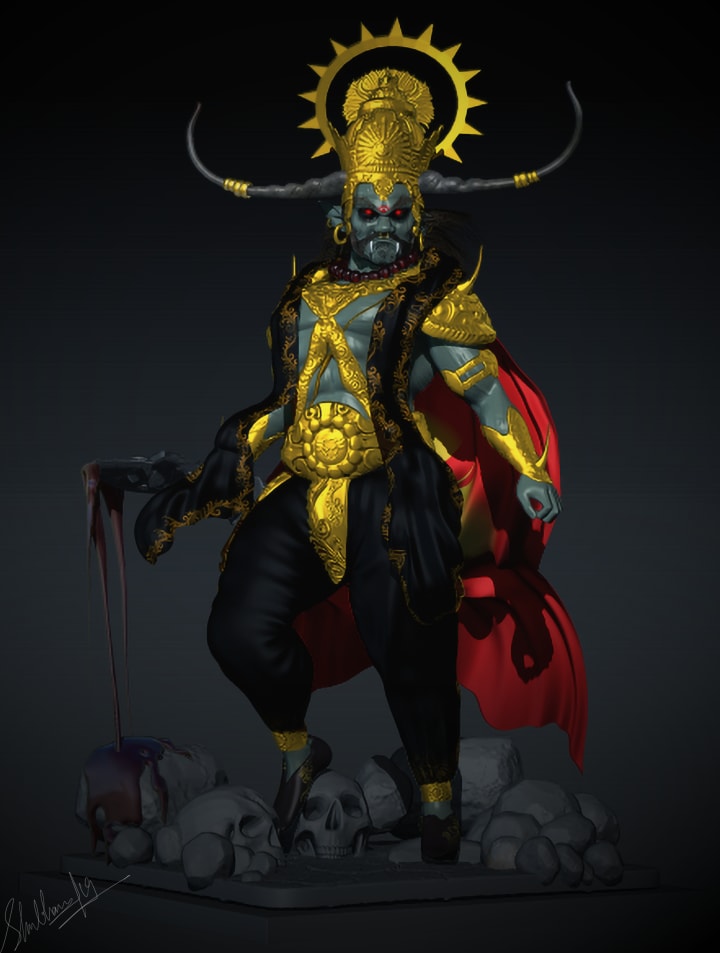
With his newfound invincibility, Mahisha began to conquer neighboring kingdoms and terrorize the earth. He became increasingly cruel and ruthless, and his people began to fear him. Eventually, he declared himself the ruler of the entire world and demanded that all the people bow down to him and worship him as a god.
The gods and goddesses were outraged by Mahisha's arrogance and begged the supreme god, Lord Shiva, to intervene. Shiva, understanding the danger Mahisha posed to the world, instructed the goddess Durga to defeat him.
And thus, the story of Durga's battle against Mahisha, known as Mahishasura, became one of the most famous tales in Hindu mythology. It serves as a reminder of the dangers of unchecked ambition and the importance of humility and compassion in leadership.
Once upon a time, in ancient India, there lived a powerful demon king named Mahishasura. He had been granted a blessing by the gods that he could not be killed by any man or god. This made him invincible and he began to terrorize the earth, causing destruction and chaos wherever he went.
The gods knew that something had to be done to stop Mahishasura, so they turned to the great goddess Durga for help. Durga was known for her fierce strength and courage, and was the only one who could possibly defeat the demon king.
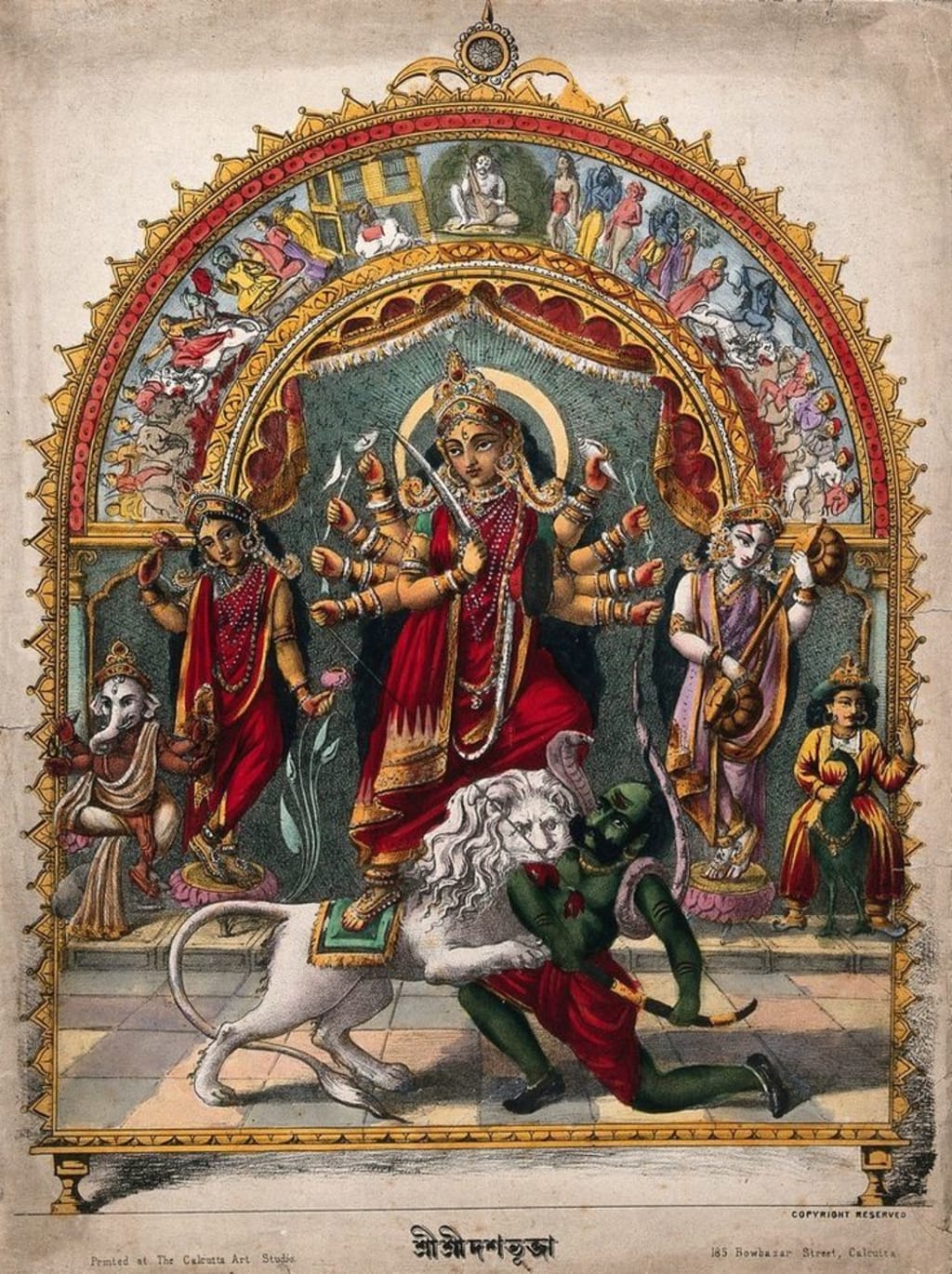
Durga agreed to help and descended to earth, riding on a lion and carrying her weapons. Mahishasura and his army of demons fought against her, but Durga's power was too great. She battled for nine days and nine nights, until finally, on the tenth day, she killed Mahishasura and saved the earth from his tyranny.
The people rejoiced and praised Durga for her bravery and strength. She returned to her heavenly abode, but her victory over Mahishasura was remembered and celebrated for generations to come. This is how the festival of Navaratri came into being.
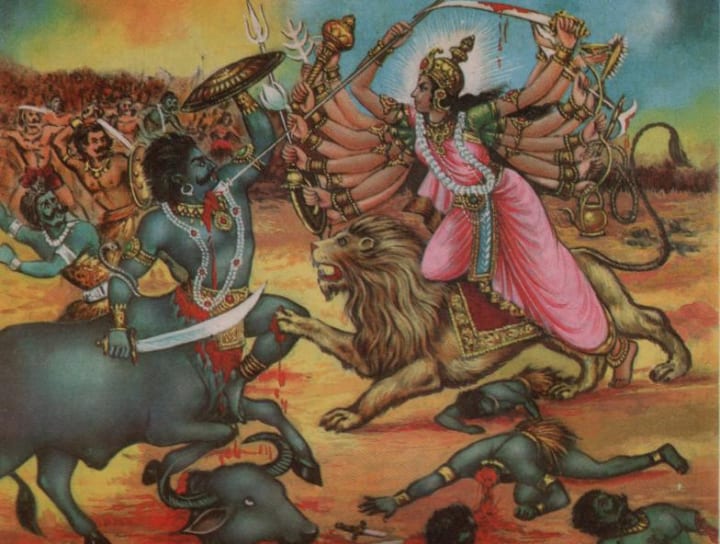
This is the story of the goddess Durga and the demon king Mahishasura, which is a well-known tale from Hindu mythology. It teaches the lesson that even the most powerful and feared enemies can be defeated by courage and determination.
After the death of demon king Mahishasura, the people of the earth rejoiced and celebrated Durga's victory. They praised her for her bravery and strength and thanked her for saving them from Mahishasura's tyranny.
According to Hindu mythology, the gods and goddesses also celebrated Durga's victory and praised her for her courage and determination. They honored her with many gifts and blessings, and they gave her the title "Mahishasura Mardini," which means "slayer of Mahishasura."
The story of Durga's battle against Mahishasura became one of the most popular and widely told tales in Hindu mythology. It was passed down from generation to generation and is still remembered and celebrated today, through the festival of Navaratri, which marks the victory of Durga over Mahishasura.
Mahishasura, however, is also remembered through another festival called Dussehra, which marks the victory of Lord Rama over the demon king Ravana. This is also celebrated as the victory of good over evil.
After his death, Mahishasura, in some versions of the story, is believed to have attained a place among the gods, as a result of his devotion and penance. He is sometimes depicted as a powerful and benevolent god, rather than a cruel and ruthless demon.
About the Creator
ARUNKING
South indian boy, become a millionaire



Comments
There are no comments for this story
Be the first to respond and start the conversation.