
Silent Walls
Some doors are closed for a reason, but when they open, they tell stories no one expected


I had always known about the room at the end of the hall. My father never spoke of it, and my mother never mentioned it. Even the house seemed to avoid it the light never quite reached the hallway, and the floorboards groaned less near that door. When I was a child, I tried to peek inside, but the door was always locked, the key always missing. Over the years, I stopped asking. Over the years, the room became invisible.
After my parents passed, I inherited the old house. It was quiet, too quiet. Dust had settled on the furniture, and the garden had grown wild. I spent weeks cleaning, painting, fixing what I could, yet that door at the end of the hall always made me pause. It felt alive, patient, waiting for me.
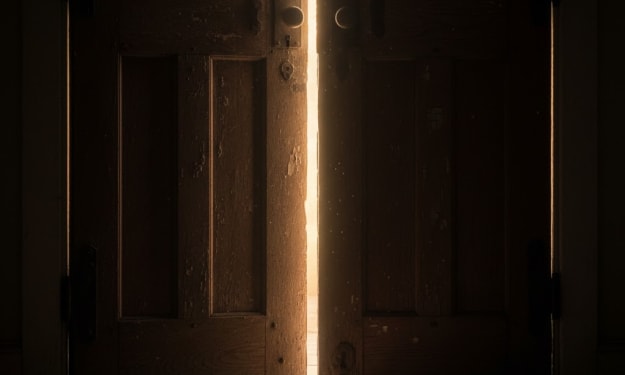
One rainy evening, curiosity overcame caution. I found a rusty key taped to the back of a photo frame in the living room. My heart raced. Could this be it? I slipped the key into the lock. The door turned with a soft click, and I pushed it open slowly.
The room was small, but the air felt heavy, as if carrying decades of whispers. Light filtered through a dusty window, landing on a forgotten desk and a chair tucked in the corner. Papers were scattered across the floor, yellowed and brittle. On the wall hung a mirror, clouded with age. Everything was coated with silence, yet the room spoke.
A rocking chair moved slightly, as though nudged by memory. On the desk lay a small box with a faded name written in careful letters: *Clara*. I opened it. Inside were letters, neatly stacked, tied with a ribbon. I read the first one.
“If anyone finds this room, know that I hid my secrets here. I hoped time would make them safe.”
I recognized the handwriting instantly. My grandmother’s. She had passed away years ago, and yet her voice echoed through the pages. The letters told stories of love lost, mistakes made, and joys never shared. There was one about a small child who had lived briefly in the house, a child the family never mentioned again. My grandmother’s words were tender, full of regret and hope all at once.
I explored further. A trunk in the corner held toys, a tiny dress, a worn-out doll with missing eyes. It was as if time had stopped when the child had left, leaving everything exactly as it had been. The room was a memorial, a container for a life quietly vanished, yet still alive in memory.
I sat on the floor, surrounded by relics of the past. I realized that this room wasn’t just forgotten it had been waiting. Waiting for someone to step inside and acknowledge what had been lost. By opening the door, I wasn’t just discovering objects; I was discovering stories, voices, emotions frozen in time.
The mirror reflected my face, but for the first time, I didn’t just see myself. I saw my grandmother’s sorrow, her love, her courage. I saw the child she mourned. And I felt a strange connection to all of them, as if the room had given me permission to carry their stories forward.
Hours passed. Rain drummed softly against the window. I gathered the letters, folded them carefully, and placed them in my bag. I touched the doll’s cracked face and whispered, “You are not forgotten.” The room, once heavy with silence, felt lighter. It had shared its secrets, and now it could rest.
As I closed the door behind me, I noticed something strange. The hallway seemed brighter, the floorboards less creaky. The house felt different, as if it had been waiting for me to finally listen. I knew I would return to the room. Perhaps not today, perhaps not tomorrow, but one day. Because the forgotten room had stories left for me to keep, and I was ready to honor them.
Sometimes, the rooms we avoid are the ones that hold the most important truths. And sometimes, stepping inside changes more than just the room it changes us.
About the Creator
Keep reading
More stories from Kashif Wazir and writers in Fiction and other communities.
The Forgotten Room
I had lived in my grandmother’s old house for six months before I gathered the courage to open the room at the end of the hallway. Every night I walked past it. Every morning I ignored it. The door was always closed, the key always cold, and the air around it always heavier than the rest of the house. My grandmother used to call it “the room that sleeps.” I never asked why. I never wanted to know.
By Kashif Wazir3 months ago in Fiction
Bomb Scare
It was 2027, and the world never thought it would happen. A missle hit the United States, but it wasn't where they had anticipated. A little town in the northeast was hit by a missile strike, they didn't know why, and they didn't know exactly where it hit, but they did know it was a coastal community, somewhere between Maine and Delaware.
By Gregory Payton8 days ago in Fiction
The Family Riches
According to family legend, our massive wealth originated from the creative genius and business acumen of my great-great-great, Grandfather Oliver Dooley. Ever since I was a young child, my parents and grandparents talked about this ancestor as though he were a cross between a conqueror and God himself. The older I got, the less believable I found these tales of his grand exploits to be. I began questioning the family lore. When I did, my elders would give me a disgusted look, point to our time- worn family bible, and exclaim, “If you don’t believe me, look it up. The family history is all in the book.”
By Mark Gagnon4 days ago in Fiction
My First Time Skiing and I Got Lost, Alone, in the French Alps
Looking back, I can trace some of my life’s biggest adventures to a simple action from my sister. She’d introduced me to Tommy (a very long time ago), a colleague of hers, who had overshared his penchant for Italian-looking women, and I ticked that box.
By Chantal Christie Weissabout 3 hours ago in Humans


Comments (1)
Awsome