
The Forgotten Room
Sometimes the places we avoid are the ones that wait the longest for our truth.

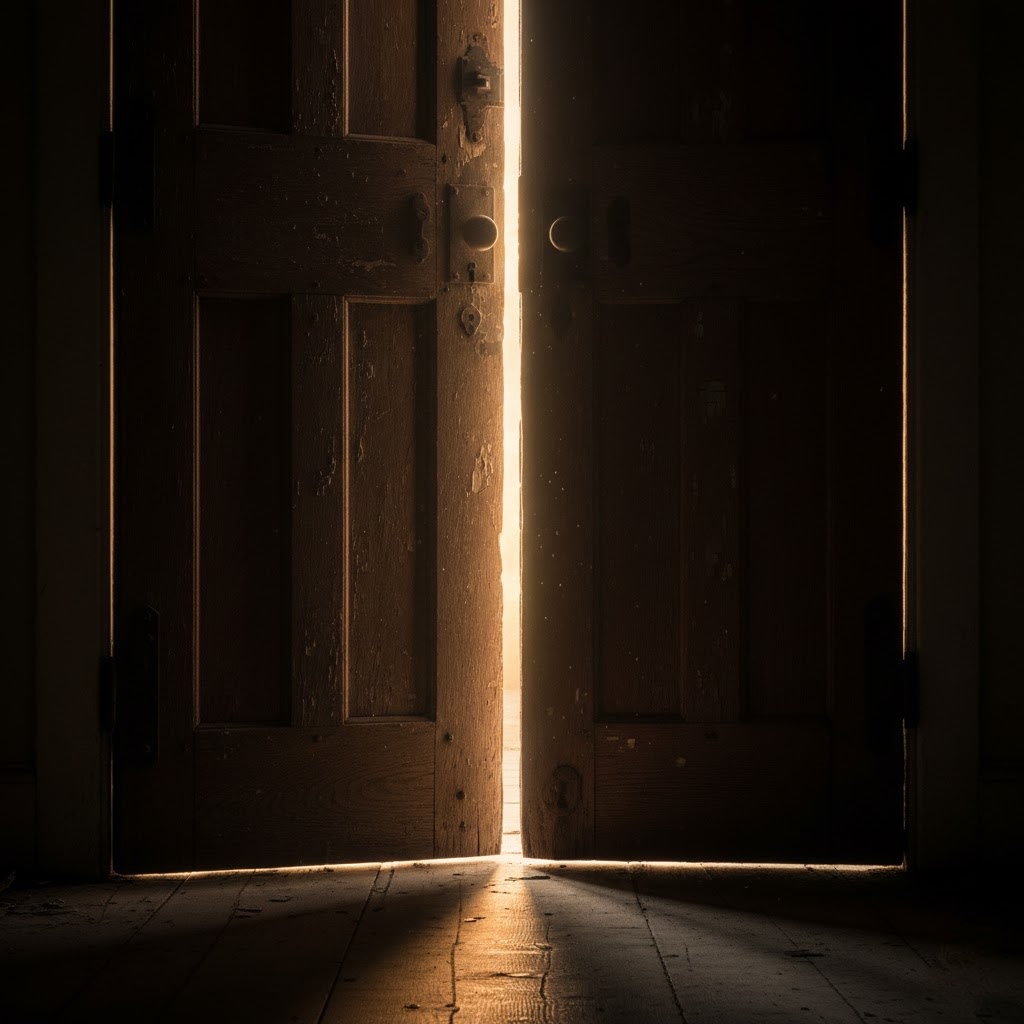
I had lived in my grandmother’s old house for six months before I gathered the courage to open the room at the end of the hallway. Every night I walked past it. Every morning I ignored it. The door was always closed, the key always cold, and the air around it always heavier than the rest of the house. My grandmother used to call it “the room that sleeps.” I never asked why. I never wanted to know.
But grief has a strange way of pushing you toward the things you spend your whole life avoiding. After she passed away, the house felt too big, too quiet, too full of things I didn’t understand. And that room the forgotten room felt like it was breathing behind the door. As if it knew I was the only one left. As if it was waiting.
On a rainy Thursday afternoon, I finally unlocked it.
The door creaked, not loud, but long, like it was stretching after years without moving. A soft smell of dust and lavender drifted out, the same perfume my grandmother wore on special days. For a second, I almost closed the door again. But then I stepped inside.
The room wasn’t what I expected.
There was no mold, no rot, no signs that time had tried to swallow it. Instead, it looked frozen like someone had pressed pause on a moment from decades ago. A sewing machine sat by the window. A vase of dried roses stood on the table, their petals crisp but still full. Shelves held jars of buttons, ribbons, and tiny silver scissors. The light that entered through the window was soft, almost gentle, as if it didn’t want to disturb anything.
But the strangest thing was the small wooden cradle in the corner.
A single knitted blanket lay inside yellow, with little white stars. I felt something crack open in my chest.
My grandmother had never spoken of a child. She raised my father alone after my grandfather died young. I had heard that story a hundred times. But a cradle? A blanket? A room wrapped in stillness? That was a story I didn’t know.
I walked closer. The blanket was soft, untouched by dust, as if someone had washed it yesterday. Beneath it lay a photograph. A woman my grandmother much younger, her hair long and dark, her face glowing with a happiness I had never seen. In her arms, she held a baby wrapped in that same yellow blanket.
On the back of the photo there were just three words:
“For my Emily.”
My breath stilled.
Emily.
That was my name.
The room felt suddenly warm, like it recognized me. Like it had been waiting for me to finally step inside and claim whatever truth had been sleeping here for so many years.
My grandmother had always been gentle, always loving, but always guarded. As if there were chapters of her life she had torn out before anyone could read them. I sat down in the small wooden chair beside the cradle and looked around. Everything felt intentional. Preserved. Loved.
And then I noticed the journal.
It was tucked beneath the sewing machine, wrapped with a blue ribbon. My hands shook as I opened it. The handwriting was hers, soft and slanted, like she used to write notes for me when I was little.
The first page began with:
“If Emily ever finds this room, she is ready.”
I felt my eyes burn.
She wrote about a daughter she had before my father. A tiny girl with bright eyes who was born too early, too fragile for the world. She wrote about grief that swallowed the sun for years. About how she built this room to hold the memory of the child she couldn’t keep. She wrote about how she locked the door the day she realized she couldn’t go on living inside her grief.
And then she wrote this:
“Emily, you were named after her. Not to replace her, but to remind me that life gives us new beginnings, not to erase old wounds, but to grow around them.”
My tears fell onto the page.
I closed the journal gently, looked around at the quiet room, and felt something shift inside me. This wasn’t a room of sadness. It was a room of love deep, painful, honest love that had lived in silence for too long.
I stood up and touched the cradle one last time.
“I’m here now,” I whispered.
And for the first time, the room didn’t feel forgotten.
It felt awake.
About the Creator
Keep reading
More stories from Kashif Wazir and writers in Fiction and other communities.
The Library That Only Opened at Midnight
**The Strange Rumor** In the small, sleepy town of Ravensbrook, everyone went to bed early — except for **Elara**, a 19-year-old girl who loved stories more than sleep. She had read every book in the town library, but still, something inside her always whispered, *“There’s more.”*
By Kashif Wazir5 months ago in Fiction


Comments
There are no comments for this story
Be the first to respond and start the conversation.