
She Smiled Every Day, But No One Asked Why
A quiet story about hidden pain, unspoken strength, and the moments that change everything.
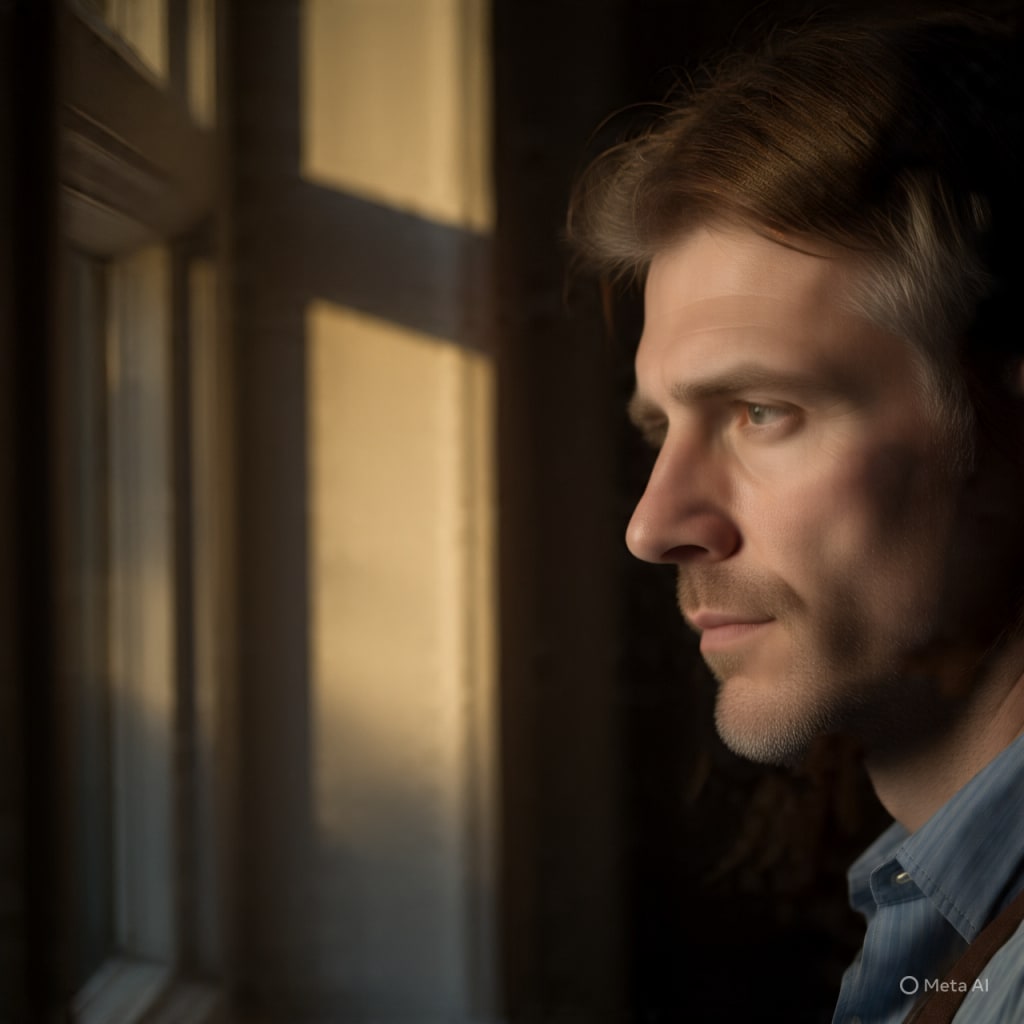
She smiled every day.
Not the kind of smile that demanded attention. Not wide or loud or dramatic. It was small, polite, practiced—something she had learned to wear the way people wore shoes before stepping outside. Necessary. Expected. Invisible.
People loved her smile.
They said it made her look strong.
What they never asked was why she needed it so badly.
Every morning, she stood in front of the mirror and adjusted her face before adjusting her clothes. She lifted the corners of her mouth just enough. Relaxed her eyes. Smoothed the tiredness away with habit, not rest.
The woman staring back at her looked fine.
Fine was convincing.
Fine was safe.
Fine meant no questions.
She had learned early that sadness made people uncomfortable. When she was younger and cried too openly, adults told her to be grateful. Friends told her to stay positive. Strangers told her others had it worse.
So she stopped explaining.
She stopped sharing.
She stopped crying where anyone could see.
Instead, she smiled.
At work, she was known as reliable. The one who stayed late. The one who listened. The one who never complained. When stress filled the room, people leaned toward her calm like it was something contagious.
“You’re always so strong,” they said.
She nodded.
Strength, she learned, was another name people used when they didn’t want to look closer.
At home, the silence was heavier.
No one asked about her day because she answered before the question could form. “It was fine.” Always fine. The word filled the space like furniture—useful, unmoving, impossible to trip over.
At night, when the world quieted, the weight returned.
Thoughts she had carefully avoided all day lined up patiently, waiting their turn.
What if this is all I am?
What if no one ever sees me?
What if I disappear slowly and no one notices?
She lay awake, staring at the ceiling, counting breaths instead of dreams.
Her phone buzzed often.
Messages asking for favors. For advice. For reassurance.
Rarely for her.
She answered anyway.
Smiling emojis replaced honesty. Short replies replaced explanations. She became fluent in sounding okay without being okay.
People loved that about her.
The breaking point did not arrive with drama.
It arrived quietly, like everything else.
One afternoon, while standing in line at a café, the barista looked at her and said, “You’re always smiling. You must have a good life.”
It was meant as a compliment.
Her chest tightened.
For a moment, the words stuck in her throat. A thousand truths pressed forward, desperate to escape.
But the line moved.
The cup was handed to her.
And she smiled.
“Yeah,” she said softly. “I do.”
That night, she cried for reasons she couldn’t fully explain.
Not loud sobs. Just tears that came steadily, without urgency, as if they had been waiting patiently for permission. She cried for the girl who learned too early how to hide. For the woman who had become invisible behind her own kindness.
She cried because she was tired.
Tired of being strong.
Tired of being easy to overlook.
Tired of smiling when no one asked why.
The change began with something small.
The next time someone asked, “How are you?” she paused.
Just for a second.
“I’m… managing,” she said.
The words felt dangerous. Honest. Real.
The person nodded and moved on.
Nothing collapsed. No one panicked. The world continued.
Something inside her shifted.
She began to notice how often people used her strength as an excuse not to care deeper. How easily smiles were mistaken for happiness. How silence was confused with peace.
She started journaling at night. Not pretty words. Not inspirational quotes. Just truth. Messy and unfinished.
Some nights she wrote only one sentence:
“I needed someone today.”
One evening, a friend looked at her differently.
“You seem tired,” they said. Not accusing. Just observant.
She almost denied it.
Almost.
“I am,” she admitted.
The room did not fall apart.
The friend did not leave.
Instead, they listened.
It wasn’t a miracle. It didn’t fix everything. But it mattered.
She realized then that being seen wasn’t about being loud.
It was about being honest with the right people.
She did not stop smiling altogether. Smiles weren’t the enemy. Pretending was.
She began letting her smile rest when it needed to. Letting silence speak when words failed. Letting herself be human instead of admirable.
Some people drifted away.
Others stayed closer.
That told her everything she needed to know.
One morning, standing in front of the mirror again, she noticed something new.
Her smile looked different.
Softer.
Less forced.
It didn’t appear on command anymore. It arrived when it wanted to—and left when it needed to.
For the first time, she didn’t adjust it.
She left the house as she was.
Later that day, someone asked, “Are you okay?”
She considered the question carefully.
“No,” she said. “But I’m learning.”
The words felt like freedom.
She still smiled some days.
Other days, she didn’t.
And slowly, gently, she learned this truth:
A smile can hide pain—but it can also return once the pain is finally allowed to speak.
And maybe the real strength wasn’t in smiling every day.
Maybe it was in letting someone finally ask why—and staying long enough to answer.
About the Creator
Keep reading
More stories from Inayat khan and writers in Fiction and other communities.
Silenced by My Own Thoughts
Silenced Between Heartbeats I learned early how to be quiet. Not the kind of quiet that comes from peace, but the kind that grows when noise feels dangerous. The kind that teaches your throat to close before a sound ever reaches your lips. Silence, for me, became a reflex—automatic, practiced, praised. “You’re so mature,” they used to say. What they meant was obedient. What they meant was easy. I remember the first time my body knew something was wrong before my mind did. A tightness in my chest. A twisting low in my stomach. A warning without words. I didn’t understand it then, so I did what I always did—I ignored it. Because good people don’t overreact. Because feelings can be wrong. Because making a fuss is worse than being uncomfortable. That’s what I was taught. So I smiled when my insides shook. I nodded when confusion pressed against my ribs. I learned to laugh softly, carefully, so no one would ask questions I didn’t know how to answer. The voice in my head became louder than any voice outside. It’s not that bad. You’re imagining things. Don’t ruin the moment. Don’t make it awkward. Every time I swallowed my discomfort, that voice grew stronger. Every time I stayed silent, it sounded more reasonable. It sounded like me. Silence doesn’t arrive all at once. It’s built—moment by moment, memory by memory. It’s in the pauses you don’t fill. The boundaries you don’t draw. The truths you fold into smaller and smaller shapes until they fit somewhere you can ignore. I became very good at folding myself. When something felt off, I told myself it was normal. When something hurt, I told myself others had it worse. When something crossed a line, I erased the line entirely. Because if the line didn’t exist, then nothing had been crossed. That was easier than admitting I didn’t know how to protect myself. There were moments I almost spoke. Moments where the words rose to the back of my throat, heavy and urgent. Moments where honesty felt close enough to touch. But then I imagined the consequences—the looks, the sighs, the disbelief. The disappointment. I imagined being told I misunderstood. That I was too sensitive. That I was making something out of nothing. And the words retreated. Silence felt safer than being wrong about my own pain. What no one tells you is that silence doesn’t disappear after the moment passes. It stays. It settles into your bones. It teaches your body to flinch even when nothing is happening. Years later, I’d still feel that same tightness. Still hesitate before speaking. Still apologize for taking up space I was allowed to occupy. I’d say “it’s fine” when it wasn’t. “I’m okay” when I wasn’t. “I don’t mind” when I did. Because silence had trained me well. I didn’t realize how much I had lost until someone asked me a simple question one day: “What do you want?” The room went quiet—not the uncomfortable kind. The honest kind. And I had no answer. Not because I didn’t want anything, but because I had spent so long burying my wants that they no longer had names. I could sense them—faint, distant, like echoes—but I couldn’t reach them. I felt grief then. Not loud grief. Quiet grief. The kind that settles behind your eyes and stays there. I mourned the versions of myself that never spoke. The boundaries I never defended. The younger me who thought silence was kindness. Healing didn’t begin with shouting or confrontation. It didn’t arrive as a dramatic moment or a perfect speech. It began with a whisper. A small, trembling sentence spoken out loud when no one else was around. “That wasn’t okay.” Saying it felt dangerous. My heart raced. My hands shook. The old voice screamed back—Don’t exaggerate. Don’t rewrite the past. But I said it again. “That wasn’t okay.” And something shifted. Learning to speak after years of silence is not elegant. It’s messy and uneven and often terrifying. Sometimes my voice cracks. Sometimes I cry before I finish a sentence. Sometimes I say things too late. But I say them. And each time I do, the silence loosens its grip. I’m learning that discomfort is not a moral failure. That boundaries are not accusations. That my body’s warnings deserve attention, not dismissal. I’m learning that being quiet is not the same as being safe. There are still days when silence tempts me. When it feels easier to shrink, to nod, to let things slide. Old habits don’t vanish just because you recognize them. But now, when that familiar tightness returns, I pause. I listen. And sometimes—gently, imperfectly—I speak. Not loudly. Not confidently. But honestly. And that is enough.
By Inayat khan5 days ago in Fiction



Comments
There are no comments for this story
Be the first to respond and start the conversation.