

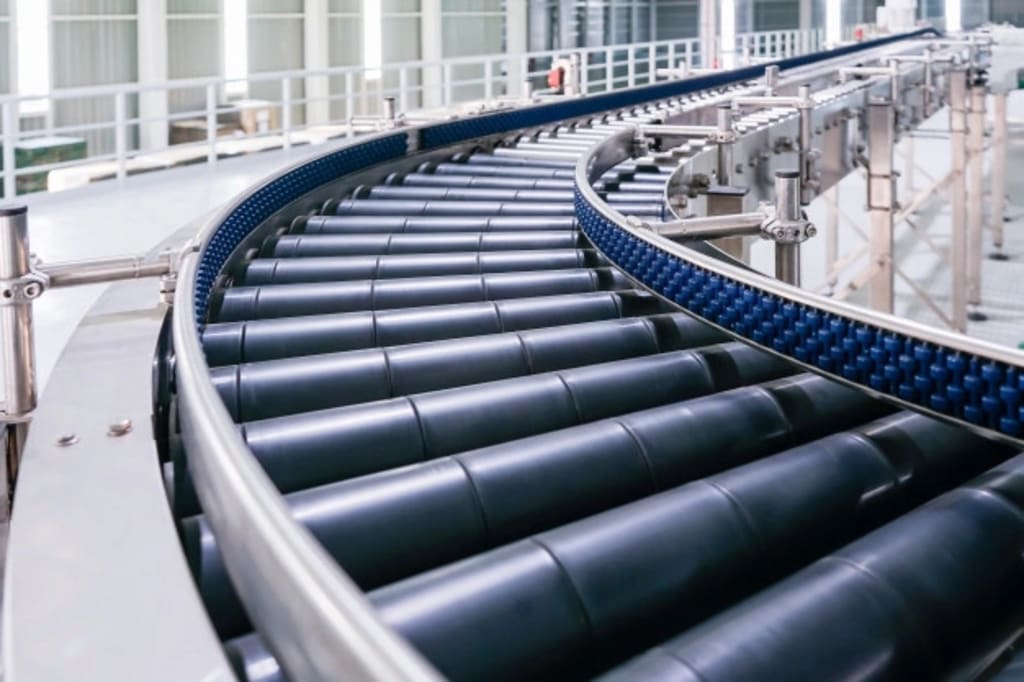
After the second plague, the third World War, the fourth Civil War, and the dropping of those nuclear weapons in New York, processing the dead became big business. It was one of those careers which sucks to have, but must be done, so they come embellished with all sorts of hazard pays to bolster their employment ranks. The money was the only reason I took the job.
It wasn't horrible. The dead came from everywhere in the city, died from every reason imaginable, although a great deal bit it thanks to radiation sickness. They were treated at the plant, then rolled on the conveyor belt down to us Processors. We stripped off the wet clothing and bagged anything salvageable, opened their hand bags and took any money, emptied their pockets and counted the coins. The clothes were recycled, the money paid forward to the next installment of the ongoing wars, the naked bodies sent down the line, to the incinerator, where they became toxic ash, packed in huge barrels and buried somewhere probably not far away, out of sight and out of mind.
I didn't think about any of this until I met Kate. Before her, I punched in to work, stripped the dead, and went on with my arguably uninteresting life. Then, there was Kate. She was assigned as my processing partner after my last one bought a farm, as they say.
Kate was your average plain faced girl with chapped lips, dressed in hand-me-downs and tattered sneakers. She had an annoying nasally voice- it was her grating voice that caught my attention first, because unlike my previous partner, Kate talked incessantly. She asked me all kinds of questions about my life, told me ridiculous anecdotes about herself, lamented our long shifts, and complained about the heat. Mostly, Kate talked about the dead.
She wondered aloud about the lives they must have lived, who would miss them now that they were laying in front of us, glassy eyed and empty. She was particularly vocal about the kids who came through. A tragedy, she would whine, as she held their little hands. A waste, she would whimsper, as she pried their tiny shoes off their feet. She even cried once, when we were taking a frilly white dress off some dead girl whose legs had been blown off. She actually cried. Can you believe it? A Processor crying over some dead kid, like it mattered, when there were seven thousand dead kids on the belts, all without legs, all without futures.
Hell, when some girl came past us wearing a locket, Kate took the time to open it. She wondered about the people inside, framed in tiny hearts. They were bits of yellowed paper; people who’d most likely all come through the Processing plant at one time or another. Kate, she talked about how this girl had kids and this one had a family portrait with parents, and this one, blah blah blah, on and on. She even took the pictures out of the lockets and pocketed them. She said she would take them home and remember them. Isn’t that the most ridiculous thing you’ve ever heard?
I couldn't comprehend it. Kate hadn't known any of these people, yet she got so worked up about them. Why the hell did she care? I made the mistake of asking her once, after she got all choked up over another dead kid. She looked at me as if I were an irradiated dog, a mad beast with too many teeth, too much rage. She asked how could I look at these people, all these deceased individuals, and not see them? How could I not see them, laying there, dead, gone, ended? I could see them just fine. She laughed and said, obviously not very well.
Pissy as I was, I made sure to 'see' the next person down the line. Some haggard woman with no eyebrows. She was wearing a patched up jacket, a floral mumu, and frayed cotton shoes; all her clothes were stained in red dirt, bleached from the sun. She smelled like cleanser, so she'd died from radiation poisoning. Nothing special, nothing outstanding. Another nobody. I didn't see what was so damn special. I didn't have any tears well up in my eyes. I striped her naked and sent her to be burned.
Kate and I didn't talk for a while after that. I guess she figured I didn't want to hear it. And, I didn't. It's just, after she had been talking so much, the silence was unnerving. I tried to start up conversations, about the weather, the encroaching enemy forces, the prevailing stench of metal in the air, but she wasn't very receptive.
Eventually, I apologized and bought her a cheap necklace; some stupid painted gold heart shaped locket, like the ones she was so fond of opening. I figured she could put a picture of her kid or wife in it, or something equally sentimental. She was completely caught off guard; didn't figure me for the gifting type. I assured her it wasn't a gift; more of a bribe, if you will.
She laughed when she put the necklace on. It fit her fine. A plain necklace for a plain girl, both surprisingly elevated to beautiful when paired together. I didn't tell her this. I just gave her a thumbs up when she asked if she looked alright in it.
I asked whose picture she was going to put inside the locket. Kate looked at me curiously, then told me she had no one's picture to go in it. She had no wife, no husband, no kids, no sisters or brothers; her parents had gone down the assembly line ages ago. I guessed from the look she gave me that she had told me this before, and I hadn't heard her, and so, my present was another reminder of my shortcomings. I tried to apologize, to take it back, get her a bracelet, only she wouldn't let me.
Instead, Kate asked for a picture of me, since I was all she had; the only person who saw her, who spoke to her. I didn't have one; no one had been around to take my picture in years. She compromised by drawing a little caricature of me, beady eyes and weak chin and all. She stuck it in her locket, despite my red-cheeked request not to.
We talked again afterwards. Mainly, about the dead, and their trinket jewelry. Kate wondered who had given them the rings we took, the bracelets we melted, the lockets we turned into cheap break away bullets. She was especially touched by wedding rings. She lovingly held the dead's hand after she took those sacred things off them, as if she needed to apologize; I'm sure she felt she had to. I hocked the rings by the truckload into buckets. She ignored my callous disregard for other people's mementos.
I finally asked why she had become a Processor, if she was so broken up about the dead and their disposal. Kate sadly smiled and said she thought everyone deserved some compassion. I didn't understand what she meant. How do you give compassion to the dead, much less the dead you never even knew? I considered asking her. I didn't want another silent treatment, though, so I nodded along.
Kate asked why I became a Processor. I told her the money was good. She didn't look surprised. My heart sank. I told her, I didn't know what else to do. She liked that answer better, though not by much. She had that distant look in her gaze again; as if she viewed me closer to a street dog than the man she worked with, the only person who spoke to her, saw her.
Maybe I was. Maybe I am.
It wasn't important to me, then. We were talking again. That's all I cared about.
Life returned to mundane monotony. The conversations continued. Kate asked me more questions about my life, who I was outside the assembly line. I didn't have much to say, since there wasn't much to me. So, I asked about her life. She answered in solemn little sentences about her losses and gains; her life resembling my own more than I thought was fair. She didn't have much outside the job. I had wanted her to have something, anything, to go home to, although it was wishful thinking. Here we were, taking wedding rings off the dead, and I thought she had a life at home? I had hoped.
But, it wasn't the case. Our lives mirrored one another, except at work. Kate held small hands and watched the dead as they rolled on down the line. I tossed frilly white dresses in the bin and grabbed up the next body. We stood across from each other, repeating these actions, for weeks and weeks and weeks.
We could have gone on like that for years. I know I could have. But, we didn't.
At the end of the year, Kate missed work four days in a row, and I knew. She was gone, eaten up by the world, another body amongst the millions left on the side of the road.
I thought about her going down the conveyor belt, dressed in her ratty street clothes. Her tiny body stripped naked by dead eyed vultures, her limbs examined indifferently, her teeth checked for gold fillings. I thought about their numb fingers peeling her tattered sneakers off her dainty feet. Them, touching her, removing everything that made her 'Kate', none of them giving care to her face, her mouth, her eyes. They would unfasten that stupid cheap locket and toss it into a bin, another bin, another pile, another bucket, all heading to the factories further down the line. And just like that, Kate, chatty Kate, silly Kate, sentimental Kate, Kate would disappear into some giant metal oven and be turned into nondescript ash.
No one was going to hold her hand. No one was going to close her eyes if they stared. No one was going to remove that ridiculous caricature and pocket it, so someone would remember she had belonged somewhere, to someone, even if it was just a bitter Processor like me. No one would show her an ounce of compassion.
Kate was a body on a moving slab. She was nobody.
I cried. I sat down in a corner in the backroom of the plant on my break, and I cried. I cried as hard as I could. I wanted to scream, but my voice was gone.
I saw Kate in all the people who came down the line, for weeks afterwards. I saw her bright eyes. Her delicate fingers. Her chapped lips. Her plain, poised face, in dozens of the girls I undressed and robbed. I saw her when I took off the wedding rings of battle torn men. When I untied and removed the sneakers from little girls in sundresses. When I unhooked a silver necklace from a mother's neck. When I took away the bits of humanity left to the dead, and when I closed their eyes, and when I boxed up their valuables. I watched them leave me, head on down the line, and disappear. I saw them.
Because someone should. Someone should say goodbye to all the dead, even if there are a million of them, even if they pile up so high we must burn them, even if we don't know them. They were a person. They belonged in this world. What a tragedy, what a waste, that they should have been removed from it so soon.
I saw them all, after Kate. Stupid and sentimental, I know.
About the Creator
SC Todd
I'm an aspiring novelist and short story writer. I dabble in all kinds of genres, particularly horror and sci-fi.
Keep reading
More stories from writers in Fiction and other communities.
My New Book is Finally Here
My poetry collection Beautiful and Brutal Things is done. It's actually done and finally published over 270 pages. Over a year of my life went into this book. More than a year, really. Long days at my computer, sometimes seven days a week because I couldn't stop even when I probably should have. Then two months of editing that felt harder than the writing itself. But it's finished, and I'm still standing, and the book is real.
By Tim Carmichael5 days ago in BookClub



Comments
There are no comments for this story
Be the first to respond and start the conversation.