
Science Fiction
A World of Infinite Possibilities

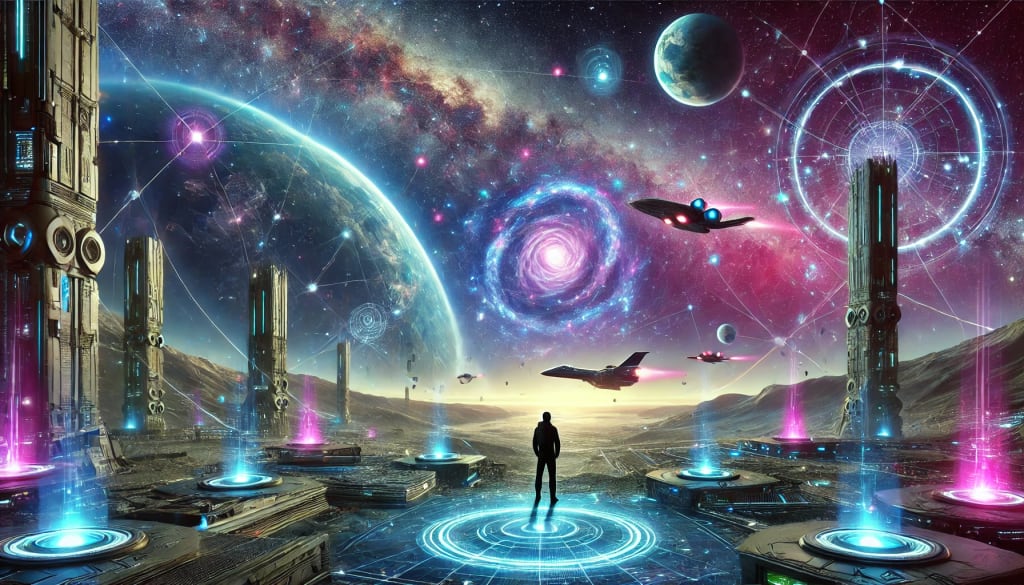
Science fiction is one of the most fascinating and thought-provoking genres that captivate the imagination. Since its inception in the 19th century, science fiction has demonstrated a unique ability to transcend the limits of reality and present innovative visions of the future and technology, often addressing existential and ethical questions that arise when humanity intersects with scientific advancement.
The stories of science fiction often revolve around worlds that are invisible to us today, but are grounded in scientific concepts that may either already exist or be in the process of discovery. From time travel to space colonization, the genre explores numerous themes related to scientific developments and the future consequences of those discoveries. While these works often feature technologies that are not yet realized, science fiction is not purely speculative—it is rooted in sound scientific principles that stimulate creativity and expand human imagination.
In literature, authors like Jules Verne and H.G. Wells helped shape the genre of science fiction, blending reality and imagination in their famous works such as Twenty Thousand Leagues Under the Sea and The Time Machine. Contemporary writers like Isaac Asimov and Arthur C. Clarke further developed this genre by exploring deep themes related to artificial intelligence, space exploration, and the ethical dilemmas of scientific progress.
In cinema, science fiction has become a central element of the film industry. Movies such as 2001: A Space Odyssey and Lost in Space presented awe-inspiring visions of the future, influencing the way we perceive space and technology. Science fiction in films often challenges reality by depicting alternate worlds that could form in the future, raising questions about technological advancements and the fears of humanity's inability to control those technologies.
On a philosophical level, science fiction provides a platform to ask significant questions about the nature of humanity, our place in the universe, and the future interactions between humans and machines. Films like Blade Runner and The Matrix delve into the complex relationship between humans and artificial intelligence, questioning identity and existence. In these films, humans explore the boundaries of the human mind and whether technology could ever replace humanity itself.
Science fiction is not just about imagining the future; it is a tool for exploring current issues that might shape the world in the coming decades. From environmental concerns to artificial intelligence, the genre encourages critical thinking about modern technologies and their potential impacts on society and the environment.
In conclusion, science fiction serves as a mirror to the future, offering us a way to contemplate what might lie ahead. It is not merely a genre of literature or film but a space for rethinking reality and challenging what is possible and impossible.
About the Creator
LABDANI AHMED
I am fond of science fiction, mysterious and exciting stories, and I try to create written content that helps people swim far in their imagination to reach the shore of psychological comfort that they have been searching for a long time.
Keep reading
More stories from LABDANI AHMED and writers in Fiction and other communities.
When the Lights Go Out
### When the Lights Go Out In the heart of the French countryside, nestled between rolling hills and dense forests, lay the small, unassuming village of Valnoir. By day, it was picturesque, with cobblestone streets, charming cottages, and the aroma of fresh bread wafting from the local bakery. But by night, Valnoir transformed into a place of terror.
By LABDANI AHMEDabout a year ago in Horror
The Man Who Always Fixed the Chair
There was a chair by the window in my childhood home that never stayed broken. It wasn’t a special chair. Wooden, plain, slightly uneven. One leg shorter than the others, so it rocked if you weren’t careful. Over the years, it cracked, loosened, and complained every time someone sat down too hard.
By Salman Writes5 days ago in Fiction


Comments (1)
Your discussion about the genre's ability to merge imagination with scientific principles is spot on. The historical insights into authors and films that shaped sci-fi add great depth. If you enjoy exploring these themes, I'd be thrilled if you could check out my latest stories and share your thoughts. Your feedback would be invaluable.