
Santa Muerte: The Folk Saint of Death
"Discover the enigmatic Santa Muerte, Mexico's beloved Folk Saint of Death.

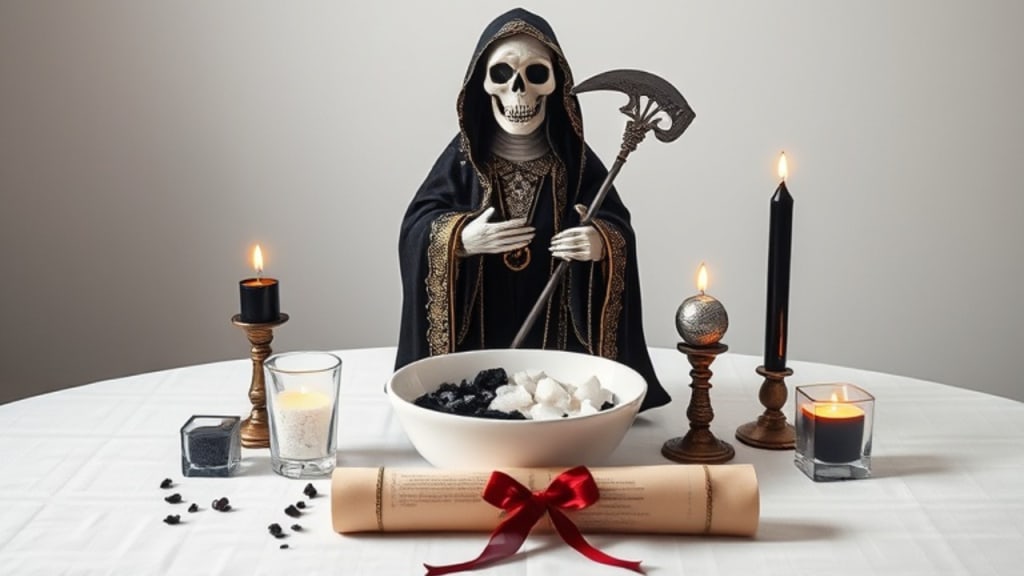
La Santa Muerte, often called the "Folk Saint of Death," is a unique spiritual figure deeply embedded in Mexican culture and spirituality. Represented as a female Grim Reaper, she is both feared and revered by millions of devotees across the Americas.
While mainstream media often associates her with crime and danger, Santa Muerte's appeal lies in her accessibility, impartiality, and miraculous powers. This review delves into her origins, symbolism, rituals, and the controversies surrounding her ever-growing popularity.
Origins and Historical Background
Santa Muerte’s origins are a fascinating blend of indigenous traditions and Catholic influences. Her history dates back to colonial times when Spanish conquistadors introduced Catholicism and the European Grim Reaper figure to the Americas.
Indigenous Mexicans, who worshipped deities of death like the Aztec goddess Mictecacihuatl, combined these elements into a single entity. Santa Muerte emerged as a hybrid spiritual figure, representing death but also granting life and miracles.
For centuries, Santa Muerte was venerated covertly due to harsh penalties imposed by colonial authorities and the Catholic Church. Spanish Inquisition records from the 18th century document indigenous devotion to skeletal death figures, highlighting the resilience of her worship.
It wasn't until the late 20th century that her following became more public, and in the early 2000s, Santa Muerte's cult saw an explosive resurgence. Today, she is one of the fastest-growing religious movements in the Americas, with millions of devotees.
Symbolism and Iconography
Santa Muerte is most commonly depicted as a female Grim Reaper, draped in long robes and holding a scythe and scales. The scythe symbolizes her role as the harvester of souls, while the scales represent her impartial ability to dispense justice. Her skeletal appearance underscores her dominion over death, yet many see her as a nurturing, approachable figure.
Devotees refer to her affectionately with names like "La Flaquita" (The Skinny Lady), "La Madrina" (The Godmother), and "La Niña Bonita" (The Pretty Girl). These terms reflect the close, personal relationship many feel with her, contrasting the distant or judgmental image of God or Catholic saints. Santa Muerte is often described as nonjudgmental, granting miracles to anyone regardless of their moral standing.
Rituals and Devotion
Santa Muerte's followers engage in a variety of rituals, many centered around altars and offerings. These altars, often found in homes or public shrines, are adorned with candles, flowers, food, alcoholic beverages, tobacco, and even marijuana products. Devotees light candles of specific colors based on their requests: red for love, white for peace and healing, and black for justice or protection.
The practice of gifting her personal items, like a favorite brand of tequila or candy, demonstrates the intimate bond between the saint and her followers. Many adherents view her as a reflection of themselves—a supernatural figure who understands their struggles because she shares their background, tastes, and values.
Her devotion is especially popular among the marginalized and those with dangerous professions, such as sex workers, delivery drivers, police officers, miners, and even drug cartel members. However, this broad appeal underscores her amoral nature; Santa Muerte does not discriminate between good and evil but simply answers the prayers of those who honor her.
Controversies and Misconceptions
Santa Muerte is a polarizing figure. The Catholic Church has condemned her as a heretical saint, claiming her veneration is satanic. Media portrayals frequently link her to drug cartels, crime, and violence, perpetuating a one-dimensional view of her role in society.
While it is true that some criminals venerate Santa Muerte, this is only a fraction of her vast following. Most devotees are ordinary people seeking her help in love, health, financial stability, or legal matters. Scholars like Dr. Andrew Chesnut argue that portraying Santa Muerte solely as a "narco saint" overlooks her deeper cultural significance and widespread appeal.
International Expansion
Santa Muerte's reach extends beyond Mexico. In the United States, her devotion has flourished, particularly among Mexican immigrant communities in border states like Texas, California, and Arizona. Los Angeles has become a hub for her followers, with numerous shops selling devotional items and several shrines and temples dedicated to her.
Her popularity has even transcended cultural boundaries, attracting followers from diverse backgrounds who are drawn to her reputation as a powerful, nonjudgmental miracle worker. This expansion highlights the universal themes of her veneration: the desire for justice, protection, and hope in the face of adversity.
Role of Women in the Movement
Santa Muerte’s movement has also become a platform for female leadership in a predominantly Catholic society, where the priesthood remains male-exclusive. Women have played a central role in promoting her devotion, founding temples, and leading rituals. Figures like Enriqueta Romero and Enriqueta Vargas have been instrumental in bringing Santa Muerte’s worship into the public eye, demonstrating how this folk saint empowers women as spiritual leaders.
Modern Significance
Santa Muerte’s multifaceted nature is a significant part of her appeal. She embodies both life and death, granting miracles in matters ranging from health to vengeance. During the COVID-19 pandemic, for instance, she was widely regarded as a healing saint, with devotees lighting black candles for protection against the virus. Prayer cards circulated, proclaiming faith in her as the ultimate vaccine against illness.
Her lack of institutional structure allows followers to personalize their devotion, blending elements from other traditions such as Santería and New Age practices. This adaptability ensures that her following remains dynamic and inclusive, resonating with younger generations and immigrant communities.
Conclusion
Santa Muerte is far more than the sensationalized "narco saint" depicted in the media. She is a symbol of hope, justice, and protection for millions of people from all walks of life. Her nonjudgmental nature and accessibility make her a powerful spiritual figure for those seeking solace in a harsh world.
While controversies persist, Santa Muerte’s growing popularity reflects a profound need for spiritual connection and empowerment in modern society.
Her role as a folk saint transcends borders, classes, and professions, cementing her status as one of the most influential and enigmatic figures in contemporary spirituality.
About the Creator
Jose Mejia
I am an accountant and blogger, combining years of finance experience with a love for technology. On my blog, I break down complex accounting regulations and tech trends into accessible and inspiring content for everyone.
Keep reading
More stories from Jose Mejia and writers in Fiction and other communities.
The Ill-Fated Journey
The ocean was tranquil that morning, a serene stretch of blue extending endlessly under a sky pigmented with the first light of dawn. The Sea Whisperer, a luxurious yacht celebrated for its satiny design and ultramodern comforts, glided painlessly through the gentle swells. On board were six passengers, each seeking the charm of an isolated passage down from prying eyes.
By Jose Mejia2 years ago in Fiction



Comments
There are no comments for this story
Be the first to respond and start the conversation.