
Review of Inglourious Basterds: A Masterpiece of Revisionist Cinema
A Bold Revision of History and Cinema


Introduction
Inglourious Basterds is a 2009 war film directed by Quentin Tarantino, blending his signature style with historical fiction. It is set during World War II and presents an alternate history where a group of Jewish-American soldiers, led by Lt. Aldo Raine, takes revenge on Nazis in brutal and creative ways.
The film is often lauded for its audacity, sharp dialogue, and superb character development. It carries a bold sense of humor amidst one of the darkest periods in history, making it an unforgettable cinematic experience.
This review will dive into three main aspects: the plot and narrative structure, the standout performances of the cast, and the film’s overarching themes, exploring how they contribute to its place in modern cinema.
The Plot and Narrative Structure
Story Overview: The plot revolves around two main narratives. First, Lt. Aldo Raine and his squad of "Basterds" infiltrate Nazi-occupied France to kill and scalp Nazis. Second, Shosanna Dreyfus, a Jewish cinema owner, plans to take revenge on the Nazis after her family is murdered by Colonel Hans Landa. Both stories intertwine in a climax that’s a blend of tension, action, and clever subversion of expectations.
Nonlinear Storytelling: Like many of Tarantino’s films, Inglourious Basterds is told in a nonlinear fashion, with chapters that build suspense and character backstories. The fragmented approach adds layers of depth and anticipation. Each chapter feels like its own mini-movie, featuring long, suspenseful dialogues that leave the audience on the edge of their seat.
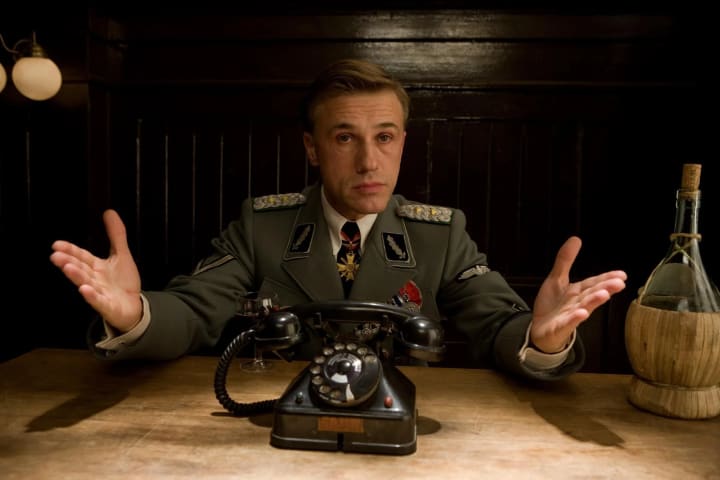
Pacing and Tension: Tarantino’s pacing keeps the audience hooked through its dramatic tension. Scenes like the "Opening Scene" with Colonel Hans Landa and the "Basement Tavern" scene are long, drawn-out moments of suspense. The dialogue-heavy scenes feel tense, as the characters engage in psychological warfare, with long pauses that build anticipation.
Subversion of Historical Narrative: The film plays with historical facts, twisting them to create a more satisfying conclusion for the oppressed. Instead of focusing on the brutality of history, Tarantino allows the Basterds to rewrite it with their own brand of violent justice. This revisionism adds a layer of catharsis for viewers, turning the atrocities of World War II into a fantasy of retribution.
Conclusion of Plot: The intertwining stories conclude with a violent, action-packed finale. The film's unconventional ending, in which history is dramatically rewritten, feels like a victory for the oppressed while making a statement on how stories and history are constructed by those in power.
Performances
Christoph Waltz as Colonel Hans Landa: Waltz’s portrayal of Landa is one of the most memorable performances in modern cinema. His performance earned him an Academy Award for Best Supporting Actor. Landa is charming, manipulative, and chillingly calculating. His ability to switch between languages, switching from calm to terrifyingly menacing, creates an eerie tension. Waltz imbues the character with both intellectual superiority and psychopathic tendencies, making him one of the most complex villains of the 21st century.
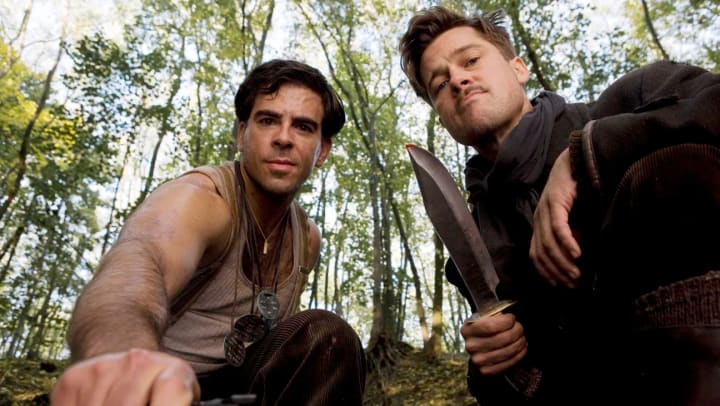
Brad Pitt as Lt. Aldo Raine: Brad Pitt’s performance as the tough yet humorous Aldo Raine is equally captivating. The character is larger than life, full of bravado, and a deep-seated need for vengeance. Pitt’s delivery of lines like “I’m the man who’s gonna get you the Jew Hunter” captures the irreverent tone of the film while adding a layer of absurdity to his role. He balances comedy and intensity seamlessly, making Raine both likable and dangerous.
Mélanie Laurent as Shosanna Dreyfus: Mélanie Laurent’s Shosanna Dreyfus is the emotional heart of the film. A character marked by deep pain and resilience, Laurent portrays her with grace and quiet intensity. Her interactions with the Basterds, especially in the final act, are filled with layered emotion as she takes the reins of her revenge, cementing her as a force to be reckoned with.
Other Cast Members: The supporting cast also delivers strong performances, including Eli Roth as the sadistic Donny Donowitz (aka "The Bear Jew"), Michael Fassbender as the suave and competent British officer Archie Hicox, and Diane Kruger as Bridget von Hammersmark, a German actress turned spy. These performances add texture and depth to the narrative, each providing their own brand of complexity to the plot.
Themes and Cinematic Techniques
Revenge and Justice: A central theme of Inglourious Basterds is the concept of revenge and justice, particularly the question of whether it is ever morally justifiable to take matters into one’s own hands. The Basterds’ brutal methods of exacting revenge on Nazis offer a cathartic experience for the audience, allowing them to partake in a fantasy where justice is delivered swiftly and violently. This theme is paired with Shosanna’s personal journey, where she seeks her own form of justice against the Nazis who wronged her.
The Power of Cinema: Another major theme is the power of cinema itself. The film constantly references the way film creates history and how stories are manipulated by those who tell them. Shosanna’s cinema is the vehicle for her revenge, while the Nazi propaganda films that play throughout the story show how film has been used to spread a particular narrative. The final scene of the movie, which takes place in a movie theater, is a literal and symbolic representation of cinema as a tool for rewriting history.
Language and Identity: The film’s multilingual dialogue reflects the fractured, multicultural world of war. Characters speak in their native tongues—French, German, English, and Italian—creating an atmosphere of tension, trust, and mistrust. Tarantino uses language as a device to show power dynamics, as those who speak multiple languages (like Landa) are positioned as more dangerous and manipulative.
Tarantino’s Cinematic Style: True to Tarantino’s style, the film is filled with long takes, intense close-ups, and excessive violence, all undercut by dark humor. The film’s soundtrack, a blend of Ennio Morricone’s music and other retro pieces, complements the tone, creating a unique balance of tension and absurdity.
Historical Revisionism and Satire: The way Inglourious Basterds rewrites history is another critical theme. Tarantino’s use of historical revisionism is not just a plot device but also a satirical commentary on how history is often shaped by those in power. The film plays with the idea of "what if" and imagines a version of history where justice is served in a violent and satisfying way. The film is a fantasy that allows viewers to imagine an alternative reality where oppression and injustice are righted.
Conclusion
Inglourious Basterds is a cinematic triumph, combining sharp dialogue, unforgettable performances, and a unique exploration of themes such as revenge, justice, and the power of cinema. Tarantino’s storytelling and direction elevate the film into a new realm, making it not just a war film but an exploration of history and its myths. The film’s unconventional narrative, rich characters, and darkly comic tone make it a timeless classic, and one of Tarantino’s finest works. Whether you love it for its style, its audacious revisionism, or its stunning performances, Inglourious Basterds remains a must-watch for any cinephile.
About the Creator
Keep reading
More stories from Willow Writer and writers in Fiction and other communities.
Peaky Blinders: A Gritty Saga of Power, Family, and Rebellion
Peaky Blinders, the critically acclaimed British crime drama, has captivated audiences worldwide with its compelling narrative, multifaceted characters, and evocative portrayal of post-World War I Birmingham. This series, created by Steven Knight, stands as a cultural phenomenon that marries historical events with fictional intrigue, making it a must-watch for fans of drama and history alike. This piece explores the show under four key subtopics: the evolution of the Shelby family, the series’ cultural and historical context, its distinctive aesthetic and soundtrack, and the profound themes of power and morality.
By Willow Writerabout a year ago in Fiction
Miss Persephone's Manual to a Seemingly Ordinary Life
Miss Persephone was found at the dining table, her blue eyes swollen, her tears arriving and retreating like the tides of the ocean. Earlier that day, her family had visited her in the retirement home where she had lived for eight years. It was her eightieth birthday.
By Imola Tóth4 days ago in Fiction




Comments
There are no comments for this story
Be the first to respond and start the conversation.