

Chapter I
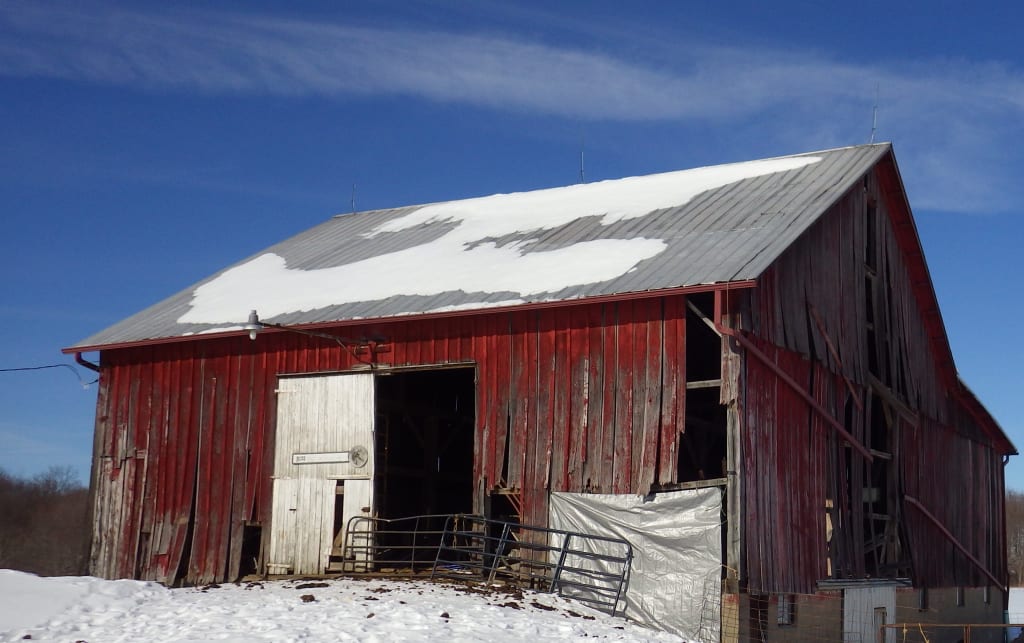
Even as Emmett hammered in the last nail, the beams of the barn already held the seeds of decay. But, then again, so do the beams in any barn. Every good farmer knows that.
Chapter II
She ran her hand along the heifer’s side, whispering words of encouragement. The first one’s always the hardest, Willa told her. Just breathe through. Her hands worked the cow’s belly, massaging and feeling that the calf was still in place.
She inhaled the sweet scent of hay and sawdust, the same aromas that marked her own passage into motherhood. Except that, on that day, the hands had been Emmett’s, gently probing her stretched and swollen abdomen, telling her when to push, assuring her that the baby would live and that she would live. Scream as loudly as you want, Emmett had said. Just careful you don’t knock the barn down. She had laughed at that and given Emmett the wryest smile she could muster before letting loose a banshee’s cry.
Now, Willa did the soothing. The rhythm of the contractions had quickened, and the heifer’s eyes had grown wide with fear. Scream as loudly as you want, Willa cooed. These boards and beams will hold your pain.
Chapter III
They learned to hold sweetness, too, those walls. Hold it the way that stone holds sunshine on a summer day so that, when your hand brushes against it, you can feel the warmth on your skin.
For Willa, she could touch those walls and feel the heft of a cow’s udder, taste the nectar of ripe blackberries, and hear hum of Emmett singing their daughter to sleep. She could feel warm, creamy milk on her tongue as she sipped it from the milking bucket, and she could smell the rich aroma of herbs that drifted out to the barn when Emmett made dinner.
She came to feel that home lived there, in the barn. She spent her days inside it, milling corn and milking cows and braiding her daughter's hair. Emmett came to visit her there when he took his breaks from the laboring sun. They even made love there, in stolen moments when their daughter was sleeping in the house. And she found that the feeling of home endured, even as the barn changed, even as it heaved and sighed with the passing of humid summers into dry winters, even as it dropped its once-fresh sawdust to the floor to be swept away with straw and muck. Instead, she only loved it more, always marveling that, with each passing year, those walls continued to soak in more memories, never filling up, the way that stone can always take more warmth.
Chapter IV
From across the ravine, with wind ripping through the folds of her dress, Willa saw a board rip free from the barn roof, thrusting itself into the fray of the storm. Between the muddled grays and blues of the rain and clouds, she did not notice the shadow it cast, long and dark across her husband’s face.
Willa and Emmett’s eyes met from across the way, imagining the same thing: a run-down barn with only the ghosts of life left behind. Not us, Emmett's eyes seemed to plead. No, not us, Willa whispered back. It’s just an unusually bad storm, just one board. Nothing that their hands couldn’t mend.
But, when the rain stopped and the wind settled, Willa found that she didn't want to fix the board. How could we fix it, she asked, with the way that it lets light into the barn?
Emmett looked at her as if she were a child. Can you hear yourself speak? he urged. It’s going to rain. It’s going to snow. Winter’s going to come, Willa, same as it always does. She gave him a pleading look, a look that he had never see on her face before. Just for now? she asked.
Every day after that, those first pink brush strokes of sunrise bathed themselves on her skin. She would invite the light in, tilting her head to the side and revealing her long and lilting neck. Nestle here, she would whisper. Lie down with me. And she would hold herself there, planted on the milking stool, as her hands pulsed the udder of one heifer after the next.
The barn changed, too. The light cast new shadows and created a new rhythm to the day’s work. Forgotten corners lit up as the sun marched across the southern sky, and spaces untouched by the sun suddenly seemed dark and forlorn. After so many years treading the same path across the floor, Willa realized that she did not know the grain of the wood as well as she thought, that the boards that had begun to seem drab still had something to offer after all.
Chapter V
But autumn came, with the threat of winter towing behind it, and Emmett set the ladder against the barn to patch the missing slat. As he pounded in the nails, the heifers began to low, sending long, sonorous moans across the ravine. Their restless hooves scratched at the barn floor, as if they hadn't known darkness each night of their lives, as if the sun had suddenly burnt out. Willa came, as she always came for the heifers, to soothe their fears. But no sooner had she come than she went again, as startled by the darkness as the heifers themselves.
She came back toting lamps from the house, more lamps than a person could really carry, and more lamps than the barn already held. She lit them, one by one, until the room shone brighter than it had from the sun. Emmett watched her frenzy, bewildered, but said nothing. After all, he told himself, those lamps will be back by morning.
Yet Willa began to pass her days amongst the herd of lamps, barely looking up whenever Emmett tripped on one, swearing and sputtering about burning down the barn. She hardly noticed, either, when his visits to the barn became less frequent, when he began to furrow his brow at the sight of her, when he muttered that she’d gone half mad. Instead, she began to notice the first signs of decay running through the walls. With the added light, she could see a new softness to the wood, and she could feel a certain wetness to it. Everywhere she looked, she saw a new spot of rot.
She pulled Emmett in one day, dragging him by the arm to look at each board. Her hair unkempt and her dress covered in dirt, she pointed desperately at the worst spots. It’s ready to fall, she told him. You’ve not been putting in the work to keep it up. Emmett shook his head, taking a step back from his quivering wife. Those walls are still fine. A few years, Willa, we’ll get to them in a few years.
But she could feel the walls sagging around her, leached of any memories they once might have held. And the thought kept coming to her, How do you mend a barn when all the boards have already rotten? Shouldn’t we do it now, board by board?
Chapter VI
The heifers huddled together in their stalls, the winter sky peeking through pockets of caved-in roof. Heavy, wet snow piled at their feet.
The temperature’s dropping, Willa whispered, looking out from the window of the house. That wet snow is going to freeze, and the heifers are going to die.
They’ll not die, Emmett snapped. They’ll keep each other warm just fine.
The calves will die, Willa urged. Emmett shut the blinds.
In the morning, they picked their way through the field of snow, breath bated. The hairs in their noses began to freeze, clinging to one another desperately. Emmett pulled backed the barn door with his gloved hand, and there they found the heifers, standing together, crusted with frost and ice, barely alive.
Every calf had died.
Chapter VII
The neighbors told them to start anew, a fresh barn with new heifers.
But the memories, Willa urged. Emmett looked at her sadly, nodding. Are they really worth it, darling?
Those beams are still strong, she whispered. He shook his head, The rot’s too deep.
Remember the sunlight, she smiled, when we let the sun pour into the room through that slat in the roof?
That was the rot, too, he replied. She watched his lips press together, holding himself in.
It was the rot, she agreed, nodding slowly. But when the rot ripped away in the wind, it opened something new.
Chapter VIII
Three summers and winters gone, and the surviving heifers still hadn’t calved. Willa had given every waking hour to one of the cows earlier this spring, feeding her and massaging her as her sides swelled. Willa’s eyes had grown weary from late nights sleeping in the barn, keeping the heifers warm through those bitter spring storms. Yet, when the calf finally came, it was still and silent. Willa had wept for the loss, wept until her head ached and her face was swollen and her muscles sagged.
Now, she found herself looking up, sending a prayer into the night sky to let this calf live. The tarps had come off the roof just a few days before, as Emmett did the finishing touches, and she could finally see the moon and stars through the sky lights. The repairs had also brought back that fresh smell of sawdust, as sweet as summer nectar, a smell that somehow seemed to be a part of her prayer.
The heifer began to moan again, and Willa brought her hands back to the cow’s side. She let herself lean against one of the original beams, strong and familiar and settled. Scream as loudly as you want, love, she whispered. These walls will hold you.
About the Creator
Sarah Nathan
Sarah attends Yale Law School and is a lifelong writer. Though she mostly spends her time writing legal briefs these days, her favorite genre is creative nonfiction. She also loves writing fiction and poetry - really, anything with words.
Keep reading
More stories from Sarah Nathan and writers in Fiction and other communities.
Painless
At night, when her mind wouldn’t rest, Norah would put the gun on her stomach and let the weight of it soothe her to sleep. She kept the barrel empty so that, if she wanted to, she could lay her fingers on trigger, the last place that Mark’s hand had touched. The last place that Thomas’s hand had touched. And, perhaps, the last place that Norah’s hand would touch.
By Sarah Nathan5 years ago in Fiction
Second Shadow
I noticed it by accident, which is how most bad ideas introduce themselves. I was cutting through the square at lunch, phone in one hand, iced coffee sweating down my wrist. The sun was a bully, straight up, no cloud cover, every edge of everything carved into the pavement. I walked past the sundial because I like proof that time is meaningful in more than one medium.
By Milan Milic3 days ago in Fiction
Wild Card Weekend Recap: What Happens Now?
I think I figured out why I love Wild Card Weekend so much. It's because it's the first playoff anything of the calendar year. The NFL season starts in the fall, and once upon a time, the champion was crowned either on or slightly before New Year's. The evolution of the NFL schedule has resulted in the playoffs starting just into the New Year, and currently, the final week of the season falls on the first weekend of the New Year, with Wild Card Weekend coming a week after that. So yes, chronologically, the NFL's Wild Card Weekend serves as the first playoff anything of the calendar year.
By Clyde E. Dawkins4 days ago in Unbalanced




Comments
There are no comments for this story
Be the first to respond and start the conversation.