
"Pulp Fiction" : A Cinematic Masterpiece that Redefined Storytelling
A timeless tale of intertwining lives and unforgettable dialogue.


Introduction: The Cultural Impact of Pulp Fiction
When Quentin Tarantino’s "Pulp Fiction" hit theaters in 1994, it wasn’t just a film—it was a cultural phenomenon. The movie’s innovative storytelling, sharp dialogue, and bold style captured the imagination of audiences and critics alike, earning it the Palme d'Or at the Cannes Film Festival and seven Academy Award nominations. In this story, we delve into the elements that make "Pulp Fiction" a timeless classic, breaking it down into three compelling subtopics: its groundbreaking narrative structure, the unforgettable characters and dialogue, and its enduring influence on pop culture.
A Revolutionary Narrative Structure
"Chronology takes a backseat as chaos reigns supreme."
One of the most striking aspects of "Pulp Fiction" is its nonlinear narrative. Tarantino’s decision to shuffle the timeline was a bold move that paid off immensely. This unconventional storytelling technique challenges viewers to piece together the events as they unfold, creating a more engaging and rewarding experience.
The Power of Nonlinearity
In most films, events unfold in a straightforward, linear fashion. However, Tarantino’s choice to present the story out of sequence forces the audience to focus not just on what happens but how it happens. For example, the film opens with Pumpkin and Honey Bunny’s diner robbery but doesn’t revisit this scene until the climax. By withholding key moments and recontextualizing them later, Tarantino keeps viewers on their toes, encouraging multiple viewings to fully appreciate the story.
Connecting the Dots
The film’s narrative is divided into distinct segments: Vincent Vega and Marsellus Wallace’s Wife, The Gold Watch, and The Bonnie Situation. While these stories appear disconnected at first, they are intricately woven together, with characters and events intersecting in unexpected ways. This approach mirrors the chaos and unpredictability of real life, lending the film a sense of authenticity despite its heightened style.
Iconic Characters and Dialogue
"Every line is a quotable gem, every character an unforgettable presence."
At the heart of "Pulp Fiction" are its richly drawn characters, brought to life by an all-star cast including John Travolta, Uma Thurman, Samuel L. Jackson, and Bruce Willis. Each character is distinct, with their own quirks, motivations, and memorable lines.
Jules and Vincent: The Philosophical Hitmen
Samuel L. Jackson’s Jules Winnfield and John Travolta’s Vincent Vega are perhaps the most iconic duo in modern cinema. Their banter—ranging from the morality of killing to the intricacies of European fast food—is as entertaining as it is insightful. Jules’s recitation of Ezekiel 25:17 before executing his targets has become one of the most quoted monologues in film history.
Mia Wallace: The Enigmatic Femme Fatale
Uma Thurman’s portrayal of Mia Wallace is both captivating and enigmatic. Her charm and wit shine in the now-legendary diner scene, where she and Vincent discuss uncomfortable silences before taking to the dance floor for an unforgettable twist contest. Mia’s overdose scene, meanwhile, adds a dose of raw tension to the film’s otherwise playful tone.
The Gold Watch: A Tale of Legacy
Bruce Willis’s Butch Coolidge anchors one of the film’s most intense segments, centered around a gold watch passed down through generations. This simple object becomes a powerful symbol of family, honor, and resilience. The story’s climax, set in a pawnshop-turned-chamber-of-horrors, is a masterclass in tension and catharsis.
Enduring Influence on Pop Culture
"Tarantino’s opus changed the game forever."
Few films have left as indelible a mark on pop culture as *Pulp Fiction*. Its influence can be seen in everything from fashion to filmmaking, as directors and writers draw inspiration from Tarantino’s bold vision.
A New Era of Filmmaking
Tarantino’s success with "Pulp Fiction" opened doors for indie filmmakers, proving that movies with unconventional narratives and dialogue-driven stories could find mainstream success. The film’s mix of dark humor, violence, and philosophical musings became a blueprint for countless imitators, though few could match its brilliance.
Music and Style
The film’s soundtrack, featuring a mix of surf rock, soul, and pop classics, became a phenomenon in its own right. Songs like Dick Dale’s “Misirlou” and Chuck Berry’s “You Never Can Tell” are now inseparable from the scenes they accompany. Meanwhile, the characters’ fashion choices—from Mia’s sleek bob and white shirt to Jules’s black suit—remain iconic to this day.
Endless Parodies and References
From TV shows like "The Simpsons" and "Community" to films like "Get Shorty" and "Boondock Saints", "Pulp Fiction" has been endlessly parodied and referenced. Its dialogue, characters, and even its poster have become shorthand for cool, edgy storytelling.
Why "Pulp Fiction" Matters
More than three decades after its release, "Pulp Fiction" remains a touchstone of modern cinema. Its daring narrative, unforgettable characters, and cultural impact have cemented its status as a masterpiece. Whether you’re watching it for the first time or the fiftieth, "Pulp Fiction" continues to surprise, entertain, and inspire.
"A true original that changed cinema forever."
About the Creator
Keep reading
More stories from Willow Writer and writers in Fiction and other communities.
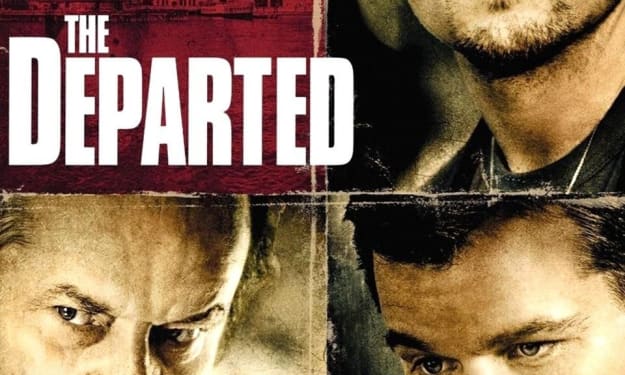
The Departed: A Cinematic Symphony of Deception, Loyalty, and Tragedy
The Art of Deception "The Departed" is a masterclass in the art of deception, a theme that reverberates through every corner of its narrative. Directed by the legendary Martin Scorsese, the film immerses its audience in a world where truth is elusive, and trust is a precious commodity. Set in the gritty backdrop of Boston, the story revolves around two moles operating on opposite sides of the law—Billy Costigan (Leonardo DiCaprio), an undercover cop in a criminal syndicate, and Colin Sullivan (Matt Damon), a criminal mole within the police department.
By Willow Writerabout a year ago in Fiction
Bomb Scare
It was 2027, and the world never thought it would happen. A missle hit the United States, but it wasn't where they had anticipated. A little town in the northeast was hit by a missile strike, they didn't know why, and they didn't know exactly where it hit, but they did know it was a coastal community, somewhere between Maine and Delaware.
By Gregory Payton6 days ago in Fiction
Real men drink, right?
He has a problem. He’s felt it for years now, but he refuses to face it. He doesn’t want to admit it, to himself or to the people around him. All his heroes were the same. He likes to recall the scene where James Bond sits in a dusty pub in Latin America, a glass of whiskey in hand, his gaze fixed on a scorpion crawling across the bar. When he first fell for literature, it was Post Office and Women, which he read over and over again. Without those cans of beer and bottles of cheap whiskey, Bukowski’s work wouldn’t have been so raw, so honest. Even Vaclav Havel spent most of his nights in Prague bars; without that, he wouldn’t have been who he was. Those were the real men.
By George Roast3 days ago in Fiction


Comments
There are no comments for this story
Be the first to respond and start the conversation.