
Paradise Never Found
One Life So Easily Traded for Another
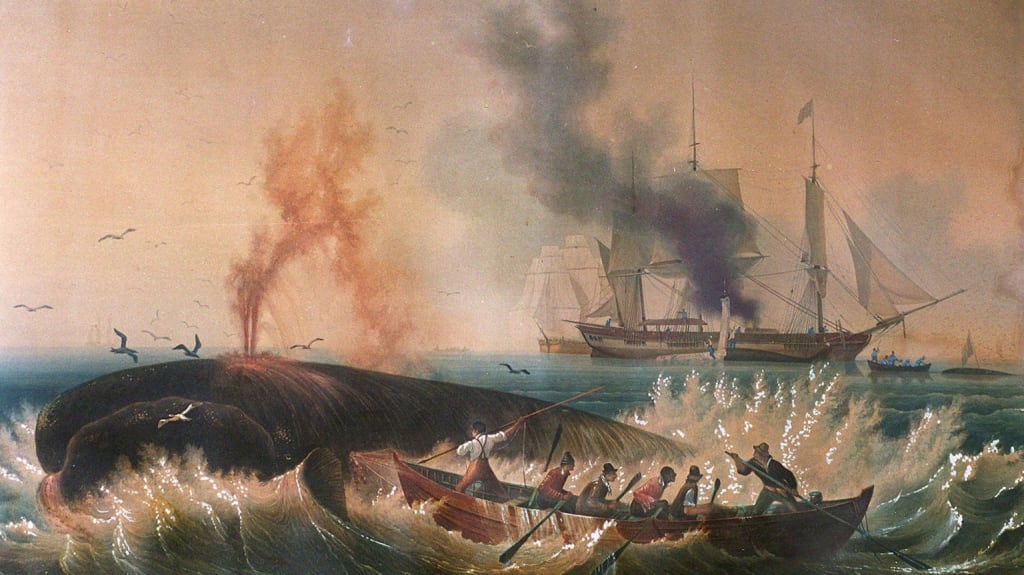
Oliver’s fingers strain under his weight. His woolen coat, once his shield from the sharp stabs of wind, now thrice soaked and adding to the burden. The water is cold, but seems a warm and inviting haven from the elements; a kind of isolation from the gale. A notion to let go and have the waves take him is repulsed with no insignificant effort. A straw lined sleeping mat on a soft earthen floor. Flickering light and luscious fleeting warmth of a whale oil lantern. Aching blisters on his feet, oozing their own brand of liquid warmth into his socks. Nothing but the next day in the field to occupy his mind. Paradise.
Why did he leave the fields? He told his friends that work wasn’t what it was. That the day's wage could hardly put smoke in his lungs and whiskey in his flask. He told family that he had ambitions to study. That he would be wearing a stovepipe and suit jacket in the red brick streets of Boston if only he could pull a higher salary into his purse at the end of each day. His answers to this question were all truths. In the same sense that every plank, nail, and drop of tar on a clipper is part of a ship. Unbeknownst to Oliver, however, he told the truth in its truest form only to the bookkeeper at the farm. That he could no longer sit idly as his life washed over him. The books had told him that a young man should seek adventure. That he who is in the prime of his life should stand up to the world, hands raised, and sock it in the jaw. That the hero in the story is never stacking hay on the henderson farm. At least not by the end. The bookkeeper didn’t look up, but simply crossed out Oliver’s name. Turning the page, he created a line for a new hand, and motioned for Oliver to move along as to not hold up the line.
The boards creak. Without a keel to cling to, the piece of hull that was Oliver’s home for the past - How long has it been?- begins to tear itself apart.
The Right Whale. A hideous lumbering sea beast. Dark grey, barnacle pocked skin stretched over fifteen yards of heavy bone and fat. The Indians called them the gods of the ocean. The white men knew better. When a living being has had its physical form molested in such a way as is the fashion to harvest oil from a whale, it is hard to believe in any kind of previously assigned spiritual value. When the skin is flayed open, blubber ripped from slimy flesh, and body left to the devices of the cruel sea, what is left call divine? A creature so easy to kill, and so useful to harvest for every bit of useful resource could never be a god. Better off as oil.
This particular monster was spotted by the Eastern most watchtower in Barnstable. The wickie lit the torch. Hot red light cut through the morning fog. A light that could be seen from the steeple of the Old North Church. Oliver and his crewmates needed only to see it from a hundred yards. What was a cold and quiet morning only seconds earlier was now a stifling cacophony of shouts and a shrill orchestra of ringing bells. Men sat bolt upright in their tents, sweat already dripping from their cold brows, pulled on their boots and got ready to work. They had precious little time to chase away the lingering merriment of the night before, as even a moment wasted could mean the Right would slip away into the fog, never to be found again. Or worse yet, to be found by another tower. The crew, hardly awake, set out to the clipper. As ready as they could be to meet today’s destiny as men of the fine American trade.
What happened next? Oliver struggles to remember anything but the terrifying crash of waves over the deck, the barking of the Captain, shouting orders that were carried away by the gale to men not a foot from him. Two harpoons were in. This much he knew for sure, for he had heaved one himself and watched as it plunged deep into the greasy flesh of the beast, hued red from its own blood. The spikes in its side dealt a great blow to the Right, rendering it unable to dive. All it could do was flounder about on the surface, begging to be put down. Now, Oliver had proven himself to be reliable with the harpoon. A feat that spared him the risk of taking out on the dinghy, with the men who had no talent for the harpoon, to lance to creature. For this he was proud. He was safe aboard the clipper.
Only for a moment, there is a break in the clouds. What little warmth is to be offered by the waning September sun washes over Oliver, igniting his humanity one last time. “Why am I here?” He asks himself. Because oil prices are high. Too high to turn down the first Right whale in 3 days. Rotten Autumn weather be damned. Oliver’s leg aches. He looks down with all the haste that his frozen joints allow. A splintered beam, deeply planted into his right thigh, is to blame. Oliver can’t complain. He lets the pain flow through him. Lets it provide what visceral warmth that it will.
Being that there were so many sounds competing for Oliver’s ear, and fog like smoke in a card room thoroughly clogging his eyes, he was not aware that the Right had given one last desperate thrash. This kind of behavior is typical of a fish on the deck of a ship, having been out of water for ten minutes. Saving up its energy for one last kick. One last roll that will send it back to the freedom of the sea rather than to the knife of the monger. The Right had managed to stir up the water enough to bob the dinghy in a most unfortunate manner, allowing a white capped wave no less than two yards high to enter cleanly into the hull. She was swamped soon thereafter. Unable to appreciate the emancipation for which the whale so yearned, the crew of the dinghy were left to float for as long as they could bear. Maybe God knows who took the last breath, the Right whale, lance dug deeply into its heart, or the Captain aboard the dinghy. But it is unlikely that he should ever share with us that rather trivial piece of knowledge.
The skeleton crew still aboard the clipper waited for the return of the Dinghy for hours. Maybe even years. Maybe there was a notion among the remaining crew to limp the clipper back to shore. But it is doubtful that many of the remaining crew seriously considered this. Without the whale, there was no wage. Without the Captain, no job. Without the Wage and the job, there was no life. Besides, the dinghy might still be out there, battling the waves, harvesting the Right. With the decision of the crew to weather the storm, and the fact that the clipper was built thirty two years prior to this day with warm summer waves in mind, the fate of the craft was locked in. The bookkeeper lazily crossed her off his eternal list, and motioned for the next in line.
It is unclear how many thousands of days the crew waited, like patient dogs, for the return of the dinghy. But what could be known for sure is that creaks and groans from deep in the hull had grown into cracks and breaks in the keel and the deck. The old ship put up its best fight, but the inexorable force of the ocean eventually succeeded in its incidental goal of wholly and fully destroying the clipper. Perhaps Oliver was the only one with luck enough to procure himself a private boat among the field of wreckage. The fog was too thick for him to know for sure.
The pale sun is once more engulfed by clouds. However, its warmth remains in oliver. His straining hands glow from the heat. So much so that he can not know for certain whether he still grips the piece of hull, or if his skin has melted to the plank. Oliver asks himself, “Why am I here?” With all the clarity of a clean pane of stained glass, he answers his question. “I am taking this here ship to the New World. To my new life. To a grand adventure across the sea. To a place where the whiskey flows like sap from a maple, and tobacco is plucked from the earth like a dandelion in spring!”
The warm water washes over Oliver. His red-hot body boils it, and releases steam as thick as bay fog on an autumn morning. His face cracks into a smile. He can see the New World, so close he can swim to it. He lets go of the plank.
Miles away, the morning bell rings at the Henderson Farm. The hands extinguish their oil lanterns, and dress for another day in the field. On the West end of Barnstable, a wickie lights his torch.
Written on a cold Friday morning on the outside terrace of some cafe in Munich. As far away from the Ocean as Oliver was from the New World.
About the Creator
Keep reading
More stories from Ryan Clarke and writers in Fiction and other communities.
A Dead Life
What is to become of humanity? Will we struggle over the cusp of a cliff to find haven on a flat plateau? Having reached a place of such stark contrast to the rocky cliff, that we sink our sore heels into the soft soil and call it home. Do we not cast at least a cursory glance to the next cliff in our catch? And what if we are to fall? From the first cliff or the second? Will we rise like a phoenix from the? Reborn to a fresh start, retaining our previous risks and rewards? Or perhaps our ember, and all energy spent creating it, will fade to blackness like the closing of a tired eye.
By Ryan Clarke5 years ago in Fiction
The Blue Ridge Stalker
Tom had left the Ford down the way, its spark plugs finally exhausted and no mechanics for a dozen miles back through the foothills to Strossburg. No matter, he had worn his boots—almost as if he planned for this to happen. The puzzle he sought to solve emanated from the woods clinging to the slopes above; the valley behind held no mysteries.
By Stephen A. Roddewig3 days ago in Fiction
How to Become a Werewolf
Thank you for choosing Lycan Brands for your life alteration. WARNING: Side effects of becoming a werewolf may include: bloodlust; drowsiness; insomnia; increased appetite; nausea and decreased appetite caused by overeating; supernatural strength; intermittent and inexplicable aches and pains; itchiness and rash. Do not proceed if you are allergic to becoming a werewolf, or have vasovagal syncope related to the sight of blood (sudden drop in blood pressure resulting in loss of consciousness), or if you are nursing, pregnant, or may become pregnant.
By Ophelia Keane Braeden7 days ago in Fiction


Comments
There are no comments for this story
Be the first to respond and start the conversation.