

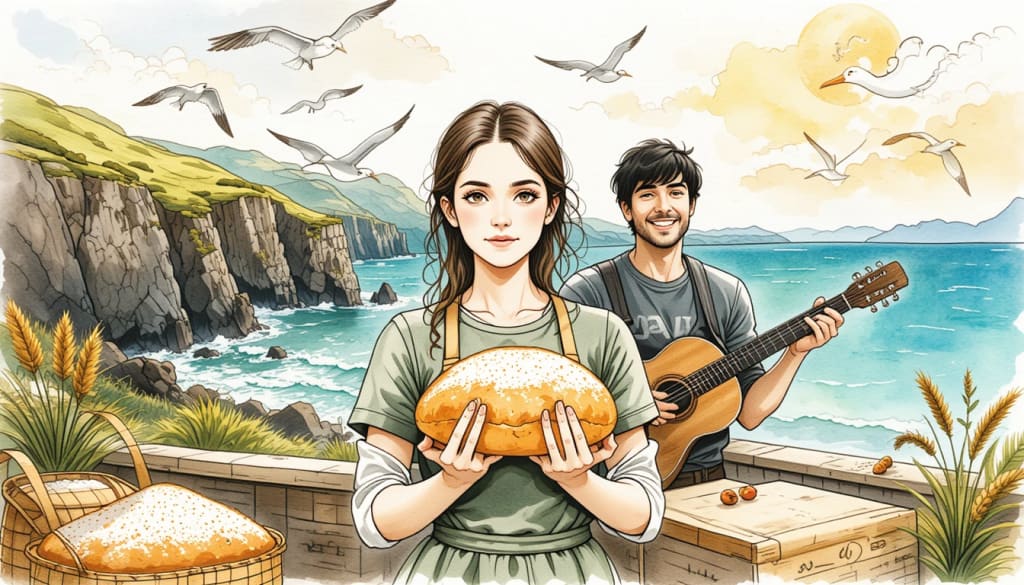
In the crisp autumn of 2025, the coastal town of Dunedin, New Zealand, shimmered with the promise of new beginnings. For 31-year-old Hana, a former corporate lawyer turned aspiring baker, the salty breeze and rugged cliffs offered a chance to rebuild a life shattered by burnout and betrayal. Her story, woven with the warmth of fresh bread and the courage to redefine herself, unfolded in a bakery where every loaf held a piece of her heart, and every connection promised a new horizon.
Hana arrived in Dunedin with little more than a suitcase, a recipe notebook, and a heart bruised by her past. In Auckland, she’d climbed the ranks at a prestigious law firm, her days a blur of contracts and deadlines. But the pressure, coupled with a bitter breakup with her partner, Tom, who’d cheated with a colleague, left her empty. A panic attack during a high-stakes meeting was her breaking point, prompting her to quit and flee south. Her grandmother, Kiri, a Māori elder who’d raised her, had always spoken of Dunedin’s healing spirit—its tides, its hills, its people. Hana, desperate for a reset, rented a small flat above a shuttered bakery, hoping to start anew.
The bakery, once called Tides & Loaves, was a relic of Dunedin’s past, its windows dusty but its ovens intact. Hana, who’d baked with Kiri as a child, saw it as a sign. She leased it with her savings, determined to revive it. Her first days were daunting—kneading dough, scrubbing counters, and learning the quirks of an ancient oven. Yet the rhythm of baking, the scent of yeast and flour, felt like a return to herself. She painted the walls a soft blue, hung Kiri’s woven flax mats, and named the bakery Pūāwai, meaning “to bloom” in Māori, a nod to her heritage and her hope.
Her first regular was Theo, a 35-year-old marine biologist who studied the albatross colonies on the Otago Peninsula. With his salt-streaked hair and easy laugh, he wandered in for a coffee and stayed for Hana’s sourdough, his curiosity disarming. “This place smells like home,” he said, biting into a still-warm roll. Hana smiled, shy but warmed by his presence. Theo, a widower who’d lost his wife to illness three years prior, carried a quiet grief that mirrored Hana’s own. Their chats, over coffee and crusty loaves, became a daily ritual, each conversation a step toward trust.
Hana’s baking drew others. Moana, a local weaver and friend of Kiri’s, brought her warmth and stories of Māori traditions, teaching Hana to weave flax into baskets for her bread. Liam, a teenage runaway who lingered outside the bakery, became her unofficial apprentice after Hana offered him a job sweeping floors. His guarded eyes softened as he learned to shape dough, his story of a broken home unfolding in quiet moments. Together, they formed a makeshift family, their laughter filling Pūāwai with life.
The town’s annual Harvest Festival approached, a celebration of Dunedin’s artisans and farmers. Hana, urged by Theo, entered her bread in the baking competition, a bold move for a novice. She spent weeks perfecting a recipe—a rosemary and sea-salt loaf infused with kawakawa, a native herb Kiri loved. The process was healing, each knead a release of her old self. Theo helped, testing batches and sharing tales of albatrosses soaring over the Pacific, their wings a symbol of freedom. “You’re like them,” he told her, his hand brushing hers. “Finding your way back.” Hana’s heart stirred, but fear of another betrayal held her back.
A letter from Tom disrupted her fragile peace. He’d found her through a mutual friend, apologizing and asking to visit. The words reopened wounds—doubt, anger, the ghost of her corporate life. Hana nearly canceled her festival entry, but Moana’s wisdom steadied her. “You’re not that girl anymore,” she said, weaving a flax bracelet for Hana. “You’re pūāwai—blooming.” Liam, too, offered quiet support, his own resilience a mirror to hers. Hana decided to face the festival, her bread a declaration of her new self.
The festival was a tapestry of Dunedin’s spirit—stalls of wool, honey, and art, with bagpipes echoing over the hills. Hana’s booth, adorned with Moana’s baskets and Theo’s photos of albatrosses, drew crowds. Her kawakawa loaf, crusty and fragrant, won second place, but the true victory was the community’s embrace. Locals shared stories of their own new beginnings—divorces, career changes, dreams reborn. Theo performed a guitar piece he’d written, its notes soft and soaring, dedicated to “the woman who bakes the sea.” Hana, blushing, felt her heart open, a new horizon within reach.
That night, Tom appeared at the bakery, his face older but familiar. He spoke of regret, of wanting her back, but Hana saw him clearly—a relic of a life she’d outgrown. “I’ve built something here,” she told him, her voice firm. “I’m not going back.” Tom left, and Hana felt a weight lift, her past no longer a chain. Theo, waiting outside, took her hand. “You’re incredible,” he said, and their kiss, under Dunedin’s starry sky, was a promise of something new—tentative, but true.
A storm hit days later, flooding the bakery’s basement. Hana, Theo, Moana, and Liam worked together to save it, their hands muddy but united. The effort cemented their bond, and Pūāwai reopened stronger, its tables filled with locals. Hana began teaching Liam to bake, his confidence growing, while Moana mentored her in Māori traditions, weaving her heritage into her new life. Theo, planning a research trip, asked Hana to join him, a chance to see the albatrosses she’d inspired.
In 2026, Hana stood on the Otago Peninsula, Theo beside her, watching albatrosses soar. Pūāwai thrived, a hub for Dunedin’s dreamers, with Liam now a skilled baker and Moana’s baskets in demand. Hana’s sketches, once hidden, adorned the bakery’s walls, her art a quiet triumph. Letters from Kiri, proud of her granddaughter’s courage, arrived with flax seeds to plant. Hana’s life, once defined by loss, was now a symphony of new beginnings, each note a testament to love—for herself, her community, and the man who saw her bloom.
About the Creator
Shohel Rana
As a professional article writer for Vocal Media, I craft engaging, high-quality content tailored to diverse audiences. My expertise ensures well-researched, compelling articles that inform, inspire, and captivate readers effectively.
Keep reading
More stories from Shohel Rana and writers in Fiction and other communities.
New Beginnings
In the vibrant chaos of Melbourne, Australia, in the spring of 2025, the city pulsed with the promise of renewal. For 26-year-old Amara, a barista with a knack for sketching faces on latte foam, the word "new" was both a hope and a challenge. After years of running from her past, she found herself at a crossroads, where a single act of courage would paint her life with colors she’d never dared to dream. This is the story of Amara’s journey to embrace a new beginning, woven through the connections she forged and the art she dared to create.
By Shohel Rana7 months ago in Fiction
Miss Persephone's Manual to a Seemingly Ordinary Life
Miss Persephone was found at the dining table, her blue eyes swollen, her tears arriving and retreating like the tides of the ocean. Earlier that day, her family had visited her in the retirement home where she had lived for eight years. It was her eightieth birthday.
By Imola Tóth6 days ago in Fiction



Comments
There are no comments for this story
Be the first to respond and start the conversation.