
Me and the Cockroaches
Me and the Cockroaches
It’s time. My whole life has been building to this moment. My destiny is at hand.
Grimacing through my body’s myriad protests, slow as the human mind to abandon self-deception, I lurch to my feet and start crunching across desiccated prairie grass. A puff of stygian summer wind wafts at my back as if to prod me along, but I pay no heed, setting my pace barely above a shuffle. Destiny is terribly important, but its days of flitting away around the next corner are finished. I can close the remaining distance at my leisure.
Needless to say for someone raised on American exceptionalism, stories of good overcoming evil, and a long arc of history bending toward justice, this is not where I’d expected to meet my fate. Not that I’d ever really had any particular situation in mind, with the eddying fantasies of childhood swept away by the day-to-day grind of chronic anxiety and depression midway through high school. But a dusty farm in Manitoba, post-civilization? It hardly fits someone prone to fatigue and sunburn who lived in suburbia for fifty years, staring into computer monitors for both work and pleasure.
Fit has nothing to do with it of course, not on this dying world full of dying people. You go wherever seems to offer the best chance of another tomorrow, however wretched it might be, and save your fancies of what might better fit for those moments when you’re too exhausted, sick, or wounded to move. It’s what eons of evolutionary programming demands after all: to see tomorrow, whatever the cost. And if that cost includes the eventual end of tomorrows for everyone? Well, there’s bound to be a few survivors here and there, and perhaps through the wonders of natural selection and epigenetics, their offspring will be less disposed to planet-wide environmental despoliation and development of nuclear weapons. One has to nurture hope.
Hope for me takes the form of Miriam Bonner, a woman twenty years my junior whom I have the audacity to imagine myself in love with. My mincing steps carry me toward her now. Miri is genuine, thoughtful, and a reader, though her taste is much more literary and poetic than my own. She has jet black hair chopped short for utilitarian reasons (a choice lately made by many women whose social circumstances permit it), dark brown eyes, sun-browned skin, smallish breasts, a reasonably shapely bottom, and an appalling rural Canadian accent. Her smile, her company, and the hints of her esteem constitute the sum of my remaining treasures. She’s even single, having lost her husband in one of the epidemics that swept Canada as global warming resurrected a host of contagions from their permafrost tombs. Not an opportunity to be missed, especially with the notion of repopulating the earth having vaulted from comedic fodder to urgent concern.
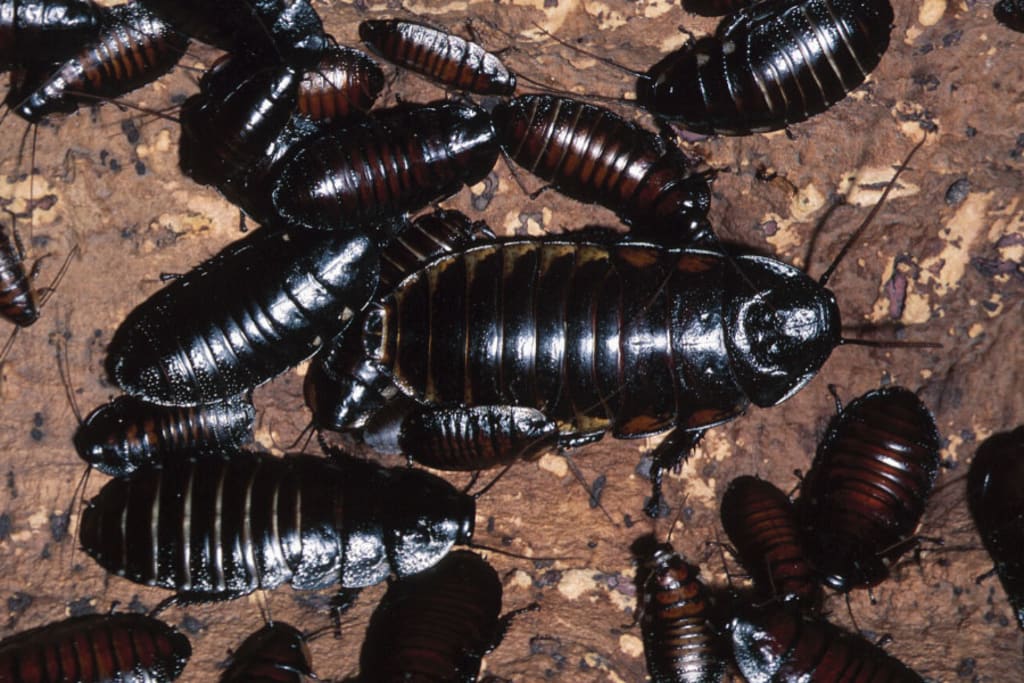
Squinting hard, not against the sun (veiled by the spew of wildfires and nuclear explosions, yet seemingly uninhibited, busily rendering the Earth a second Venus) but because my vision relies on scavenged glasses, I can just confirm it’s Miri up ahead feeding the chickens. Absurdly, my pulse quickens. I’ve experienced political violence, the collapse of the environment and society, and the desperate life of a refugee, yet here I am, anxious about a conversation. My lips can’t help but twitch in the direction of a smile. I once tried to explain to my brother Tony – who comprehended neither chronic mental illness nor my capacity for survival despite my frequently being defeated by mundane tasks – that one day it would just be me and the cockroaches, and I would be worrying about whether the roaches approved of me. At this point, my prediction isn’t looking too wide of the mark.
I pause to rest against an ancient split-rail fence and watch Miri through the haze, leaning carefully so as to minimize the pressure on the more poorly healed and cancer-wracked parts of my body. Yes, I’m dying. Slowly, as far as I can tell, but the cliff edge can’t be far considering the metastases I can reasonably assume. After cancer took both of our parents back in the twenties, I’d (only half-jokingly) suggested to Tony that we start a pool on which of us would sprout a tumor first, with a bonus for also nailing the type. You could say I won with melanoma, but it would be more fairly deemed a no-contest, since Tony was incinerated in a drone strike before I was diagnosed. One has to nurture a sense of humor. Laughter is the only medicine I’ve seen in months.
Miri finally notices me. It’s fairly obvious I’ve been watching her, and she arches a brow in response to my lethargic wave. We’re only at shouting range and she has more work to do, so she turns away after a moment. A good moment. No trace of displeasure, as I know that quirk of her brow to signify curiosity, even playfully so. My sense of fateful anticipation deepens, and I slip a hand into my pocket to touch the gift with which I hope to seal my courtship. It’s a heart-shaped locket, real gold as far as I can judge from its weight and luster. Sadly scratched-up, but free of scorching after my careful ministrations. It’s another bit of scavenge, this from the remains of the convoy with which I’d fled America. The convoy which had also contained my brother and his family. Tony had been right, the “Patriots” hadn’t considered us worth a plane or a gunship. But some heil-Trumper had apparently thought a Reaper and a couple of Hellfires would be good fun.
I only survived the slaughter because I’d been doing what I had all my life: holding myself apart. Even before I was a diagnosable headcase, I’d seemingly always found ways to alienate or distance myself from others. Much of the time unintentionally, but often quite of my own volition, even if I wondered at myself as I was doing it. Life as most knew it became something I escaped from or observed from a remove, despite my longing to at least dip my toes in. With the convoy, I would’ve much preferred to stay close, but I drove point as often and as far ahead as I could because the herd felt sickeningly vulnerable. Just as society in general once had.
I’m reminded yet again of an article I found back on one of the countless weekend afternoons I’d spent alone in front of a computer, the TV tuned to a newscast by fumbling fourth-stringers just to give me a facsimile of company. It was about how loners are made for legitimate evolutionary reasons; by staying apart, they might survive disasters which strike down the larger community and go on to breed with other survivors, thereby restoring the population. My destiny, if I will only grasp it.
I pull my hand from my pocket and resume walking. Closer and closer to Miri. Wondering if I do fuck her, if I’ll experience the same sense of wondrous accomplishment as Bobby Shaftoe in Cryptonomicon, fathering his child against a sea wall in Manila on the eve of World War II. Then I veer away, and the distance grows anew. I imagine I feel her quizzical gaze, but I don’t look back. Before reaching my new destination I stop only to scoop up a stick, at the cost of agony from my tumors and other hurts.
The said destination is an outhouse. Its stench and drone of flies envelop me well before I arrive. Once inside, I’m gratified to see the hole under the seat is nearly brimming with shit, so I won’t have to bend over far. I fish out the locket, run my thumb over it one last time, musing that real gold, perhaps shaped by actual human hands, deserves a better fate. But deserves, like fit, has nothing to do with it. I drop the locket onto the shit pile and use the stick I grabbed on my way to push it in. Softened by the heat, the collective intestinal detritus of the farm turned refugee camp devours the vehicle of my affection with a greedy squelch. The burial accomplished, I draw the pistol I keep tucked into my waistband and cock the hammer.
Me and the cockroaches. Well, close enough. My destiny is indeed at hand.
About the Creator
Keep reading
More stories from writers in Fiction and other communities.


Comments
There are no comments for this story
Be the first to respond and start the conversation.