
Manifest
a wish on a plane, antique shopping with mother, and a new beginning in Georgetown, Seattle


The leftover chill’s talons lost their sharp once the rain stopped. Miriam sat outside on the steps leading to her front door watching her new neighborhood.
The morning was loud with animal noises as a neighbor’s chickens cackled. She didn’t pray any more because she no longer believed in god or goddess, just the Universe. The robins in the persimmon trees by the gate shrieked and fluttered amongst each other. Runoff flowed down the edge of the street and poured into the sewer grate as the clouds began to break.
Just her luck, within the week of searching on Zillow the upper level duplex in Georgetown was hers. Sure, the thick panels of glass didn’t completely shut out the buzz of descending planes circling the municipal airport and the yard needed some fresh grass seed, garden shears, and a lawn mower cord pull but the newly remodeled kitchen and year-old carpet was just what she’d asked for. The empty smell of a new beginning vibrated in her home.

Miriam just about willed what she wanted into existence once she decided it. Although she always stubbornly clutched her single minded determination, her Taurus ambition didn’t play a role in this; she faithfully trusted that the Universe would present her with exactly what she’d envisioned sooner rather than later.
It was time to prepare for her day. In a few hours Mother would buy her a new piece of furniture. From her perch on the stoop she created a mental inventory of everything that she would fill the space with: a leather sofa larger than the Wayfair futon tucked in the sitting room corner, a matching ottoman that flipped open to store Pendleton blankets, a golden framed mirror hung above a cherry wood side table in the foyer.
When she arrived at the antique furniture store, Mother was already waiting.

Endlessly reliable and detail-oriented, she shocked her youngest daughter when she left out her typical greeting: “You’re slouching.” Miriam longed for the familiar pang that hit the middle of her chest, the sudden straightening of her spine, the anger and sudden movement. She wished the four years since they last saw each other at Grandma’s funeral were nothing.
Instead, no words. Mother looked her up and down, taking stock of her shoes, the pleats in her plaid skirt, the slight rise of her crop top above the waist and its neckline at her throat, the brown eyeliner she wore, and whatever changes in her facial complexion needed to be accounted for.
As Miriam crossed the street towards Mother, she imagined the diamond tennis bracelet slinking around her wrist like an earthworm as she sipped a vodka martini. The layer of dirt beneath those French-manicured fingernails showed when she didn’t bother to hide her disapproving laughter. Today she wore a safer smile than Miriam remembered.

Her grandmother had retired in Florida, the opposite corner of the country where her elder twin sisters had moved after graduating from the UW and marrying six foot tall, blue-eyed cousins who worked on oil rigs in the Gulf. They’d met when they were summer stewardesses on a National Geographic cruise up to Alaska and the men were engineers. Miriam spent that summer in the woods writing poems, meeting temperamentally gentle boys whose future careers in academia never provided the beachside life that Cynthia and Phoebe savored.
When Mother stepped out of the air conditioned airport in Miami the humidity weighed strangely. She’d never visited while Grandma was alive. One regret. Her eyeshadow curdled.
After the wake, Mother drowned in her grief at the hotel bar. She’d stayed on the West coast, of course, with the law firm she built instead of a marriage. Another. She reapplied her lipstick – too much had been left along the martini glass rim.
“You know why couldn’t we get along, Miriam? You always reminded me too much of her – too witchy and unrealistic. Look at you now, alone again. You’ll never get what you really need.” She tapped the drink and threw her head back with that terrible laugh.
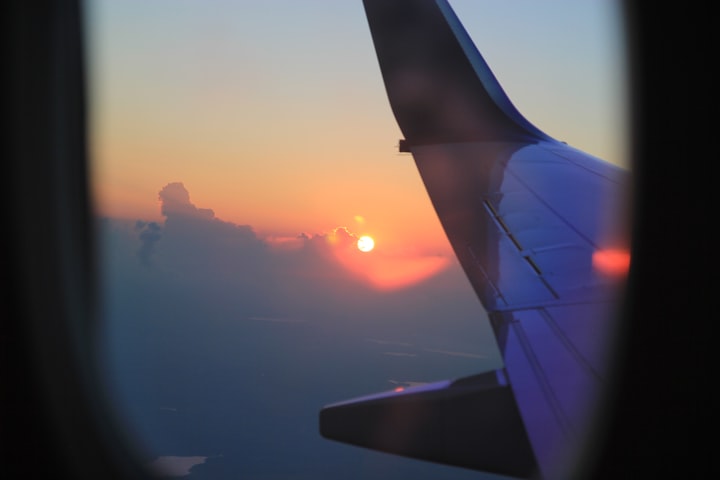
Miriam flew home from Florida alone in a window seat with a wish and two strangers in the row. She couldn’t remember what she muttered under her breath all those years ago as the plane lifted into the air, but she knew in her heart it had come true as she hugged Mother closely. Their bodies were softer now and they molded into each other’s missing pieces.

The store was filled with old knick knacks, vintage toys, half-lit neon, and decades of Playboys wrapped in shiny plastic sleeves. None of the furniture fit the vision she had focused on that morning. Mother didn’t speak, so she also remained silent.
When they came to an oak hope chest her eyes lit up. The interior was lined with green velvet and the lid was carved with an intricate nautical design. It was unlike anything Miriam had ever imagined. She hadn’t known she wanted it, but Mother knew. She purchased it and still only shared silent, meaningful glances with her daughter. The delivery was arranged by the clerk.
The hope chest arrived at the duplex the next morning right as a private plane was beginning to land. Miriam sat on her stoop looking from the unkempt grass up to the sky and back down to the runway she couldn’t see past a dozen rows of houses.

It wasn’t what she wanted, but it’s what Mother had been able to provide. As the moving men carried the heavy piece of furniture into her home and set it down at the foot of her bed, she knew again that the Universe would always give.
Her favorite part of the flight was the end, when she knew the wish she made during take off had been safely left in the heavens. When she returned from Grandmother’s funeral, she decided she would never pray again.
Joe Nasta is a foodie and poet vibing in Seattle. He has whispered four books of poetry into the world: I want you to feel ugly, too (2021); agony: love pomes (2022); blur/screenshot memories of platonic lust (2023); and salt-water poems (2024). He is the author of Halve It (2025), a collection of short stories available wherever books are sold. Ze is an associate editor for Elizabeth Ellen's Hobart.
About the Creator
Keep reading
More stories from Joe Nasta | Seattle foodie poet and writers in Fiction and other communities.
Logic and reason are not always explanation enough.
Logic and reason are not always explanation enough. Understanding is elusive He sat looking at the half empty glass but not seeing it, he was cold but not feeling it, he was in pain but not hurting from it. His mind was numb, his memory a jumble of conflicting events, as if from a nightmare but were in fact real. The phone rang for a long time before it gained his attention and then he tried to turn it off, an automatic reaction against coming back to reality. His mind preferred the numbness to anything else that was available. In this distracted state he accidentally accepted the call and put it onto speaker, the voice from the speaker jolted him into giving it his full attention. This was a call from the dead. The voice was full of concern, “where are you John, why haven’t you called, what is going on?” Even to his own ears his tone sounded subdued, defeated, “I am in the cabin, in the woods but I am OK will call you later” and he turned the phone off both ending this call and not accepting any other.
By Peter Rose4 days ago in Fiction



Comments
There are no comments for this story
Be the first to respond and start the conversation.