
Man or Ape? The Genetic Mystery of Oliver
Oliver the humanzee: A Remarkable Life That Shaped Science and Ethic

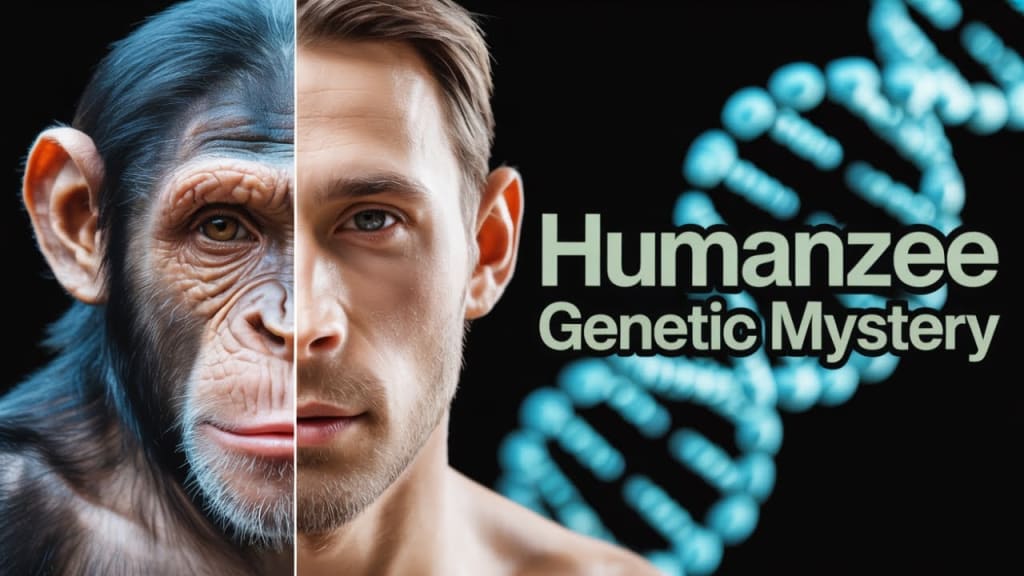
Oliver was no ordinary chimpanzee. From the moment he came into the public eye, his life ignited fascination and mystery among scientists and everyday observers alike. Born in the 1950s, he rose to international attention during the 1970s thanks to a set of behaviors and physical features that defied what experts thought they knew about chimpanzees.
What made Oliver so extraordinary was not just his appearance, but the way he carried himself. Unlike other chimps, Oliver often walked upright, much like a human. His facial features were flatter, with smaller ears and a more expressive gaze—attributes many considered unusually humanlike. These peculiar traits led to intense speculation: Could Oliver be a hybrid between a human and a chimpanzee?
As these questions spread, scientists became deeply invested in uncovering the truth about Oliver’s genetic background. Biologists, geneticists, and evolutionary researchers conducted numerous studies to decode the mystery of his lineage. His mannerisms and unique features prompted a wave of hypotheses that challenged long-held beliefs about species classification.
The media played a pivotal role in amplifying Oliver's story. Newspapers, TV shows, and magazines featured him extensively, often referring to him as the "humanzee." To the public, Oliver was more than just an animal; he became a figure of wonder, a possible bridge between humans and our closest evolutionary relatives.
Despite the frenzy, it wasn’t until the 1990s that more conclusive answers began to emerge. Genetic testing conducted at the University of Chicago revealed that Oliver had the standard 48 chromosomes of a chimpanzee—two more than a human. This finding effectively dismissed the theory that he was a hybrid. However, the research didn’t end there. Scientists found slight genetic variations in his DNA, suggesting that he might belong to a rare subspecies of chimpanzee, known for displaying more humanlike features.
Beyond genetics, Oliver’s personality added another layer to the intrigue. He often preferred human company over that of other chimps and displayed a calm, curious demeanor that set him apart. This behavior, combined with his distinct appearance, made him a subject of ongoing research and debate.
Oliver’s case forced scientists to reevaluate the boundaries that separate humans from other primates. His story sparked philosophical discussions about what it truly means to be human, and whether our current systems of classification adequately reflect the complexity of nature.
His upright gait and humanlike expressions became symbols of the thin line between species. These features drove evolutionary scientists to dig deeper into the connections between modern humans and other primates. Oliver became more than just a scientific curiosity—he became a challenge to our understanding of evolution itself.
But Oliver's story is also one of ethical reflection. Much of his life was spent in captivity, including time in entertainment and research facilities. These conditions were not always ideal, prompting a broader conversation about the ethical treatment of primates in human care. Animal rights activists saw Oliver’s situation as a case study in the need for stronger protections and more humane treatment of intelligent animals.
His later years were spent in sanctuaries, where he was treated with the dignity and respect many believed he had long deserved. By then, Oliver had become a symbol—not just of scientific inquiry, but of the moral responsibility humans bear toward other species.
In the end, while Oliver may not have been the hybrid some once believed him to be, his impact was undeniable. His story reshaped scientific conversations, raised awareness about animal welfare, and reminded us of the interconnectedness of all life forms. He urged humanity to reconsider the lines we draw between ourselves and other animals and to remain curious, humble, and ethical in our exploration of the natural world.
Oliver’s legacy endures—not as a missing link, but as a living testament to the power of curiosity, compassion, and the enduring mystery of evolution.
About the Creator
Francis Osei
“Tom bele has been working with writing challenged clients for over four years. He provides ghost writing, coaching and ghost editing services.
Keep reading
More stories from Francis Osei and writers in Fiction and other communities.
The Zanesville Massacre: Animal Owner Nearly Kills a Community
On October 18, 2011, the quiet rural town of Zanesville, Ohio, became the center of a horrifying crisis when dozens of dangerous exotic animals were set loose, triggering panic and forcing law enforcement into a grim, unprecedented standoff. The incident, later known as the Zanesville Massacre, began when local resident and animal owner Terry Thompson opened the cages of his private menagerie before taking his own life.
By Francis Osei9 months ago in Horror



Comments
There are no comments for this story
Be the first to respond and start the conversation.