
mamakaadakamig Reimagined
A poem about the beauty and tragedy of disappearing — from a place, from a person’s memory, or even from yourself.
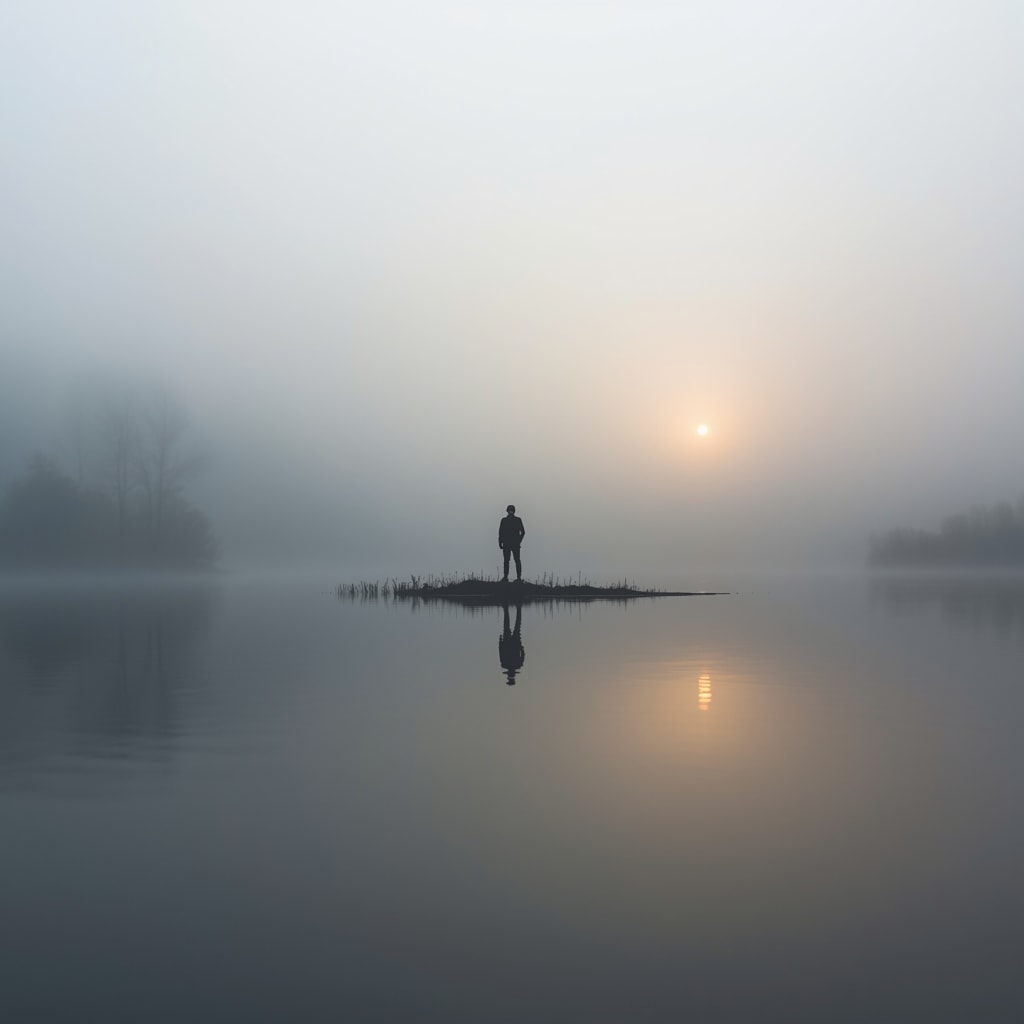
mamakaadakamig Reimagined
They told me once that mamakaadakamig means to disappear.
I am not Ojibwe, but the sound of the word stayed in my mouth like rainwater cupped in two hands—
clear, trembling, impossible to hold forever.
I’ve been thinking about disappearing for a long time.
Not the sharp, final vanishing that comes with death,
but the slow erosion you don’t notice until you realize
you haven’t been in your own reflection for weeks.
It begins quietly.
The first disappearance was from a place.
The small, half-forgotten town where my childhood sprawled out
in cracked sidewalks and stubborn lilac bushes.
I left for the city when I was twenty,
telling myself I’d visit on weekends,
but weekends collapsed into years,
and now the only thing that knows my name there
is the mailbox outside my mother’s empty house.
The town doesn’t miss me.
The bakery still bakes its bread at dawn.
The river still folds itself around the bend by the mill.
And the lilacs bloom each May,
whether I stand under them or not.
Disappearing from a place is an ache without witnesses.
The second disappearance was from a person’s memory.
It was my grandmother first.
Her eyes still carried warmth,
but when she looked at me,
I could see her mind tilting sideways,
searching for a name that had slipped between the cracks.
At the end, she held my hands as if they were an unfamiliar but pleasant object—
like a seashell found in a drawer.
When she passed, I told myself she hadn’t forgotten me completely,
but deep down I knew she had.
That kind of vanishing
leaves you grieving twice—
once for the person you loved,
and once for the place you held in their mind.
The last disappearance was from myself.
I don’t remember when it started.
One morning I simply noticed
that my laugh sounded like someone else’s.
I caught my reflection in the train window
and felt like an understudy performing my life
without ever having seen the original script.
I was still going through the motions—
replying to emails, paying rent,
making dinner, meeting friends—
but it was all happening two steps away from me,
like watching a movie where the lead character’s lips move
and the sound arrives a beat too late.
Disappearing from yourself is the strangest of all
because there’s no one to tell you it happened.
You can vanish for years
before you even think to look for yourself
I keep wondering if disappearing is always a tragedy.
Some days, it feels like an escape.
To slip quietly from the places that hurt you.
To fade from the memory of people who would rather remember you wrong.
To let go of the self you’ve been dragging like a rusted anchor.
There’s a beauty in the clean lines disappearance can draw.
Like snow covering a field,
it erases the mess, the debris,
leaving only silence and possibility.
But snow melts.
And sometimes you stand in that empty field
and realize you’ve erased too much.
I once read that in Ojibwe stories,
names are powerful.
To speak something is to acknowledge its place in the world.
So maybe mamakaadakamig is not just to disappear
but to make space for reappearing.
If I can vanish from a place,
maybe I can return,
even if the lilacs don’t know me anymore.
If I can vanish from a memory,
maybe I can plant myself in another one,
become a new photograph in someone’s mind.
If I can vanish from myself,
maybe I can find my way back,
piece by piece,
learning the sound of my own laughter again,
even if it’s not the same as before.
I try little rituals now.
Leaving my shoes by the door each night,
so in the morning I know I belong somewhere.
Calling my mother every Sunday,
even if the conversation is only ten minutes long.
Writing my name in the margins of books
so when I find them again years later,
I remember I was here.
Some days I still feel the pull—
the temptation to step sideways
into that thin space between here and gone.
It’s quiet there,
weightless.
No one asks anything of you in the place you don’t exist.
But the more I think about it,
the more I realize disappearing is not the same as being lost.
To disappear is a choice,
whether made in desperation or in hope.
To be lost is to wait for someone to find you.
Maybe I have been both.
If you asked me now what mamakaadakamig means,
I would still say it means to disappear—
but I would also say it means
to understand the shape of your absence.
To step away,
so when you return,
you can feel the exact place
where you fit back in.
And if one day I vanish completely
from the town,
from the memory,
from myself
I hope it will be like snow in spring,
melting not into nothing,
but into water
that soaks back into the earth,
waiting quietly
for something new to grow.
About the Creator
Pyro's Spell, Friday, May 18th, 2007
“Here you are ladies, early as usual.” Anton informed his six gorgeous passengers. “Same time again tonight?” Anton had landed one hell of a gig this time. All he had to do was pick up six exotic dancers at the same place and time, then drive them 20 minutes down the road. Each girl gave him $20 to drop them off, and another $20 when he picked them back up.
By Anton Mathias Heft 6 days ago in Fiction


Comments
There are no comments for this story
Be the first to respond and start the conversation.