
Luxuriously Lost at Sea
A diver compares the Titanic in the height of its glory to the wreckage he finds off the coast of Newfoundland, but an accident threatens to sink him just as the Titanic went under.
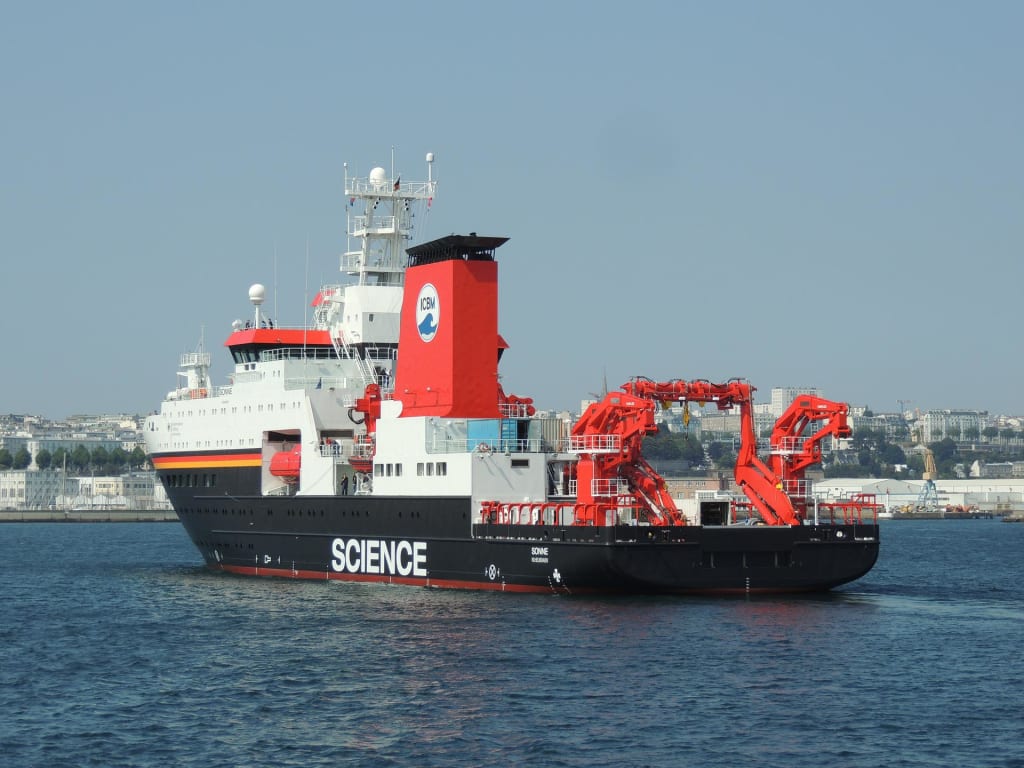
Morton Giesbrecht tested the sturdiness of the cable that would be soon his lifeline as he prepared to dive into the depths of the freezing Atlantic. Off the coast of the frigid Canadian province of Newfoundland, he was tasked with exploring the century-old wreck and recording anything that he could find inside in order to piece together the secrets of the long-lost liner, better known as the unsinkable Titanic. Looking over to his side, two other divers were preparing just as he was, suited up in warm clothing and equipped with head mounted high-definition cameras. As the waves pushed and rocked their medium-sized crane-equipped boat, Morton was grateful for the relatively stable weather, otherwise they would have pulled the plug on the mission for the day.
Giving a thumbs up to the other divers, they all entered a small capsule, used to withstand the bone-crushing pressure of the ocean, and began their daring descent. For the first few hundred metres, nothing seemed to be visible, other than the vast expanse of ocean that seemed to swallow up everything in their field of vision. Even with large ten thousand lumen lights scanning the depths below them, visibility was murky at best, and they were unable to penetrate more than several metres into the dark recesses of the Atlantic.
As they kept recording, all evidence of life seemed to vanish, and a feeling of eerie stillness haunted the mood of their mission. Here and there they would see something dart away, which they thought were some sort of deep-sea creatures, living off the meagre scraps sinking down to the sea floor.
Reporting to the command ship, Giesbrecht relayed back the current condition of the craft and some of the measurements being read from the submersible’s tracking system. “This is Morton, we’re approaching one thousand metres, oxygen supply is at two hours and cabin temperature has dropped to two degrees Celsius.”
“We read you Morton, keep up the good work. All camera feeds are transmitting perfectly and weather seems stable at the moment but winds are picking up.”
Hearing the ship’s response was comforting to the crew, who for the moment were reassured that they were not completely alone and that help was capable of getting them out in the event of an accident.
For the next few moments, all was quiet, until suddenly a large silhouette appeared below them, and they all held their breath at the magnificent sight. The bare remains of the Titanic revealed itself and it seemed like something out of a movie, massive in size and hollow like an empty shell. Reaching the bottom, the sub powered its jets and began to drive towards the ancient ship, as the crew watched in astonishment, anxious as a child waiting for their birthday present.
Disturbing sediment that was probably decades old, it took a while for the dust cloud to settle so they could take clear video recording of the wreck.
“Captain, this is Morton, we’re inside the hull of the ship and are currently in some sort of dining room, I think. I’m not sure which level of the ship we are in, but it appears to be
first-class.”
Thinking back to the numerous photographs of the Titanic’s interior, Morton compared the pre-accident photos to the current wreck in his mind and imagined what it must have been like to be aboard the ship before it sunk. In the pre-accident photos, fancy chairs with floral patterns were neatly placed four to a table, allowing amble elbow room for each passenger. Napkins were neatly folded next to shiny cutlery and plates. Glasses were present as well, waiting to be filled with champagne, brandy or wine; otherwise water for the less adventurous. The carpet was vibrant in colour, and fan-like palm trees were placed around the dining saloon, adding a touch of greenery to the interior space.
Maneuvering through a gaping hole in the wall, they exited the dining room and found themselves in one of the ship’s promenades, which were ghostly empty, with the railing encrusted with decades of barnacles, coral and anemones growing on the skeletal structure and hull of the boat. Closing his eyes and thinking back again, Morton imagined the deck, awash in the rays of the afternoon sun, and lined with scores of deck chairs. Past the railings, one could see the waves lapping up to the sides of the boat far below. Looking into the horizon, passengers would have seen nothing but the vast expanse of open ocean, in which they were just a speck when looked from above.
Continuing on with their expedition, they returned into the dining saloon and prepared to descend down the ornate stairwells that hinted at the lavish design of the luxury ship. At the top of the stairwell there should have been a dome-like structure, with a large light fixture dangling tens of metres above the floors below. Now all that was left of the posh décor were the metal frames the formed the structure of the dome, with the glass all but gone and the chandelier nowhere to be found.
Arriving at the junction of some narrow hallways where the sub could not fit through, Morton tried his best to illuminate the rooms further down to record as much as he could for analysis later on. Several doors were ajar or missing and there was no trace of belongings or items that would suggest the rooms were in use. Remembering what the first-class rooms looked like from photos, Morton imagined in his mind a small bunk bed, a cabinet and vanity, all crammed into a nearly claustrophobic space, with a small round window on the side.
Descending another flight of stairs, they arrived at the first-class saloon and lounge area, which were even more lavish than the third-class rooms above. Morton recalled that first-class tickets included meals so they didn’t need to pay as the third-class passengers had to. In the hallways, ornate tiles would have added a flare of contrast to the white walls and doors, but after nearly a century of being submerged, the whole interior looked as the rest of the ship; derelict and forgotten in a sea of murky turquoise-blue.
Stopping at the elevators, Morton knew they couldn’t get down further into the ship unless there was an opening outside, but from his studies, he knew the boiling rooms, crew dormitories and lavatories were all located below. He could only imagine the panic amongst the crew as the ship began to sink and how it must have felt as they began to realize their fate, with no escape from the watery grave.
Floating up as the cables began pulling the craft back to the ship, Morton took one last look at what was the boarding doors for one the upper levels, until soon enough, the wreck faded out of view, turning into a shadow among many shadows, hidden in the depths of the ocean.
Suddenly the sub jerked and halted its ascension, shaking everyone on board, rattling their nerves as they nervously laughed at each other, pretending like nothing was wrong.
“Hello? Captain? What’s going on? Captain? This is Morton, do you read me?”
His attempts at communicating were cut off, while above the water, the science vessel was in dire straits, with chaos ensuing as everyone started to panic with the change in weather. “Captain, our comms is disconnected and we’re no longer connected to the sub. The tow mechanism is also malfunctioning. We’ll check on the rest of the ship’s systems but it looks like a power failure.”
Staring at the growing waves and increasingly dangerous winds, the captain knew time was something they did not have to spare. “I want a distress signal sent out and hopefully the Canadian Coast Guard or any nearby vessels will be able to come and help. We aren’t going to just abandon Morton and his crew.”
“But sir, if we stay here any longer, it won’t just be Morton and his crew sinking, we’ll be sunk as well!”
“I’m the captain and I make the orders here. I say we stay and hold put and that’s exactly what we’re going to do. Do I make myself clear young man?”
“Yes sir.” With an unhappy look plastered on his face, the sailor left the captain’s presence, hoping that for everyone’s sake, his superior knew what he was doing.”
Heading over to another young lad who was calling for help from the coast guard, the captain was informed that several craft would be heading to their position soon and that an emergency air-lift would be available for any injured personnel. Giving a thumbs up, he stared out the window at the volatile weather and assured himself that help was out there, on its way to rescue them.
Back on the sub, Morton was starting to get worried, as it had been nearly half an hour with radio silence on the comms. Oxygen supply was down to forty minutes and they had been stuck at a dept of eight hundred metres for what seemed like an eternity now. Looking over at one of his shipmates, he noticed her writing something down on a notebook, with small drops of tears staining her writing and causing the ink to bleed. Curious to know what she was writing, the woman showed him her scribbling.
“I’m writing down my last words just in case we don’t make it out alive. Perhaps this sub will keep the letter safe and one day someone might find it and return it to my family. I’ve got a husband and two boys you know…I just wished I had more time with them.”
Shaking his head and holding her shoulders, Morton dismissed any thought of dying and tried to instill hope back to his two-person crew. “Hey, don’t think like that. We’ll survive to tell the tale, so don’t worry. We’ll be back on dry land by nightfall and we’ll be joking about the whole situation in no time.”
“And what do you base your confidence on Morton?”
Raising an eyebrow, he nodded once. “Just a haunch.”
His other crewmember suggested a drastic idea, as a way of of last resort. He suggested cracking open the sub’s hatch and swimming up eight hundred metres to the surface.
Shaking his head once again, Morton dismissed the idea based on what he knew about air pressure and human lung capacity. “The longest dive possible would be approximately forty metres, so trying to ascend eight hundred metres would require some sort of external air supply. Also, the air pressure would crush our lungs and form fatal air bubble clots in our arteries, causing death. Not sort of a pleasant way to go you know?”
“Yeah, falling asleep from lack of oxygen seems more subtle and less gruesome I think.” Continuing her writing in her journal, she wondered in her mind, just as her two crewmates were thinking; what was going on in their ship above them and whether they would come out of this debacle alive.
Holding onto the satellite phone and desperate for getting some form of help, the captain was relaying their coordinates to the Canadian Coast Guard, who optimistically replied that they would be arriving in about thirty minutes.
Thirty minutes…I don’t know if our ship will hold out another half-hour.
“Alright, we’ll hang tough, but please hurry as we have crew submerged with limited oxygen capacity waiting to surface.”
Hanging up the phone, a service member updated him on the status of the ship and confirmed that it was a power failure that caused the cable mechanism and comms to shut down. “The diesel engines are out and there’s no power on the entire ship. If we had some sort of power transfer, we could still bring up Morton and the crew back.
“Any idea on how much oxygen they have left?” Inside his head, the captain hoped they had enough air to be rescued.
“From their last transmission about half an hour ago, they still had roughly an hour’s worth of oxygen.”
“Boggs, let’s hope this doesn’t turn from a rescue into a recovery. Keep your eyes peeled for any nearby vessels.”
Heading over to a technician who was working on the ship’s wiring, she informed the captain that something in their boat’s electrical was disconnected or faulty, resulting in their power outage.
“Just try your best to get us back with power, but keep in mind three lives are depending on it.” Patting the young man on the back, they both nervously smiled with a sense of unwarranted optimism that hope was on its way.
“I’ll try my best sir.”
Back outside the cabin, a team of workers were trying to crank the tow cable coil manually, and after much strenuous and valiant effort, they gave up in exhaustion. Sitting on the floor shaking their heads, clearly demoralized, they barely even cared as the wind and waves blasted their faces with the salty sea spray.
Feeling a slight tug on the sub then falling back down one or two metres to where they were before, Morton could only guess that the crew were trying to pull them up by sheer manpower. But knowing how heavy the submersible was, and the dragging force from the water, he figured they would need another crew just to lift the entire craft back to surface.
As the emergency flashlights in the sub began to flicker, so did the hope of the crew that they would live to see another day; condemned to a watery fate.
Speeding through the choppy waves that seemed to grow larger by the minute, the brave men and women of the Canadian Coast Guard in the patrol boat HMS Bristol prepared themselves for a treacherous search and rescue mission. The captain was a senior waterman for many years, and he had been through many storms just as bad as the current squall.
“Ladies and gentlemen, I’ll keep the briefing short. We have twenty-three passengers in a scientific research vessel in need of rescue. For now, our only option is to airlift them by air to our vessel. I want medics ready to treat the passengers for hypothermia and shock. We will also be sending a boarding team to help them restore power to the crane, which is pivotal for rescuing the researchers currently eight-hundred metres below sea level. Alright! Let’s get the show on the road.”
With bulky enormous searchlights, the coast guard vessel honed in on the distress call and eventually could see the scientific vessel battered mercilessly by the waves and wind, thrown and tossed about like some play doll.
“Chopper One, at my command, lift off with the engineers and air lift the other passengers back. Alright Chopper One, you are clear to go.”
The whirl of blades created loud aerodynamic noise, but even these were drowned out by the storm’s ferocious upheaval.
Picking up the communications speaker, the captain asked to be put through to the vessel they were trying to rescue. “Hello, may I speak to whoever is in charge of your vessel?”
“That would be me, I’m Captain Hernandez. Thank you so much for coming to help us.”
“No worries, that’s our job. I’ve just sent a team over in a helicopter and they will have a look at your electrical to see if it can be fixed as soon as possible. I can also start ferrying passengers to our ship which will be heading back to port in Halifax, but I understand if you or some of your crew would like to stay with the boat. When was the last you heard from your crew in the sub?”
Clearly emotional at the gravity of the situation, Hernandez cleared his throat and relayed the solemn news. “I’m afraid our last contact was nearly an hour ago, and their oxygen will run out in minutes, if not already done so.”
“I respect the fact that you care for your team members. Just don’t take it too hard on yourself. Somethings at sea just can’t be predicted, least of all the weather. It can be calm one moment and then with hurricane force winds the next. Alright, you should be able to see my team reaching you just about now, stay dry captain.”
As the team on the research vessel watched the Bell 412 helicopter land, there was an enthusiastic cheer from the crew, as they shook hands with the engineers that hopped out. Several of the women and older staff boarded the aircraft and it immediately took off back to the HMS Bristol as the engineers got to work on identifying the cause of the power outage on the ship. Showing them the engine room, they immediately illuminated the area with their
high-power flashlights and began checking the wires, fuses and engine to identify the issue.
“Captain, it looks like you’re in luck. The only problem we can see is that the spark plugs are faulty, and you have a slightly flooded engine. Just hang on a sec, we’ll replace the plugs, run the engine on idle for a while and it should fix itself.”
Turning on the engine, there was a loud cheer once again from the crew as the lights and displays all came back to life, instilling hope and adverting disaster like snatching a baby from the jaws of death.
Immediately, the crew powered up the tow cable machine winder and began bringing up the sub after leaving it in limbo for nearly an hour. As the sub buoyed to the surface, everyone eagerly opened up the hatch and found the three crewmembers passed out from the lack of oxygen. Immediately putting on oxygen masks, eager hands carried the trio to the deck where they would be transported to the coast guard ship for proper medical treatment. Checking all three, the captain was glad they were still alive, but in critical condition having been blacked out for some time by now.
“Captain! You might want to see this.”
Rushing over to the bridge, the captain watched as a technician played the recorded video feed from the crew’s head cameras, which had enough battery to keep recording after the ship lost power. They watched as the three crew members sang Bridge over Troubled Water by Simon & Garfunkel before slowly passing out, one by one. Being the last one to black out, Morton gave one last thumbs up before losing consciousness, as with his other crewmates, from the lack of air.
Astonished at how they could be so calm despite the dire and seemingly hopeless situation, the entire crew now knew just how brave the trio were, a shining example of resilience and an iron will to never give up.
The End
About the Creator
Jesse Leung
A tech savvy philosopher interested in ethics, morals and purpose.
Keep reading
More stories from Jesse Leung and writers in Fiction and other communities.
Vessels of Darkness
Zipping by the bustling market in Ninkong, full of vendors seeking customers to buy their wares, Bao Wang hurried to the bird stall where the owner had imported an owl, just as he had requested. Looking to participate in the first secret rodent remediation job opportunity offered by the undergrown movement against Chibaese rule, the wage of ten million fabi a week was nothing to be sneezed at. Parking his rusty bike outside the shop, he opened the door, which rang a tiny bell alerting the shopkeeper to his presence.
By Jesse Leung4 years ago in Fiction
me, me, me
when i read back my poetry it screams “me, me, me” on my screen in bold letters and i can’t shut it up — most days, i cannot make any other words out; i want to throttle a thousand versions of the me gone by, i want to throw myself from a figurative balcony, i want to sink a sword into every pen i’ve held
By angela hepworth5 days ago in Poets



Comments
There are no comments for this story
Be the first to respond and start the conversation.