
The men came in the night to kill my father. It was an unceremonious affair. They came with their rifles and their flashlights and their uniforms and they took him downstairs and they shot him in the living room in front of the television that we used to watch the Tigers play the Vietnam Rockets on and they left.
Their reasoning was no mystery. My father had returned from work six hours late on a Third Day of Work and confided that the Chairman’s Own had visited the week earlier and carried canes encrusted in rubies. “Unseemly,” he had remarked, that they would carry such luxuries to a sweatshop, filled with thousands who had nothing. Such remarks would have amounted to nothing, as the power had gone out, disabling the mandatory room surveillance, if my mother had not heard.
Many people had many different reactions to the rise of surveillance. Some had an attitude of defiance, which if gone unpunished would be the result of the typical incompetence of the Chairman’s administration rather than lenience. Others committed themselves to conformity, purging dissent from their minds until they seemed incapable of it. My mother lost herself to a particular brand of paranoia. She prioritized me and my siblings above all else, and likely perceived my father’s remarks as a threat. She no doubt reported him.
Such actions might seem monstrous, however, she may have saved him. To be reported meant execution. To be caught meant worse.
His funeral claimed his death to be suicide. It would have been laughable if I were not grieving. My mother seemed to be doing her best to make herself invisible. The executor of his will wore a cheap suit, likely borrowed. He had an easy job, as my father had very little. He left most of his belongings to the community, as they were mostly worthless. One trinket, however, was left to me. A heart-shaped locket. The will stated that I would find an important gift inside of it.
I wouldn’t be able to access it for months. The locket was kept in a wooden box under the floorboards, and the house was closed off. He had been very protective of it. Some days, when he would return from work exhausted and dejected, he would wear it and after an hour and a half or so he would smile and put it away. It was as if the metal itself held joy, or at least memories of better times. I always thought he looked silly, a towering man wearing a heart-shaped piece of jewelry. I never said it, though.
I didn’t think much of his choice, because all this was forgotten immediately.
After the ceremony had closed, the executor pulled me aside. He told me that my father had accumulated forty thousand dollars in debt. It made no sense. He was never away for too long, and he had no expensive habits. I was refused further information.
I suppose many men acquire debt without the knowledge of their family. It still stung to know there was an aspect of his life he had kept from us. It stung further to know that I would almost certainly be imprisoned or killed for it, depending on the creditor. I did not sleep that night.
In the morning, I was greeted with strange news. The winning lottery ticket, for a million dollars, had been drawn several days earlier but not claimed. This was a near impossibility. The lottery was worshipped, if a winning ticket were lost at the bottom of the ocean it would be found in minutes. I thought little of it.
I walked by the old house later that day. The police had been searching the place endlessly for further evidence of dissent. They had not found the locket, or I surely would’ve been brought in for further questioning. It was not illegal to keep souvenirs from the time before the Chairman’s rise, but it invited suspicion. The will did not specify its age for this very reason.
When I was a child, I used to sit on the edge of the Fourth Bridge as the cars went by. I would look at the water, but I would also try to look inside their windows as they darted across my field of vision. My father had told me every car was full of a person with a place to be.
I stared down at the water, and at the bird’s nest beside it.
After a few hours sitting on the bridge, I received a call from the executor. He said he had found the source of my father’s debt. As this would determine my fate from that point on, I listened intently.
Most of it was typical gambling debt. But as it turned out, roughly four hundred dollars of it was because my father had been buying lottery tickets on credit.
This was startling news. Not that he had done so, many people did. But it gave new meaning to the message in his will. If he had won the lottery but known that he was about to be reported, he would’ve known that he couldn’t have claimed it himself. Anybody suspected of treason is disqualified. The only was he could’ve hoped for the money to be delivered to our hands is if the ticket was claimed afterward by one of us. In this case, the choice of the locket made perfect sense. It was the perfect size to contain a folded lottery ticket. However, it was hopeless.
The house would be closed off for another month, and it was inevitable that the police would search the floorboards before long. The only way I’d be able to escape the consequences of my father’s debt would be if I broke in, and that would be impossible.
The next day, I was attacked by one of my father’s creditors. It was an introductory visit, so it wasn’t as cruel as it could’ve been. I was simply picked up off the road and thrown into the back of an unassuming black sedan.
I didn’t recognize the man I was speaking to. We conversed about as politely as you’d expect given the circumstances. He didn’t know me, he said, and therefore had no reason not to trust me yet. I told him that I could get him the money owed if I could be given any opportunity to retrieve it from his old house. I didn’t tell him about the lottery ticket.
He was well connected, and said that he could arrange for the guards to be bribed. However, I would need to have the money by the day after, or there would be unspoken consequences. I assured him that there would be no difficulty. The lottery was efficient, all funds would be deposited in my account immediately upon claiming the winning ticket.
The entrance was the most stressful experience of my life. I was still expected to break in, the guards were only instructed to ignore any suspicious activity. I had to climb the fence in the back and wait forty-five minutes for the rear guard to exchange shifts, giving me a window enough to slip in the back door. I had kept the key when I left.
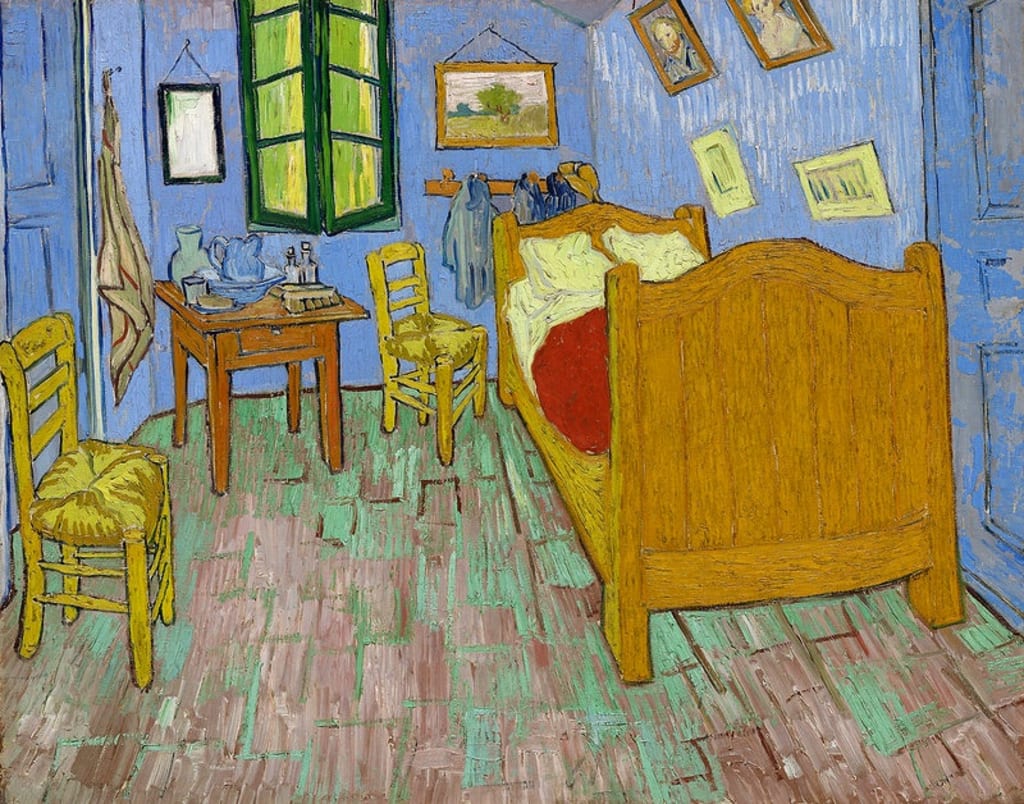
From there, I entered the bedroom. Everything was as it was. I stood, frozen, realizing what once seemed so commonplace had become so alien and unfamiliar. The placement of old photos, formerly burned into my retinas from all the times I’d wandered into the room as a child, looked as if I’d never seen them before.
I had no time to think, however. I went straight to the floorboard under which the locket was kept. Prying it open, my heart sank.
The space was empty, save for a note. I hastily unfolded it. “I know I am going to die soon. I cannot lose what I kept here to them. If this is found by somebody familiar, it is now kept in the nest.”
It made too much sense. He knew it would be found if it was left where it was. I knew where the nest was, it was beneath the bridge. I’d have to climb down and risk falling into the water below to get it, but the wind was still that night and I could retrieve a length of rope from the attic.
I left in a hurry. On the way, I encountered one of the creditor’s men. He chased after me for a while, but lost sight of me. I knew that pushing the boundaries of his employer’s trust without the money in hand would mean death for me. Nearly dead from running, I arrived at the bridge.
Climbing down from the side proved more difficult than I expected. I twisted my ankle jumping down to the supports below, meaning I’d have to wait until morning to be rescued. I’d left my cell phone at home so I couldn’t be tracked.
The bird’s nest had been empty for years. The wooden box sat neatly in the center. Hands shaking, I opened it.
Inside the locket, there was a picture of my mother as a young woman. She was smiling, and in the corner, written in careful cursive, was “I Love You Always.”
The locket was empty, except for this.
Empty.
About the Creator
Keep reading
More stories from writers in Fiction and other communities.




Comments
There are no comments for this story
Be the first to respond and start the conversation.