
The Weight of Words
Language as Both Weapon and Healing Tool
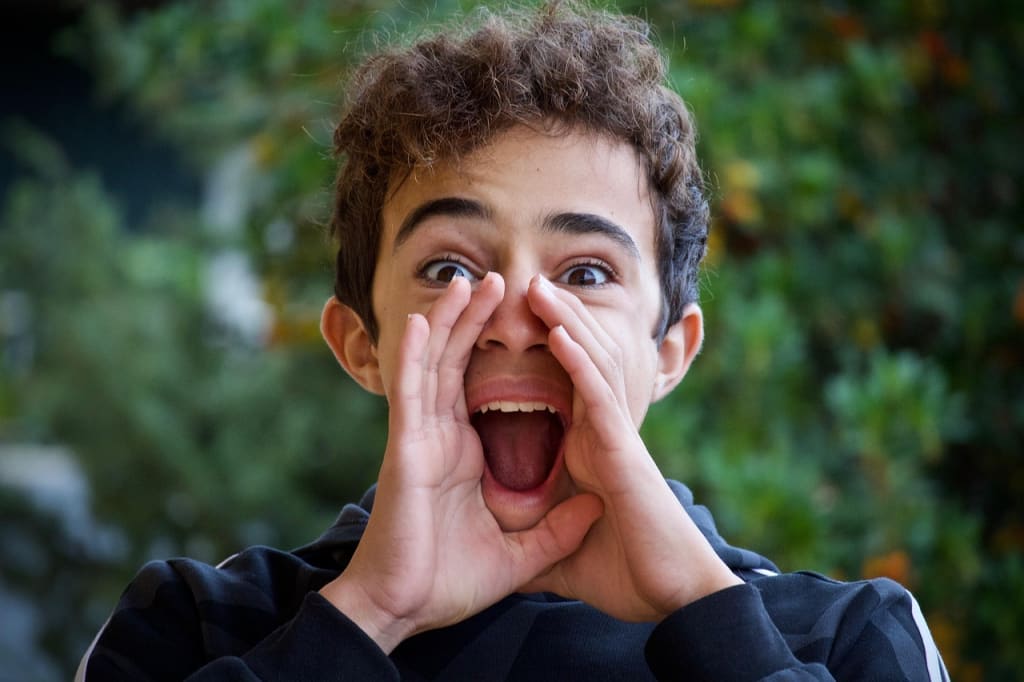
My mother used to say that words have teeth.
Not like fangs—more like molars. Heavy, grinding, able to wear things down slowly. And if you weren’t careful, they could crush the spirit of a person the same way time crushes stone.
I didn’t understand what she meant until I was fifteen, the day my father broke a plate—not by throwing it, but by shouting so hard that his voice cracked and mine disappeared.
“Speak up!” he barked, eyes wild.
But I couldn’t.
That day, I learned that silence could be a wound. But I also learned that **language**, when wrapped in anger, could become a fist. And my father had a vocabulary made of weapons.
I grew up in a house where love was implied but rarely spoken.
“You hungry?” meant “I care.”
“Turn that music off” meant “I’m trying to hold it together.”
And “Don’t be stupid” meant “I’m scared for you.”
It took me years to translate those phrases into something softer, something more like love—but by the time I understood, my voice was already carrying the same sharp edges.
In college, I met someone who loved words like I feared them.
Her name was Mariam. She read poetry aloud in parks and whispered affirmations into my collarbone like they were prayers. She once told me that the word *"abracadabra"* came from Aramaic and meant: create as I speak.
“Words build worlds,” she said.
I laughed. “Words burn them down too.”
She looked at me—not with judgment, but with quiet concern. “Only if that’s what you’re choosing to build.”
It hit me then, how much of my language was shaped by defense. How often I’d used sarcasm as a shield, silence as punishment, jokes to deflect, and curses to assert control.
Words were how my father dominated the room.
Words were how I disappeared in it.
And now, words were how Mariam was trying to pull me out.
The first time I said I’m sorry and meant it, it sat in my chest like a brick. Heavy, awkward, unnatural. But when she replied “Thank you for saying that,” something shifted.
That sentence—so simple—was a door I had never known how to open. Not in my family. Not in myself.
Months later, I visited my parents for the first time in a year.
My father was older. His voice still had weight, but it no longer threw shadows. We sat on the porch, sipping bitter tea in silence. The conversation was thin, stretched over years of unsaid things.
Then he said, “You don’t call.”
It wasn’t a question. It was an accusation wrapped in disappointment.
I wanted to snap back—say, “You never asked about me,” or “I didn’t know if you'd yell or listen.”
But instead, I inhaled the ache and said, “I didn’t know how to talk to you without becoming you.”
He blinked. The silence after that sentence was louder than any of his outbursts.
And then—miracle of miracles—he nodded.
I don’t know if healing begins with truth, or if truth is just a wound that no longer wants to hide.
But I do know this: words can draw blood, and they can also stop the bleeding.
Now, I teach language arts at a high school not far from where I grew up. My students are a mix of open wounds and closed books. Some of them curse like punctuation. Some barely speak at all.
One boy, Elijah, writes poems in a spiral notebook. He never reads them out loud, but sometimes he leaves them on my desk
One poem began:
“My father speaks in lightning bolts / but I am trying to be rain.”
I underlined the line and wrote:
“You are already.”
In the same classroom, there's a quote on the board that I leave up year-round:
“Be careful with your words. Once they’re said, they can only be forgiven, not forgotten.”
Some days, I think about how my mother warned me: words have teeth.
But now I know: they also have wings.
They can break
About the Creator
Ahmad shah
In a world that is changing faster than ever, the interconnected forces of science, nature, technology, education, and computer science are shaping our present and future.
Keep reading
More stories from Ahmad shah and writers in Fiction and other communities.
A Lesson in Nobility and Betrayal
Once upon a time, in a vast and scorching desert, the chief of a noble tribe rode alone on his majestic horse. The sun beat down relentlessly, and the silence of the desert was broken only by the sound of hooves crunching on sand. This was a journey the chief had undertaken many times, a silent meditation in the heart of the wilderness. But on this day, fate had a lesson in store—one that would test not only his strength, but his wisdom and character.
By Ahmad shah8 months ago in Fiction
Real men drink, right?
He has a problem. He’s felt it for years now, but he refuses to face it. He doesn’t want to admit it, to himself or to the people around him. All his heroes were the same. He likes to recall the scene where James Bond sits in a dusty pub in Latin America, a glass of whiskey in hand, his gaze fixed on a scorpion crawling across the bar. When he first fell for literature, it was Post Office and Women, which he read over and over again. Without those cans of beer and bottles of cheap whiskey, Bukowski’s work wouldn’t have been so raw, so honest. Even Vaclav Havel spent most of his nights in Prague bars; without that, he wouldn’t have been who he was. Those were the real men.
By George Roast7 days ago in Fiction


Comments
There are no comments for this story
Be the first to respond and start the conversation.