
Letters from the Border
Two retired soldiers, once divided by a border, find connection through handwritten letters—and discover that peace begins with listening.
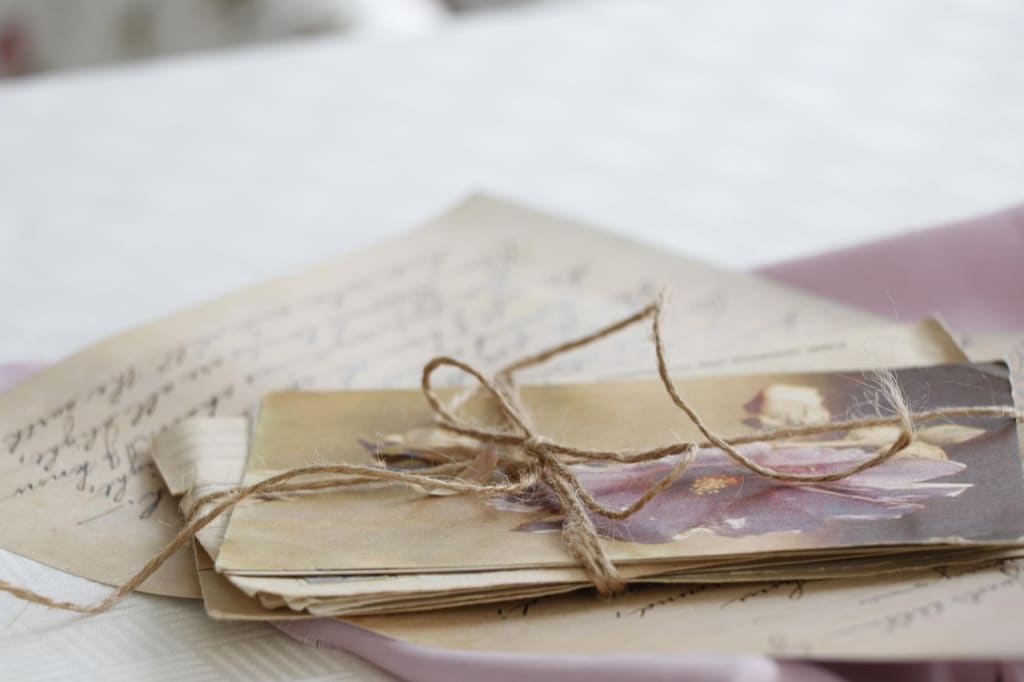
The first letter came on an unusually quiet morning in October. Colonel (Retd.) Arvind Mehta, sipping his cardamom tea in the courtyard of his home in Amritsar, turned the envelope over with curiosity. The handwriting was neat, the paper scented faintly with something floral—unexpectedly gentle for a letter that had come from across the border.
"Dear Colonel Mehta," it began, "I hope this letter reaches you in good health. My name is Brigadier (Retd.) Salim Khan. We never met in the field, but I know of you. I served across the fence during the same years you did. Now that the border is quiet and we are men of peace, I thought perhaps we could speak—as veterans, as old soldiers who no longer fight, and perhaps as friends."
Arvind chuckled, folding the letter carefully. His wife raised an eyebrow.
"Who writes letters these days?" she asked.
"An old Pakistani soldier," Arvind replied. "Says he wants to be friends."
The idea was strange—and yet, comforting. For decades, Arvind’s life had orbited around the border. It had been his assignment, his obsession, and later, his burden. But things had changed. The last skirmish had been years ago. Both countries had signed the Peace Corridor Accords, allowing free passage of civilians and goods in specific zones. No shots, no standoffs—only watchful quiet.
He wrote back.
Over the months, the letters grew longer.
Salim shared stories of his childhood in Lahore: cricket in the alleys, kites over the rooftops, and the first time he saw snowfall in Murree. Arvind responded with tales from Shimla: monsoon rains, army drills in the mud, and the way the hills turned golden in November.
They never discussed politics.
They wrote of their families, their scars, the odd dreams that still visited them in the early hours of morning—always the same dreams of patrol routes and radio static, of voices that no longer answered.
Arvind learned that Salim’s wife had passed away a few years before. Salim learned that Arvind had a grandson who liked astronomy.
“I envy that,” Salim wrote. “A child who looks at stars, not borders.”
In one letter, Salim enclosed a photo: two young officers, smiling in black-and-white, one in olive green, the other in khaki. He’d found it in an old trunk. It was from a peacekeeping exchange drill in 1983, briefly forgotten in the tide of history. There, standing beside Salim, was a much younger Arvind, holding a cricket bat.
Arvind stared at the photo for a long time. He didn’t remember the moment clearly, but the familiarity was undeniable.
“So we did meet,” he wrote back. “Before the uniforms hardened and the maps mattered so much.”
Eventually, their story made its way into a veterans' magazine. A journalist picked it up, and suddenly, they became symbols—not of war, but of what follows after. Invitations came: to speak at summits, to sit on panels, to share their story of letters that crossed no-man’s land.
They declined most of them. Fame was never the point.
Instead, on the 15th of August, they agreed to meet—not in India or Pakistan, but at the Wagah Peace Pavilion, the one place where both flags flew side by side, unlowered.
They hugged like old brothers.
Tourists clapped. Cameras flashed.
But neither noticed.
Back home, Arvind kept the letters in a wooden box. Some were stained with tea, others creased at the edges. He had Salim’s handwriting memorized now—steady, deliberate, a little slanted to the left.
In the last letter he received, Salim wrote:
“I used to think peace was silence. Now I know it’s the sound of someone replying.”
About the Creator
Keep reading
More stories from Md. Siyam Bishwas and writers in Fiction and other communities.
Celebrate National Blueberry Pie Day: A Slice of Sweet Tradition
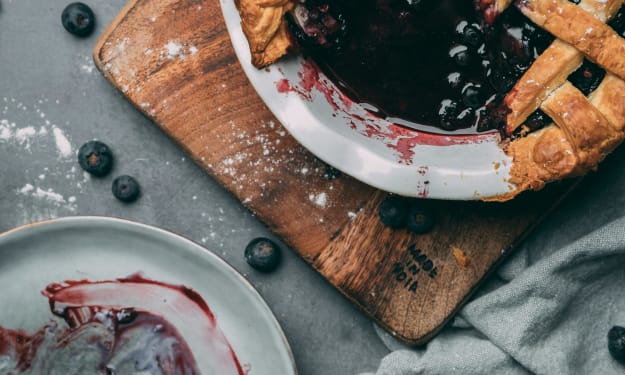
Every year on April 28th, fans of delicious, juicy blueberries gather in their kitchens, bakeries, and cafes to celebrate National Blueberry Pie Day. It’s a day dedicated to honoring a truly classic American dessert — a rich, flaky pie bursting with deep, purple-blue delight — and perhaps even creating a little homemade magic of your own. Whether you’re a seasoned baker or a blueberry enthusiast, today offers the perfect excuse to indulge and enjoy.
By Md. Siyam Bishwas11 months ago in Feast
Pandora’s Burden
“My brother warned me to not accept gifts from the one who commissioned you,” said Epimetheus to the woman clad in silvery raiments standing at the entrance to the temple. Her silver tiara and the silver rings on her fingers and toes glinted in the firelight cast by torches set on either side of the doorway. Lingering in the shadows, beyond the reach of the flames as she was, he could not tell what she held in her hands. At first what appeared to be a box was perhaps a funerary urn, or maybe merely an apple.
By J. Otis Haas2 days ago in Fiction
Eurydice's Truth
The poets say he turned back. They forgot that both gods and men had already silenced me. Even now I linger in the world of the dead, millennia after my husband showed how little faith he had in me. The stories say that after his awful death he found peace, that he could walk beside me with no need to look back. But in truth, he remains lost in his songs, and I am still an afterthought, or perhaps merely an ideal for his imagination.
By J.B. Miller6 days ago in Fiction


Comments
There are no comments for this story
Be the first to respond and start the conversation.