
Last Breath
In a world consumed by death, hope is the rarest infectious disease
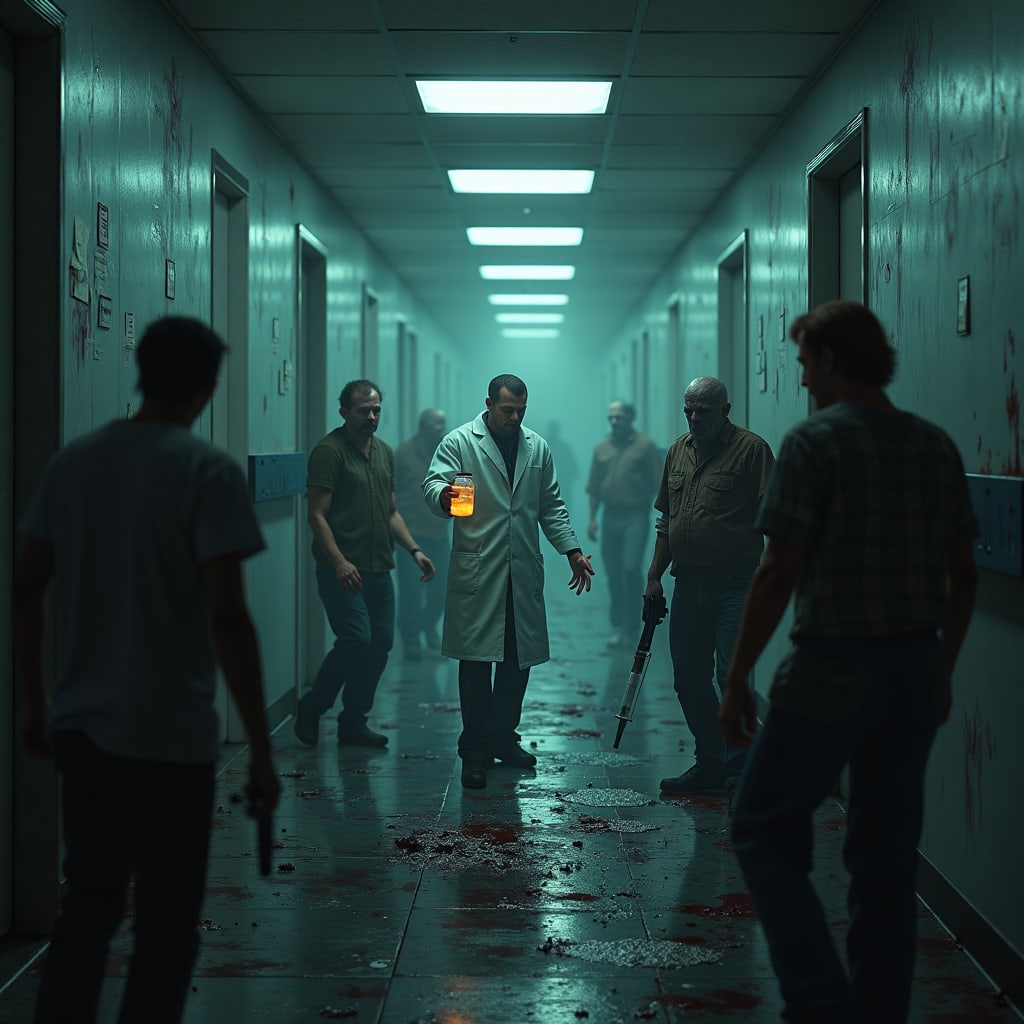
The outbreak didn’t start with chaos. It began with silence—the kind that settles before a storm. Hospitals filled overnight. News channels speculated wildly. Governments issued half-truths. Then came the screams.
By the time the world understood what it was facing, it was already too late.
In the shattered remains of what used to be Portland, a small group of survivors took refuge in the skeletal remains of a university medical research facility. Among them was Lena, a former virologist whose life before the outbreak was marked by white lab coats and ethical debates, not blood-soaked hallways and makeshift barricades.
The infected were fast. Not the sluggish, groaning shells horror stories warned about, but quick, violent, and cunning. They moved in packs, hunting by sound and scent, and they learned. Survivors had to adapt faster.
Lena wasn't just running—she was searching. Somewhere in the bowels of the building, beneath the chaos and abandoned experiments, was a sample. A trial serum. The last project she had worked on before the fall, designed to treat an aggressive neurovirus. No one expected that virus would evolve and become airborne. Or that it would kill billions.
Her small group included Mason, a combat medic haunted by the wife he couldn’t save; Tasha, a former physics professor turned sharp-eyed scavenger; and Jordan, a teenager who barely remembered the world before. They weren’t warriors. They were people stitched together by loss and the raw need to survive.
Each day was a gamble. While others focused on food, ammo, and fuel, Lena hunted data—old access logs, encrypted backups, handwritten notes left behind by colleagues who never made it out. Her obsession bordered on madness, but the others followed her because she believed. And belief, in a world crawling with the dead, was a kind of power.
Then, one morning, while sorting through a lab buried beneath rubble, Lena found it. A cryopreserved vial, intact and humming faintly with energy. The original prototype. It wasn’t a cure. But it was a beginning.
As the group prepared to move it to a safer location, the building came under siege. Dozens of infected flooded the corridors. Mason went down first, dragged screaming into the shadows. Tasha covered their escape until her rifle clicked empty. Jordan and Lena ran, vial in hand, breath sharp with panic.
They escaped into the tunnels beneath the city. The vial was still safe. Lena wept—not for the dead, but for the possibility that their deaths might finally mean something.
Weeks later, word began to spread through survivor networks. A new camp. A lab. A chance. Whispers of immunity. Of progress.
The dead still roamed, and the cure was still a dream. But in Lena’s hands, hope no longer felt like fiction. It was real. Fragile. And for the first time in a long time, something worth fighting for.
Thank you for reading. In every end, there is a beginning—and your time spent with this story means more than you know.
About the Creator
Lucian
I focus on creating stories for readers around the world
Lightning Never Strikes Twice
The distant rumble, the sudden deluge, the crescendo of sound, the flash of light, the explosive energy — it never gets old. I became an amateur storm chaser about two years ago. My wife, Cindy suggested it. Sort of. She said, "Alex, you know this cancer is killing me. I've come to terms with that, but you're smothering me. Go join a band, write a book, or become a storm chaser, for all I care. I love you, but you need a hobby."
By Julie Lacksonen6 days ago in Fiction



Comments
There are no comments for this story
Be the first to respond and start the conversation.