
In the shadows of war, one woman must choose between loyalty and conscience
Attic Silence

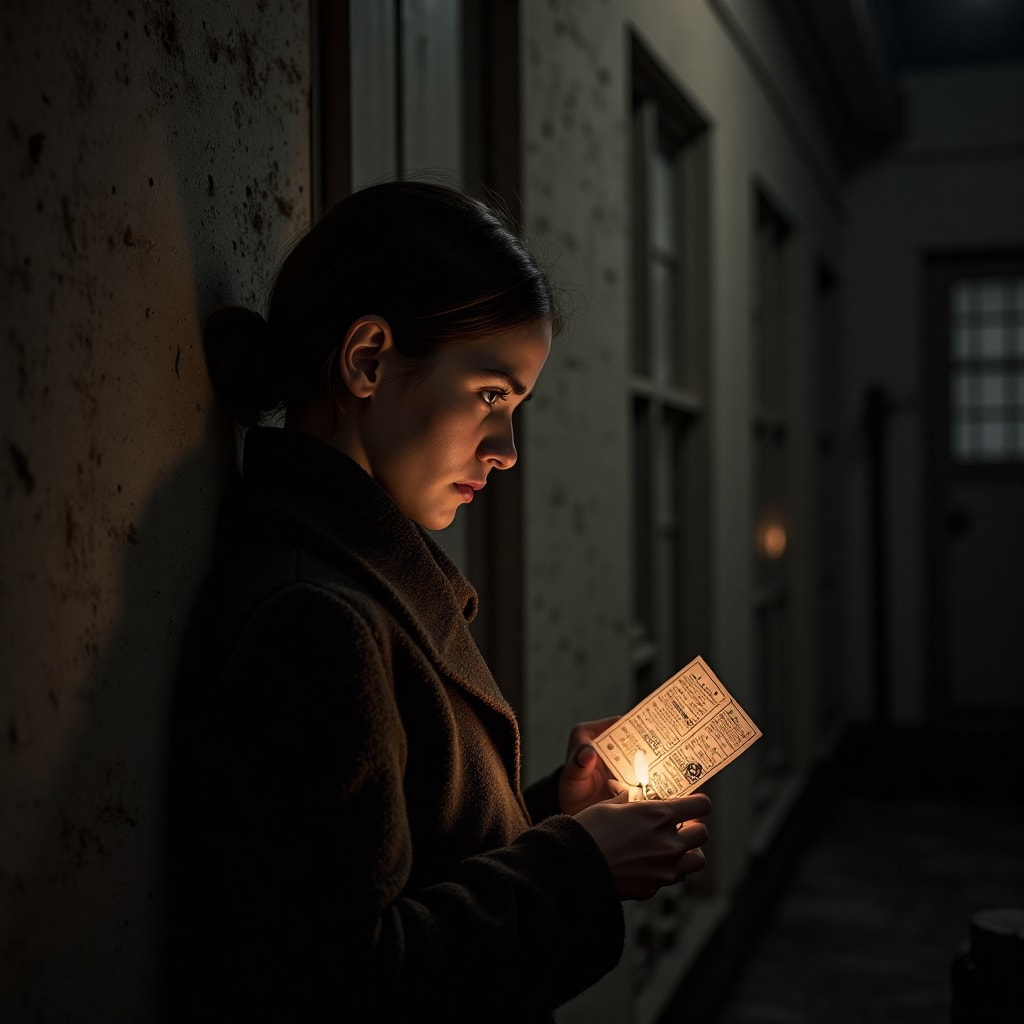
In the waning months of 1943, as the war dragged its cold, iron grip across Germany, seventeen-year-old Klara Weiss lived two lives. In the daylight hours, she wore the face expected of her—a quiet daughter, a dutiful student, a girl who kept her head down in a country ruled by fear. But at night, when the air sirens had long fallen silent and only the wind whispered through the broken streets of Dresden, Klara felt the weight of a truth that had rooted itself in the walls of her family home.
The truth lived in their attic.
His name was Samuel, and he had been hiding in the crawlspace above Klara’s bedroom for three months. Her father, once a university professor before the Reich had disbanded what it called “decadent scholarship,” had made the decision. Klara’s mother, a woman of trembling hands and silent stares, had agreed—though it was never spoken aloud. Samuel was thin, pale, and quiet. But his presence turned every floorboard into a warning, every knock on the door into a potential betrayal.
Klara had not been told. She had discovered Samuel on her own one rainy night, when the creak of the ceiling became too much to ignore. She had crept up the stairs and found him crouched beneath a pile of wool blankets, clutching a worn photograph and a silver Star of David. Her first instinct had been fear. Her second, shame.
She hadn’t told anyone. Not even her best friend Elsa, whose brother wore the uniform of the Hitler Youth with pride. Not even her cousin Dieter, who had begun asking strange questions about their family's "loyalty." Klara carried the knowledge alone, and it grew heavier by the day.
Then the letter arrived.
It bore the official seal of the Reich and informed them that their home would be inspected for "structural integrity"—a thinly veiled excuse, Klara suspected, to root out dissent. They had three days to prepare. Her father’s hands trembled as he folded the letter. Her mother wept in silence. Samuel said nothing, only looked at Klara with eyes that no longer dared to hope.
That night, Klara couldn’t sleep. The storm outside matched the one in her chest. She had to make a choice. If she did nothing, the inspection would lead to Samuel’s discovery. If she helped him escape, her family risked execution.
But there was a third option.
The next morning, Klara slipped into town under the pretense of visiting her aunt. She found an old contact of her father’s—an apothecary who had once studied in Prague and now secretly aided escapees. It took every ounce of courage she had, but she arranged a plan. A midnight departure, through the back alleys, under the cloak of smoke and dark.
On the night of the inspection, Samuel was gone.
The soldiers searched the house, poked through cupboards and lifted floorboards. But they found nothing. When they left, Klara collapsed into a chair and let herself cry for the first time in months.
Weeks passed. A letter arrived, unsigned and unaddressed. It was written in careful script on a torn scrap of paper.
"Freedom is not a place, but a chance. You gave me one. I will not waste it. —S."
Klara burned the letter that night, but the words stayed with her forever.
The war would rage on, and so would the weight of choices made in silence. But Klara would never regret the night she chose conscience over comfort, even in a world that punished such bravery.
Thank you for reading. May we all remember that history is not only written by nations, but by the quiet courage of individuals.
About the Creator
Lucian
I focus on creating stories for readers around the world
Beneath the Liquid Sky
Silence. A silence so deep it pressed against the shore like the world itself forgot to breathe. The water remained still, its glazed edges shone with an iridescent glow that pulsed with life beneath the burning sun. Dark trunks rose skyward to the heavens, their branches tracing the outline of the world suspended in silence.
By Caylin Watkinsa day ago in Fiction



Comments
There are no comments for this story
Be the first to respond and start the conversation.