
Imprisonment in the ocean
how long can a person live without a water
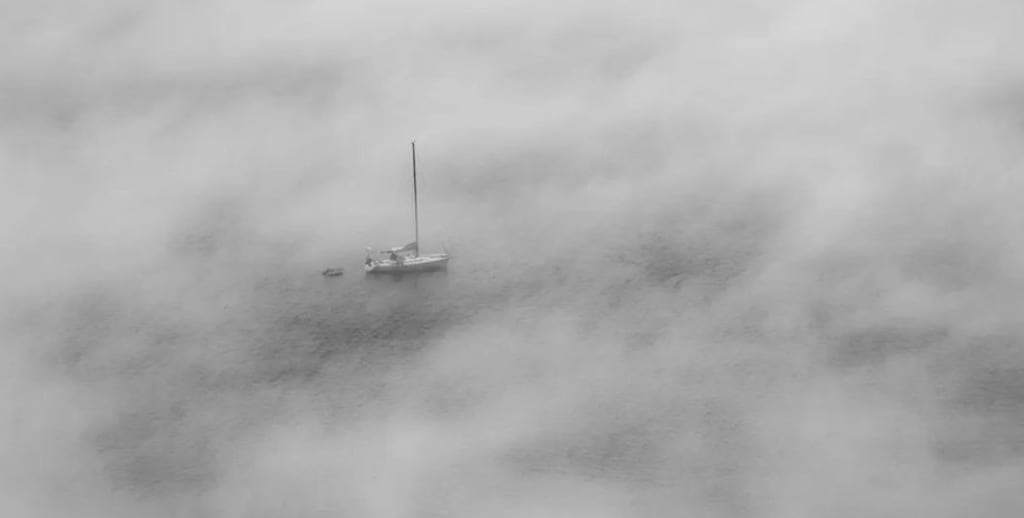
A 51-year-old sailor spent two months on the high seas without food or water. How did he manage to survive in such harsh conditions?
This story spread throughout the world's media. 51-year-old Tim Shaddock from Sydney miraculously managed to escape after his boat was caught in a storm while traveling from Mexico to French Polynesia. As a result, the man was trapped on a boat with his dog Bella without food or drinking water, writes IFLScience.
The sailor managed to survive by drinking rainwater and eating raw fish, which he managed to catch using the boat's fishing gear. Note that the main cause of death after the crash is exposure to the sun and cold. Luckily, Shaddock managed to construct some kind of shelter from the boat's canopy.
After two months of imprisonment in the ocean, he was rescued by a trawler. Tim and Bella lost a lot of weight but were otherwise completely healthy; now they feel good and are already on the mend. According to Shaddock himself, he had to endure “difficult trials at sea,” and now all he needs to recover is rest and good food since he spent a long time alone at sea. However, in general, the sailor notes that his health is fine.
Shaddock and his dog Bella were extremely lucky that they were able to find food, shelter, and water in the open ocean; this is what helped them survive so long. However, how long can a person really live without water?
The answer to this question is extremely complex. Mainly because human experimentation is simply ethically unacceptable—you can't simply deprive a person of water and food and then simply see how long they can hold out. That is why researchers have to analyze certain cases when people, for one reason or another, are deprived of water and food.
Some observations indicate that on average, a person can last from 8 to 21 days without food and water, and this period will increase to two months if only food is missing. However, researchers believe that this forecast is overly optimistic, and there is evidence for this.
In reality, scientists believe that a person can survive without water for no more than 2–3 days. This period greatly depends on the health and age of the person, as well as other factors such as ambient temperature.
Read how to survive this situations!
So, in 1979, 18-year-old Andreas Mihavec was locked in a police cell in Germany after an accident. He spent 18 days in captivity before he was remembered and released from his basement cell. The guy was very thin but was still alive.
In 1944, two scientists conducted one of the few experiments on humans. They deprived themselves of water and ate only dry food, like cats. The scientists were 28 and 33 years old; they survived but stopped the experiment before it became life-threatening.
According to the authors of the experiment, on the third or fourth day, their faces became haggard and very pale, and a hint of cyanosis appeared around the lips. When the experiment was stopped, the general appearance of ill health disappeared within just a few hours of fluid balance being restored. Moreover, the symptoms of dehydration disappeared long before the completion of physiological rehydration.
The story of Tim Shaddock's survival at sea without food and water, along with the information on human survival limits without water, highlights the remarkable resilience of the human body in extreme conditions. It underscores the importance of resourcefulness and adaptability in such situations. In addition, the mention of historical cases like Andreas Mihavec and the 1944 experiment by two scientists provides further context on the topic of human survival without water. These instances serve as valuable insights into the boundaries of human endurance and the critical role hydration plays in maintaining health and vitality.
About the Creator
Keep reading
More stories from Olga Syromolot and writers in Fiction and other communities.
The Midnight Heist
The city's dimly lit streets stretched out like a web of shadows, with secrets hidden in every alley. Detective Raymond Malone had seen it all. He was a man who moved in the shadows, his fedora pulled low over his eyes, and a cigarette burning at his lips. Tonight, he was chasing a lead that could break open a case that had haunted him for months.
By Olga Syromolot2 years ago in Fiction
So You Decided To Become a Nurse Practitioner:
So you decided to become an "Advanced Practice" nurse. Congratulations!... is what I would say if this was a good idea. Grad school? In this economy? What were you thinking? Likely it was something along the lines of either 1) “I've seen these other chucklefucks do it— Why can't I?” or even 2) “I've got a nice career, I should shake it up. I miss feeling like I have no clue what I'm doing.”
By Sandor Szabo3 days ago in Fiction



Comments
There are no comments for this story
Be the first to respond and start the conversation.