
Illuminating the Deep: Unveiling the Secrets of Bioluminescence
From Glowing Jellyfish to Medical Marvels, Exploring the Enchanting World of Light-Emitting Life Forms
Illuminating the Deep: Unveiling the Secrets of Bioluminescence
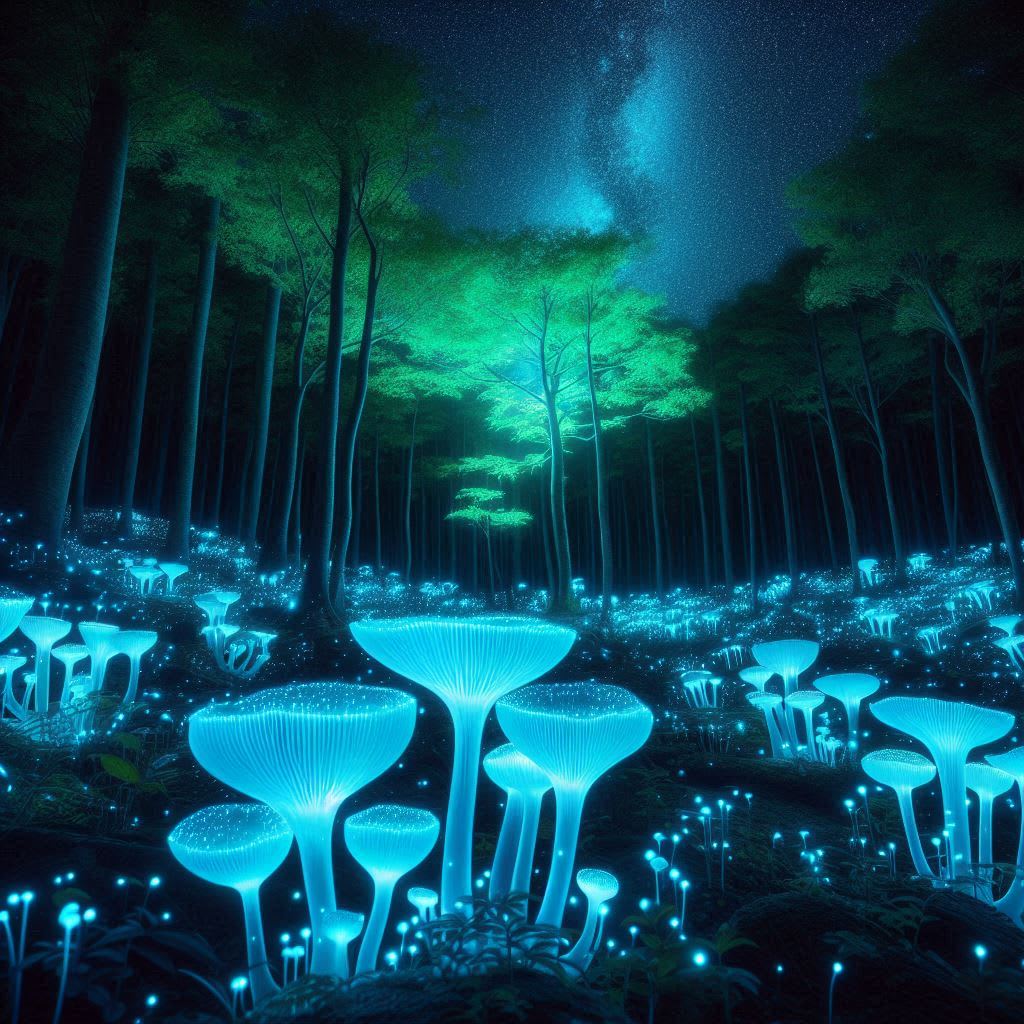
Have you ever scrolled through social media and stumbled upon a mesmerizing video of a glowing forest floor? Or perhaps you've seen a news story about scientists engineering glowing mice for medical research? These captivating phenomena are all thanks to bioluminescence, the ability of living organisms to produce their own light. It's a dazzling display found across the natural world, from the depths of the ocean to the forests on land, and scientists are only just beginning to unravel its incredible secrets.
The Science Behind the Shine
Bioluminescence isn't magic; it's a fascinating chemical reaction. Inside specialized cells or organs of these organisms lies a complex process. A molecule called luciferin reacts with an enzyme known as luciferase. This reaction releases energy in the form of light, creating the captivating glow we see.
The reasons why these creatures go to such lengths to light up the night are as diverse as the organisms themselves. Some, like fireflies, use their bioluminescence to attract mates. Deep-sea creatures might use it to lure prey, like the barreleye fish with its bioluminescent "headlight" that attracts unsuspecting plankton, or to communicate with each other in the inky darkness of the ocean depths. Others, like vampire squids, have bioluminescent organs on their arms that they use to confuse and disorient predators, giving them a chance to escape. And some bioluminescent organisms, like certain comb jellies, use their light to camouflage themselves, counter-illuminating their bodies to blend in with the downwelling sunlight from above, making them invisible to predators lurking below.
Beyond the Beauty: The Practical Applications of Bioluminescence
The world of bioluminescence isn't just visually stunning; it also holds immense scientific potential. Researchers are harnessing the power of bioluminescent organisms for various applications. In the field of biomedical research, scientists are studying the luciferase enzyme and its interaction with luciferin. This knowledge could help develop new drugs and diagnostic tools. For instance, a recent breakthrough involved scientists engineering a strain of E. coli bacteria to produce a bioluminescent protein that specifically binds to cancer cells. This glowing protein could be used to illuminate tumors during surgery, allowing for more precise removal and potentially improving patient outcomes.
Environmental monitoring also benefits from bioluminescence. Certain bioluminescent organisms, like dinoflagellates, are sensitive to changes in water quality. By monitoring their light output, scientists can gauge the health of marine ecosystems, detecting pollution or other environmental changes. In fact, a recent project in the Maldives utilized bioluminescent phytoplankton to create an "underwater disco" that attracted tourists and raised awareness about the importance of coral reef conservation.
The potential doesn't stop there. Scientists are even exploring the possibility of creating bioluminescent plants! Imagine illuminating your garden with glowing flora that doesn't require electricity. While this is still in the early stages of development, a recent study successfully transferred bioluminescent genes from a mushroom to a moss species, paving the way for potential future applications in sustainable lighting solutions.
A Universe of Light: Exploring the Nuances of Bioluminescence
The world of bioluminescence is far more diverse than fireflies and glowing plankton. Deep-sea creatures have evolved some of the most fascinating bioluminescent adaptations. The viperfish, for example, has a bioluminescent lure that dangles from its chin, attracting prey close enough to be snatched in its massive jaws. Some deep-sea jellyfish, like the Atolla jellyfish, have pulsating bioluminescent organs that they use to startle predators. Others, like the bobtail squid, have symbiotic relationships with bioluminescent bacteria, creating a living light source that helps them navigate the darkness and even communicate with each other.
Bioluminescence isn't just about light emission either. Some organisms, like certain types of millipedes, produce bioluminescent flashes. While the exact purpose of this behavior remains a mystery, some scientists believe it might be a form of communication or defense mechanism.
A Glimmer of Hope: The Future of Bioluminescence Research
The study of bioluminescence is still in its early stages, with scientists constantly uncovering new secrets. As research progresses, we can expect even more fascinating discoveries. Future research might delve deeper into the diverse purposes bioluminescence serves in different organisms. Unraveling the complex signaling pathways involved in bioluminescence could shed light on communication patterns and survival strategies in various ecosystems.
Bioluminescence also holds immense potential for bioengineering. Scientists might be able to create bioluminescent materials for various purposes, from illuminating buildings in a sustainable way to creating new diagnostic tools for medical applications.
Conclusion
The captivating world of bioluminescence is a testament to the remarkable diversity and ingenuity of life on Earth. From the otherworldly glow of bioluminescent mushrooms on forest floors to the mesmerizing light shows of deep-sea creatures, bioluminescence transcends mere beauty. It's a scientific marvel with the potential to illuminate not just our understanding of the natural world, but also the future of various fields. As research progresses, we can expect to unlock even more secrets about this captivating display of light. Imagine a future where bioluminescent organisms become living diagnostic tools, guiding surgeons with unparalleled precision during operations. Or perhaps, our cities will be bathed in the soft glow of bioluminescent plants, a testament to a new era of sustainable lighting. The possibilities are as endless as the vast oceans where many bioluminescent wonders reside. The future of bioluminescence research is as bright as the light it inspires, and its potential to illuminate our world in unexpected ways is truly awe-inspiring.
About the Creator
suren arju
Hi there! I'm Suren, your startup guide. Entrepreneur, writer, dreamer - I share insights, tips & stories to fuel your startup journey. Ready to explore, learn & win together? Join me & let's redefine how we launch, learn & leap!
Keep reading
More stories from suren arju and writers in Fiction and other communities.
Unleash Your Inner Dancer: How Moving to the Groove Benefits Your Body and Mind
Unleash Your Inner Dancer: How Moving to the Groove Benefits Your Body and Mind Have you ever felt the irresistible urge to move when a catchy tune starts playing? Tapping toes quickly morph into full-blown dance moves, and before you know it, you're lost in the rhythm. Beyond the pure joy of dancing, this spontaneous movement offers a wealth of benefits for your physical and mental well-being.
By suren arju2 years ago in Fiction
Miss Persephone's Manual to a Seemingly Ordinary Life
Miss Persephone was found at the dining table, her blue eyes swollen, her tears arriving and retreating like the tides of the ocean. Earlier that day, her family had visited her in the retirement home where she had lived for eight years. It was her eightieth birthday.
By Imola Tóth3 days ago in Fiction



Comments
There are no comments for this story
Be the first to respond and start the conversation.